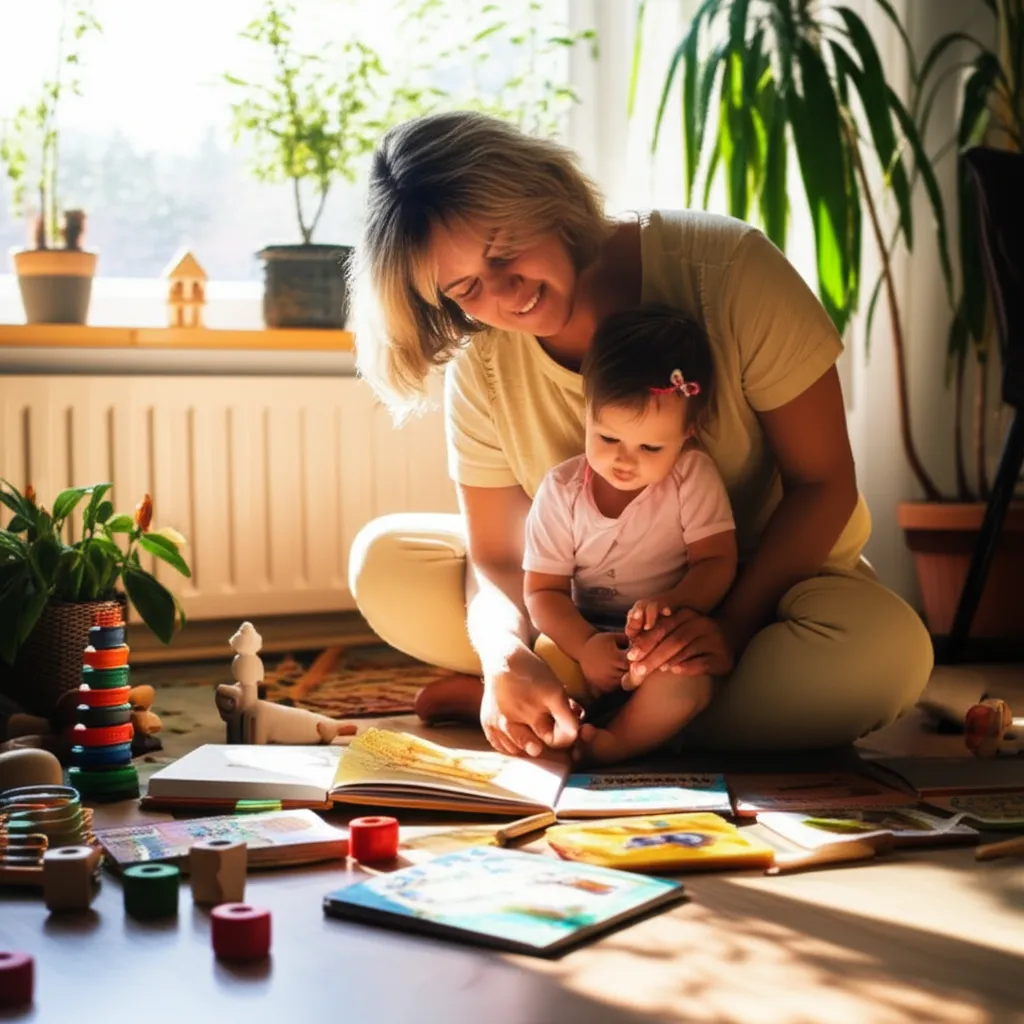
Traditional/Textbook
Traditional education follows a structured, sequential curriculum delivered primarily through textbooks, workbooks, and direct instruction. Content is organized by grade level and subject, with clear learning objectives, regular assessment, and systematic skill progression. While sometimes criticized for rigidity, this approach provides clarity, accountability, and a straightforward path through academic content that many families find reassuring and effective.
Traditional textbook-based education is the most commonly practiced form of homeschooling in the United States, and for good reason: it works, it is easy to implement, and it provides the clarity and accountability that many families need, particularly when starting out. The approach mirrors what happens in conventional schools — structured lessons, textbook reading, workbook practice, tests, and grades — but in a home setting with individualized pacing and one-on-one instruction. Critics dismiss traditional homeschooling as "school at home," but this characterization misses the real advantages. A child working through a well-designed textbook with a parent who can stop, explain, re-explain, and adjust pace receives a qualitatively different education from a child in a classroom of thirty working through the same textbook without individual attention. The one-on-one interaction transforms even formulaic curriculum into a responsive learning experience. Traditional education also provides something that more progressive approaches sometimes lack: comprehensive coverage. A family following a grade-level textbook in math, science, language arts, and social studies can be reasonably confident that no major content areas have been missed. This matters for families who may need to transition their child back to conventional school, demonstrate academic progress for legal requirements, or prepare for standardized testing.
Core Principles
- Sequential, grade-level curriculum with clear scope and sequence
- Direct instruction followed by guided practice and independent application
- Regular assessment through tests, quizzes, and graded assignments
- Textbooks and workbooks provide structured, comprehensive content coverage
- Teacher or parent-led lessons with defined daily schedules
- Standards-aligned content ensures no significant gaps in knowledge
Strengths
Easy to implement with minimal parent preparation or training
Clear benchmarks make progress measurable and gaps identifiable
Comprehensive coverage ensures no major subject areas are missed
Familiar structure eases transitions to or from traditional schools
Abundant resources available from mainstream publishers
Best For
- Families transitioning from conventional school who want familiar structure
- Parents who feel uncertain about their ability to design curriculum
- Children who thrive with clear expectations, routine, and predictable structure
- Situations requiring documentation of academic progress for legal or institutional purposes
Getting Started
What a Typical Day Looks Like
Strengths and Limitations
Frequently Asked Questions
Is traditional homeschooling secular or religious?
Both options are widely available. Christian publishers (Abeka, BJU Press, Sonlight) produce textbooks that integrate faith throughout all subjects. Secular publishers (Time4Learning, Oak Meadow, secular editions of standard textbooks) provide equivalent academic content without religious framing. Some curricula (Saxon Math, Singapore Math, most science texts) are inherently secular because their subject matter does not intersect with religious questions. When assembling a traditional curriculum, families can choose religious or secular materials on a subject-by-subject basis.
How much does traditional homeschooling cost?
A complete boxed curriculum from a major publisher runs $300 to $1,200 per year per child, depending on the publisher and grade level. Individual textbooks cost $30 to $80 each, and a full set of subject textbooks runs $200 to $600. Online programs (Time4Learning, Khan Academy) range from free to $30 per month. Used curriculum markets (homeschool book sales, Thrift Books, Facebook groups) can cut costs dramatically. Total annual costs typically range from $200 (used books and free resources) to $1,500 (new boxed curriculum with supplements).
Can I combine traditional with other approaches?
Absolutely, and most families eventually do. A common pattern is to use a traditional math curriculum (structured, sequential, with plenty of practice) alongside Charlotte Mason-style living books for history and science, nature study for outdoor education, and project-based learning for deeper exploration. The traditional approach provides a reliable backbone that ensures coverage, while other methods add depth, creativity, and engagement. Many families also start fully traditional and gradually shift toward more progressive methods as they gain confidence.
Does traditional education work for kids with ADHD or learning differences?
Traditional education can work for children with learning differences when the one-on-one home environment is leveraged to adapt pacing, modify assignments, and provide multisensory support. The clear structure and predictable routine can be beneficial for children who need consistency. However, the heavy emphasis on seated work, paper-and-pencil tasks, and textbook reading can be challenging for children with ADHD, dyslexia, or kinesthetic learning needs. Many families use traditional materials but adapt the delivery: reading the textbook aloud instead of assigning independent reading, replacing workbook pages with oral discussion, adding movement breaks between subjects, and using manipulatives alongside written math.
Is traditional homeschooling rigorous enough for college prep?
Yes. Traditional textbook-based education aligns directly with the content and skills measured by standardized college admissions tests and expected in college coursework. Students who complete a traditional high school curriculum in math (through at least Algebra II), English (composition and literature analysis), science (with lab components), social studies, and a foreign language are well-prepared for college. The challenge for traditional homeschoolers is often not rigor but engagement — maintaining motivation through four years of textbook-based learning requires discipline and may benefit from supplementation with dual enrollment, online courses, or experiential learning.
What age should I start traditional education?
Traditional textbook programs typically begin in kindergarten (age five or six) with structured phonics, basic math, handwriting, and introductory science and social studies. Some publishers offer pre-K programs for four-year-olds. Before kindergarten, most families focus on read-alouds, counting, outdoor play, and social-emotional development without formal curriculum. Starting traditional education at any point during K-12 is straightforward — assess the child's current level in each subject and begin with the appropriate textbook. The structure of the approach makes mid-stream starts easier than with methods that build cumulatively (like classical education's history cycles).
Explore Traditional/Textbook by Age
See what Traditional/Textbook education looks like at every stage of development.