Reggio Emilia
The Reggio Emilia approach views children as strong, capable, and rich in potential. Education emerges from respectful collaboration between children, teachers, and the environment, which is considered the 'third teacher.' Learning is made visible through documentation, and children express their understanding through what Malaguzzi called the 'hundred languages' of childhood: drawing, sculpture, dramatic play, writing, music, and more.
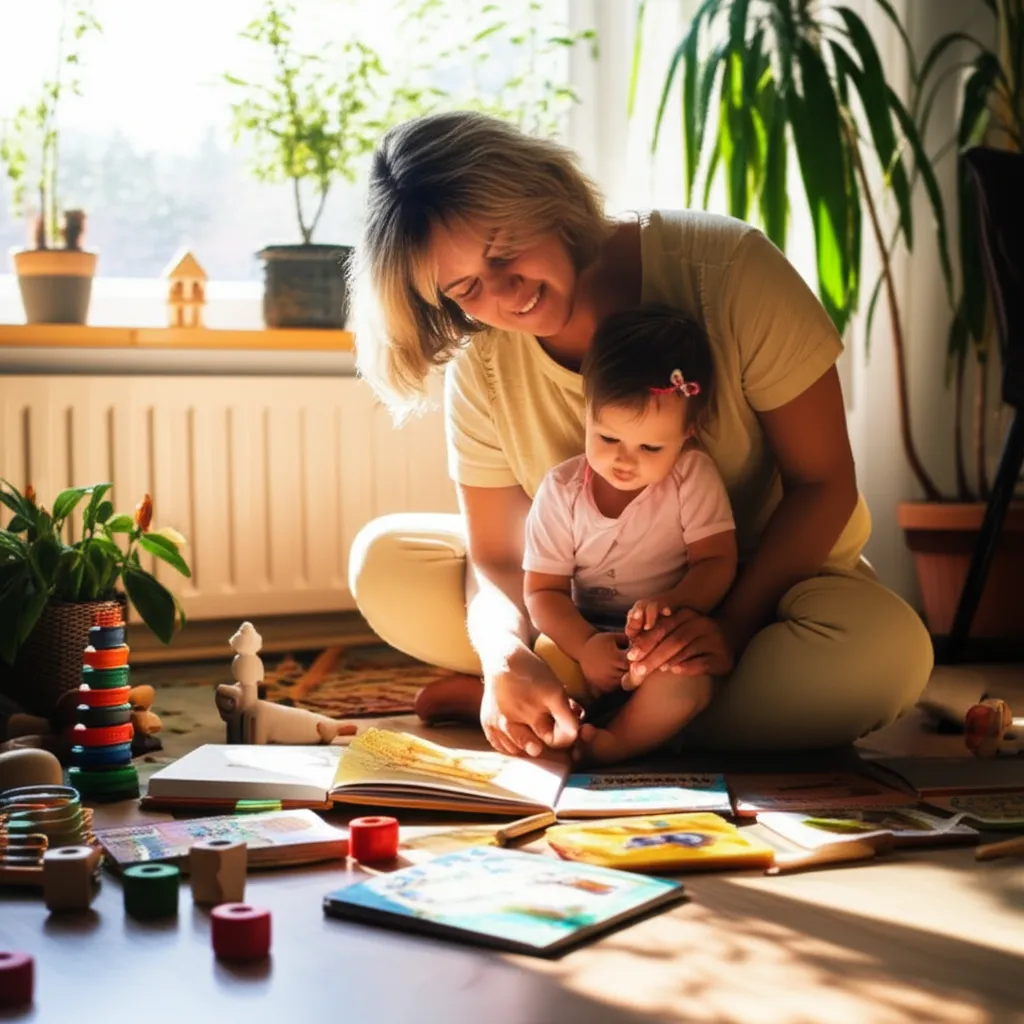
The Reggio Emilia approach emerged from the ruins of postwar Italy, where parents in the Reggio Emilia region of northern Italy came together to build schools for their children from the rubble of bombed buildings. Under the pedagogical leadership of Loris Malaguzzi, these schools developed an approach to early childhood education that has since been recognized as one of the best in the world. The approach defies easy categorization because it is not a curriculum or a set of techniques but a way of thinking about children and learning. At its heart is an image of the child as competent, strong, and rich in potential — not an empty vessel to be filled but an active researcher constructing understanding through interaction with people, materials, and ideas. The environment is considered the "third teacher" (after parents and educators), and Reggio-inspired spaces are deliberately beautiful, filled with natural light, open-ended materials, and provocations — carefully designed invitations to explore, question, and create. Documentation — the practice of photographing, recording, and displaying children's work and words — makes learning visible and serves as both assessment and curriculum planning tool. When teachers study documentation, they discover what children are thinking and wondering, which guides the next steps in an emergent curriculum that follows children's genuine questions rather than a predetermined scope and sequence.
Core Principles
- The child is a competent, capable researcher and communicator
- The environment serves as the third teacher, designed to provoke inquiry
- Documentation of learning makes thinking visible and drives curriculum
- Progettazione (emergent curriculum) follows children's genuine questions
- The hundred languages of children honor diverse forms of expression
- Collaboration between children, families, and educators is essential
Strengths
Develops creative confidence and sophisticated visual-spatial intelligence
Honors individual learning styles through multiple modes of expression
Builds deep inquiry skills and comfort with open-ended investigation
Creates visually stunning, inspiring learning environments
Develops collaborative skills and democratic participation
Best For
- Creative, curious children who learn through exploration and expression
- Families who value arts integration and child-led inquiry
- Visual and kinesthetic learners who need multiple ways to show understanding
- Parents comfortable with emergent rather than predetermined curriculum
Getting Started
What a Typical Day Looks Like
Strengths and Limitations
Frequently Asked Questions
Is Reggio Emilia secular or religious?
Reggio Emilia is entirely secular. The approach emerged from a community-based, politically progressive movement in postwar Italy and contains no religious content or philosophy. Its emphasis on democratic participation, social constructivism, and the image of the competent child is grounded in educational theory rather than spiritual tradition. Families of all religious backgrounds use Reggio-inspired approaches comfortably.
How much does Reggio Emilia cost?
Reggio-inspired preschool tuition ranges from $8,000 to $25,000 per year, as authentic programs require extensive materials, trained teachers, and an atelierista. For homeschoolers, costs can be minimal: natural and recycled materials (clay, cardboard, wire, fabric scraps, stones, shells) are inexpensive or free. The main investment is in quality art supplies (good watercolors, real clay, high-quality paper), a light table (can be DIY for under $30), and documentation tools (a camera and a notebook). Annual costs for a home Reggio approach typically run $100 to $400.
Can I combine Reggio Emilia with other approaches?
Reggio Emilia combines beautifully with other approaches, and most families who use it at home do blend it with structured instruction in literacy and math. Reggio's project-based, arts-integrated inquiry pairs well with Montessori practical life and sensorial materials, Charlotte Mason nature study and living books, or classical education's rich content. Use Reggio principles for science, social studies, and arts, and add systematic phonics, math curriculum, and structured reading from another approach. The combination gives children both creative freedom and foundational skills.
Does Reggio Emilia work for kids with ADHD or learning differences?
The open-ended, multi-sensory, movement-friendly nature of Reggio-inspired environments can be excellent for children with ADHD and learning differences. The hundred languages philosophy means that a child who struggles with writing can express understanding through drawing, building, dramatic play, or sculpture. The project-based format allows children to pursue interests at their own pace. However, the lack of explicit structure can be challenging for children who need clear routines and defined expectations. Many families find that adding a structured daily schedule and explicit skill instruction alongside Reggio-inspired project time provides the best of both worlds.
Is Reggio Emilia rigorous enough for college prep?
As originally designed for early childhood (birth through six), Reggio Emilia is not a college prep approach — it is a foundation for thinking, creating, and inquiring. For elementary and beyond, families typically blend Reggio's inquiry and documentation practices with more structured academic approaches. The skills Reggio develops — creative problem-solving, collaboration, self-expression, comfort with ambiguity — are increasingly valued by colleges and employers, but they need to be paired with strong literacy, numeracy, and content knowledge for academic preparation.
What age should I start Reggio Emilia?
Reggio Emilia was designed for children from birth through age six, and the infant-toddler program is where its principles are most naturally expressed. Starting from birth with an emphasis on a beautiful, responsive environment, open-ended materials, and documentation of the child's exploration is ideal. The approach is most commonly adopted during the preschool years (three to six), where the project-based, atelier-centered model is fully developed. Adapting Reggio principles for older children is possible and rewarding but requires supplementation with structured academic instruction that the original approach does not provide.
Explore Reggio Emilia by Age
See what Reggio Emilia education looks like at every stage of development.