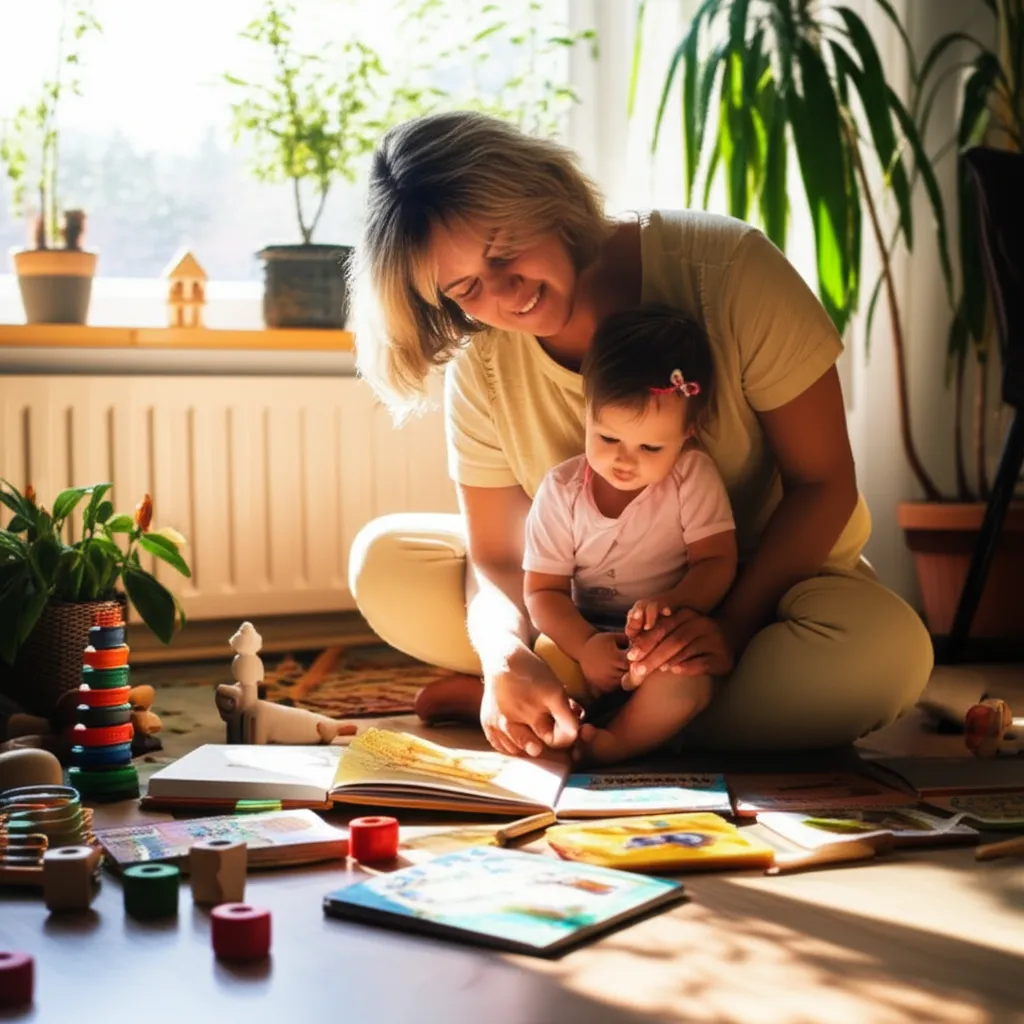
Educational Systems
22 philosophies of education — each with its own view of how children learn best. No single right answer.
22 entries to exploreMontessori
Montessori education follows the child's natural developmental impulses, providing a carefully prepared environment where children choose their own work and learn at their own pace. The method is built on the observation that children pass through sensitive periods for language, order, movement, and sensory refinement, and that education is most effective when it aligns with these windows of intense receptivity.
READ MOREWaldorf/Steiner
Waldorf education nurtures the whole child through a developmental approach that honors the unfolding of thinking, feeling, and willing in distinct stages. Academics are introduced slowly and artistically, with early childhood focused on imaginative play and imitation, middle childhood on artistic expression and feeling, and adolescence on critical thinking and intellectual engagement. Beauty, rhythm, and reverence permeate every aspect of the curriculum.
READ MORECharlotte Mason
Charlotte Mason viewed children as born persons deserving a feast of living ideas rather than dry facts served through textbooks. Her method uses living books, narration, nature study, and short focused lessons to cultivate a love of learning, keen observation, and strong character. The approach respects the child's intelligence while emphasizing habit formation as the foundation for both academic and moral development.
READ MOREClassical (Trivium)
Classical education structures learning around the three stages of the Trivium: Grammar (knowledge acquisition), Logic (analytical reasoning), and Rhetoric (articulate expression). Students move through rich content in history, literature, science, and mathematics while developing the tools of learning that enable them to master any subject independently. The goal is not just information transfer but the formation of wise, articulate, virtuous thinkers.
READ MOREReggio Emilia
The Reggio Emilia approach views children as strong, capable, and rich in potential. Education emerges from respectful collaboration between children, teachers, and the environment, which is considered the 'third teacher.' Learning is made visible through documentation, and children express their understanding through what Malaguzzi called the 'hundred languages' of childhood: drawing, sculpture, dramatic play, writing, music, and more.
READ MOREUnschooling
Unschooling trusts that children are natural learners who will acquire the skills and knowledge they need when they are motivated by genuine interest and supported by a rich environment. Rather than following a predetermined curriculum, unschooling families facilitate learning through real-life experiences, conversations, resources, and the child's own questions. The philosophy holds that imposed learning creates resistance, while self-directed learning creates engagement and deep understanding.
READ MOREForest School/Nature-Based
Forest School education immerses children in natural environments as the primary learning landscape. Through regular, sustained outdoor experiences in woodlands and green spaces, children develop resilience, confidence, and deep ecological awareness. The approach recognizes that risk, weather, and the unpredictability of nature are features rather than bugs, developing adaptability and problem-solving that controlled indoor environments cannot replicate.
READ MORETraditional/Textbook
Traditional education follows a structured, sequential curriculum delivered primarily through textbooks, workbooks, and direct instruction. Content is organized by grade level and subject, with clear learning objectives, regular assessment, and systematic skill progression. While sometimes criticized for rigidity, this approach provides clarity, accountability, and a straightforward path through academic content that many families find reassuring and effective.
READ MOREUnit Study
Unit study integrates multiple subjects around a single topic or theme, creating connections that mirror how knowledge works in the real world. When studying ancient Egypt, for example, students simultaneously learn history, geography, art, math (pyramid geometry), science (mummification chemistry), and literature. This approach leverages children's natural tendency to think holistically rather than in artificial subject compartments.
READ MORELiterature-Based
Literature-based education uses high-quality children's literature as the primary vehicle for learning across all subjects. Rather than reading about the American Revolution in a textbook, students read Johnny Tremain or My Brother Sam Is Dead and absorb history through narrative, empathy, and human experience. This approach recognizes that stories are humanity's oldest and most effective teaching technology, creating emotional connections that make information meaningful and memorable.
READ MOREEclectic
Eclectic homeschooling intentionally draws from multiple educational philosophies, selecting methods and materials based on each child's unique needs, learning style, and the family's values. Rather than committing wholesale to one approach, eclectic families might use Montessori math manipulatives, Charlotte Mason nature study, classical history cycles, and unschooling principles for afternoon time. The approach requires more planning but produces a truly personalized education.
READ MOREProject-Based Learning
Project-Based Learning organizes education around authentic, complex projects that require students to investigate and respond to real-world problems. Students develop content knowledge and skills through sustained inquiry, often producing work for an authentic audience beyond the teacher. PBL mirrors how adults actually use knowledge in professional settings: integrating skills, collaborating with others, managing timelines, and creating tangible products.
READ MOREThomas Jefferson Education (TJEd)
Thomas Jefferson Education proposes that great leaders are educated through classics, mentors, and a structured developmental sequence of phases. The approach argues that children progress through Core (relationship building), Love of Learning (exploration), Scholar (serious study), and Depth (specialization) phases. Rather than conveying information, the mentor inspires the student, and the classics do the heavy lifting of education through exposure to the greatest thinkers in human history.
READ MOREDelight-Directed
Delight-directed learning builds curriculum around the child's genuine interests and passions, trusting that deep engagement with any subject develops transferable skills. When a child who loves dinosaurs studies paleontology, they simultaneously develop reading comprehension, scientific methodology, geological understanding, mathematical reasoning (dating fossils), and writing skills. The approach maintains that passion is the most powerful engine for learning, and that skills acquired through delight transfer readily to other domains.
READ MOREMoore Method (Better Late Than Early)
The Moore Method argues that formal academics should be delayed until the child demonstrates readiness, typically between ages eight and twelve. Drawing on developmental research, the Moores demonstrated that children who begin academics later often surpass their early-starting peers within one to two years because their neurological maturity allows faster, more efficient learning. The approach emphasizes warm family relationships, practical work, and community service as the foundations of education.
READ MOREEnki Education
Enki Education integrates Waldorf, Montessori, and world wisdom traditions into a multicultural, developmentally appropriate curriculum. The approach grounds learning in direct experience, song, movement, and story, then gradually introduces abstract thinking. Unique among educational methods, Enki explicitly addresses the child's inner life through exposure to diverse cultural traditions, mindfulness practices, and a deep respect for the spiritual dimension of childhood development.
READ MOREAmbleside Online
Ambleside Online is a free, complete Charlotte Mason curriculum that faithfully implements Mason's educational philosophy using carefully selected living books and structured term schedules. The program provides week-by-week reading assignments, nature study guidance, art and music appreciation sequences, and exam questions. It represents the most thorough and historically faithful implementation of Charlotte Mason's methods available, created by a dedicated community of Mason scholars and practitioners.
READ MOREIgnatian/Jesuit
Ignatian education forms the whole person for service to others through academic excellence, reflective practice, and justice-oriented action. The Jesuit tradition, one of the oldest and most global educational networks, uses a pedagogical framework of experience, reflection, and action to develop students who are intellectually competent, open to growth, religious or spiritually grounded, loving, and committed to justice. Education is never merely for personal advancement but always for the greater good.
READ MOREDemocratic/Sudbury
Democratic education entrusts students with full responsibility for their own learning and equal participation in school governance. At Sudbury schools, there are no required classes, no grades, and no curriculum. Students of all ages mix freely, pursuing their interests with access to adults who serve as resources rather than directors. The School Meeting, where every member has one vote regardless of age, governs all aspects of school life. The philosophy maintains that freedom and responsibility, not external structure, produce capable, self-directed adults.
READ MOREGameschooling
Gameschooling uses board games, card games, tabletop RPGs, and strategic games as primary educational tools rather than mere supplements. Games naturally teach mathematical thinking, strategic planning, reading, social skills, economic principles, and content knowledge in history, science, and geography. The approach leverages the fact that games create a state of engaged, voluntary challenge where failure is low-stakes, iteration is natural, and learning is genuinely fun.
READ MORERoadschooling/Worldschooling
Roadschooling and worldschooling use travel as the primary educational experience, whether across the country in an RV or around the world. The approach recognizes that direct experience of diverse cultures, ecosystems, historical sites, and human communities creates understanding that no textbook can replicate. Geography becomes real when you cross mountain ranges, history comes alive at battlefields and monuments, and cultural competence develops through actual relationship with people who are different from you.
READ MOREVirtual/Online Academy
Virtual and online academies provide structured, accredited education through digital platforms with live or asynchronous instruction. These programs range from fully self-paced to real-time virtual classrooms with certified teachers, and they offer access to specialized courses, AP classes, and dual enrollment that may not be available locally. The approach leverages technology to personalize pacing, provide immediate feedback, and connect students with expert instructors regardless of geographic location.
READ MORENot sure which philosophy fits your family?
Answer a few questions about your child's age, your values, and how your family lives. We'll help you narrow it down.
Take the quiz