What Montessori Gets Right

Maria Montessori was an Italian physician, not a teacher. She developed her method by observing children in psychiatric institutions and urban slums, not in privileged nursery schools. This matters because the principles she arrived at weren’t aspirational. They were descriptive. She watched what children actually did when adults stopped interfering, and she wrote down what she saw.
More than a century later, developmental science keeps validating what she observed. Not all of it, and not without qualification. But a handful of her core principles hold up so consistently across research and across educational traditions that they’re worth understanding even if you never buy a single Montessori material.
The prepared environment
Montessori’s most practical insight has nothing to do with curriculum. It’s about the space.
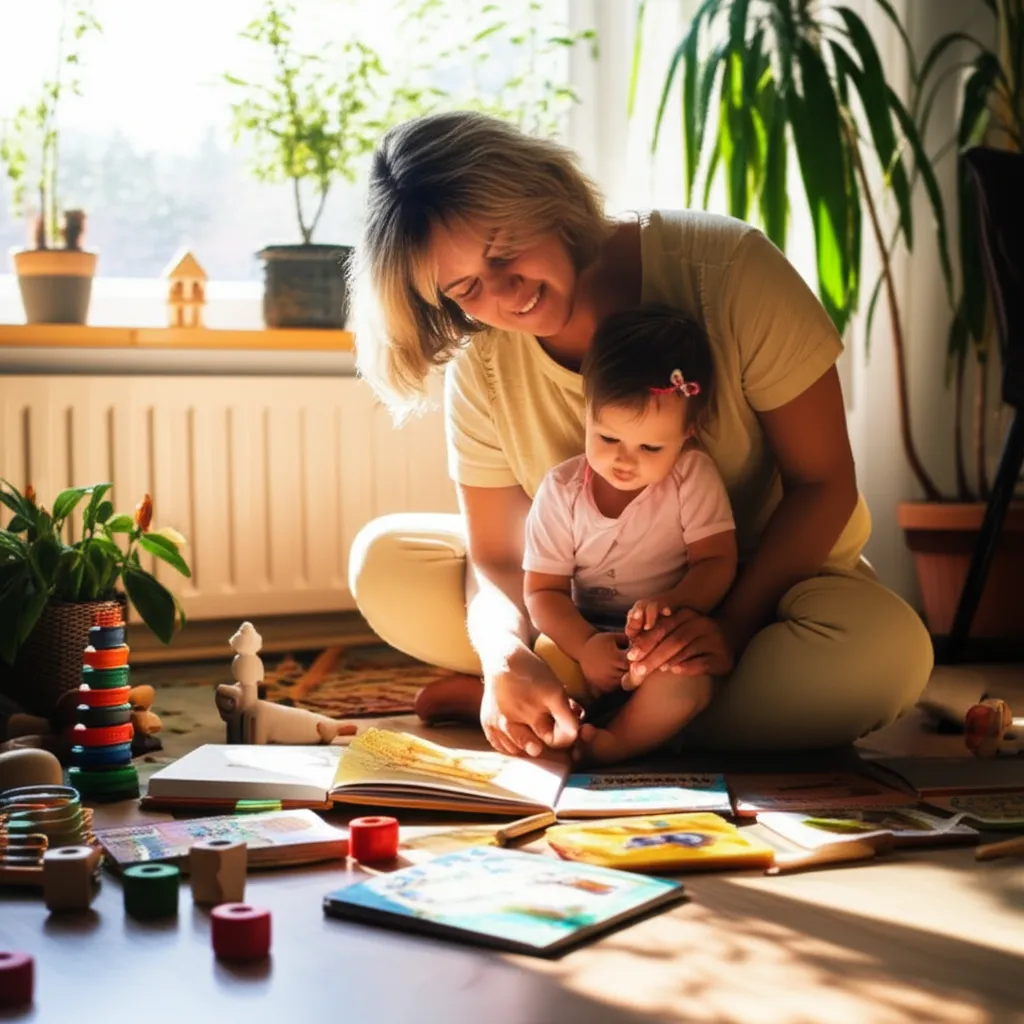
A prepared environment means a space designed so the child can function independently. Low shelves they can reach. Child-sized tools that actually work. Materials organized so they can find what they need, use it, and put it back. The idea isn’t aesthetic (though Montessori Instagram would have you believe otherwise). It’s functional. When a child can operate in their environment without constantly asking for help, something shifts. They start making choices. They stop waiting for permission. They develop agency, not because someone taught them a lesson about independence, but because the architecture made independence possible.
This works whether you’re doing Montessori at home or running a Charlotte Mason nature study or an unschooling household. The principle is universal: the physical environment either supports a child’s agency or quietly undermines it. Every time a child has to ask you to reach something, open something, or find something, that’s a small interruption to their initiative. Multiply that by a hundred times a day and you start to see why some kids seem passive and others seem driven. A lot of it is just architecture.
Most adults don’t notice this until they audit their own homes. The snack shelf a child can’t reach. Art supplies behind a childproof latch they can’t open. Favorite toys stored where a chair is required. A child who asks constantly might be asking because the environment requires asking.
Following the child
This phrase gets repeated so often in Montessori circles that it’s lost its meaning. So let me be specific about what it actually looks like.
Following the child means paying attention to what a child is drawn to and building from there, not dragging them through a predetermined sequence because a scope and sequence says they should be doing X at age Y. It means if your three-to-six-year-old is obsessed with bugs, you don’t redirect them to letter tracing. You get field guides, magnifying glasses, and drawing supplies. The letters will come. Probably through labeling the parts of a beetle.
This is counterintuitive for most parents because we’ve been trained to think of education as a checklist. Reading by five. Multiplication by eight. SAT prep by sixteen. Montessori challenges this by asking: what if you let the child’s interest lead and trusted that the skills would follow?
The research backs this up more than most people realize. Self-directed learning, when a child is pursuing something they genuinely care about, activates different neural pathways than compliance-based learning. Retention is higher. Transfer is better. The motivation is intrinsic rather than dependent on external reward. We all learn better when we care about what we’re learning. We just forget this when it comes to children, because somewhere along the way we decided that what they care about doesn’t count.
You don’t have to be a Montessori family to follow your child. You just have to be willing to hold your plan loosely.
Sensitive periods
Sensitive periods are windows of time when a child is neurologically primed to acquire a specific skill or type of knowledge. Language acquisition in the first six years. Order and routine between one and three. Sensory refinement in the early years. Fine motor control. Social awareness. Developmental science has largely validated this concept under different names (critical periods, optimal windows), and it cuts across every tradition.
The insight isn’t just that these windows exist. Most parents intuitively know that. It’s that learning during a sensitive period is qualitatively different from learning outside one. A child in a sensitive period for language absorbs it effortlessly, almost unconsciously. The same person trying to learn a second language at thirty will need flashcards and grammar drills.
What this means practically: when a toddler insists on putting their shoes on by themselves even though it takes ten minutes and you’re late, that’s not defiance. That’s a sensitive period for independence and order. When a four-year-old asks “why” four hundred times a day, that’s a sensitive period for language and causal reasoning. When an infant stares at your mouth while you talk, that’s a sensitive period for language acquisition.
Working with sensitive periods instead of against them is the difference between pushing a boulder uphill and rolling it downhill. Waldorf’s delay of formal reading until age seven, for instance, is essentially a sensitive-period argument. They believe the sensitive period for imaginative play shouldn’t be interrupted by academic demands. You can agree or disagree with their timeline, but the underlying principle is Montessori’s.
Intrinsic motivation
This is where Montessori gets the most pushback, and where the research is clearest.
Montessori classrooms don’t use grades, gold stars, sticker charts, or praise as primary motivators. The theory is simple: when you reward a child for doing something, you teach them that the activity itself isn’t worth doing. The reward becomes the point. Remove the reward, and the behavior stops.
Decades of motivation research (Deci and Ryan’s self-determination theory, Alfie Kohn’s work on rewards, Carol Dweck’s research on praise) have largely confirmed this. External rewards undermine intrinsic motivation. Children who are praised for being “smart” take fewer risks. Children who receive sticker charts for reading read less once the chart is gone.
This doesn’t mean you never acknowledge a child. It means the goal is a child who reads because reading is interesting, not because they get a prize for it. A child who helps because helping feels good, not because they’ll earn screen time.
It’s the hardest principle to implement. We live in a culture that runs on external motivation, from grades to salaries to social media likes, and most of us were raised inside that system. The pattern runs deep. But watching a child deeply absorbed in something they chose, for no reason other than the thing itself, you can see what Montessori was trying to protect. That’s what agency looks like before we teach it out of them.
What Montessori is really about
None of these ideas require buying Montessori materials or joining a Montessori community or calling yourself a Montessori family. They’re not even really “Montessori ideas.” They’re observations about how children work that an Italian physician articulated in 1907 and that developmental science has been quietly validating ever since.
Prepare the environment. Follow the child’s lead. Respect the developmental windows. Protect intrinsic motivation.
That’s the whole framework, and it works underneath any philosophy you choose. The categories are for the adults. The learning is for the child.
Not sure which approach fits your family?
Take our free quiz and get personalized recommendations based on your child and your values.
Take the Quiz