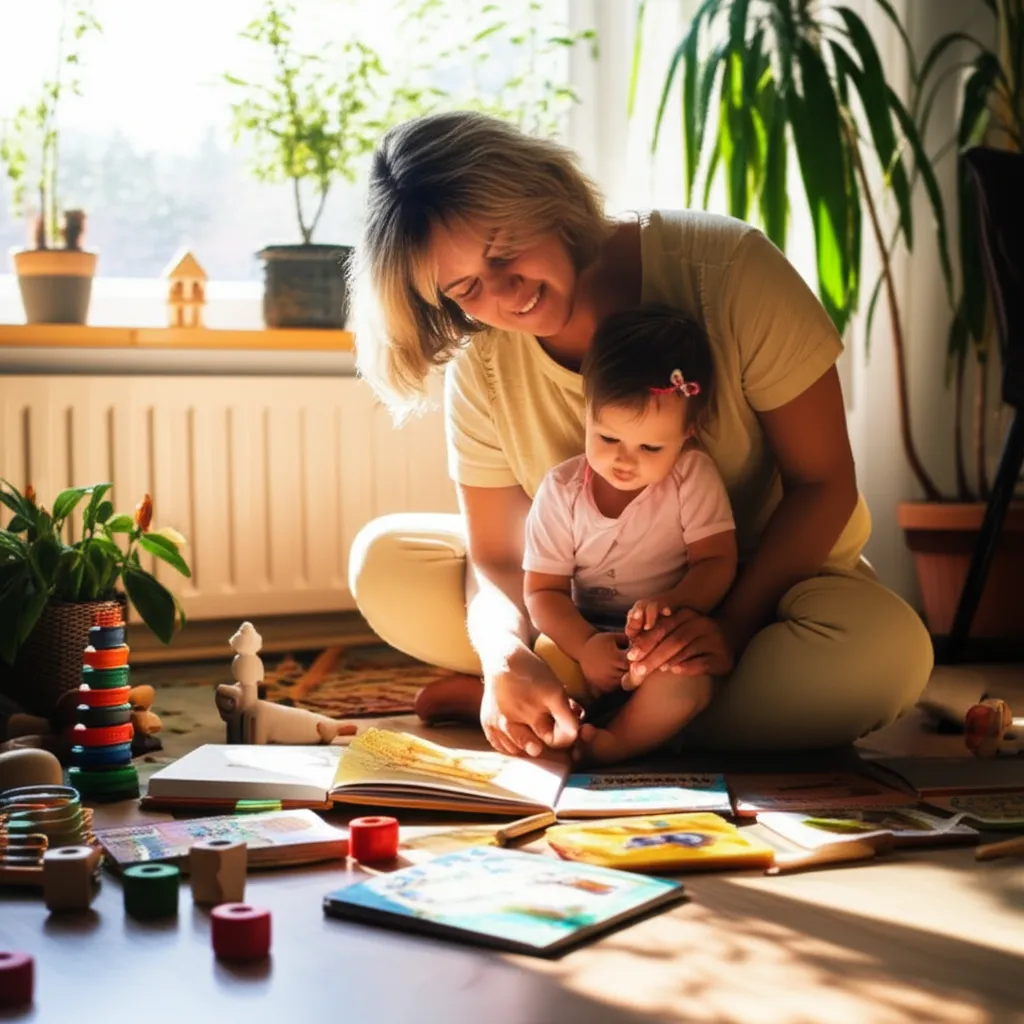
Ignatian Education for Two Year Old
Two-year-olds are astonishing. They're speaking in sentences, engaging in complex pretend play, forming real friendships, and beginning to understand concepts like fairness and kindness. Ignatian education finds genuine footing at this age because the child can now meaningfully participate in all five steps of the Pedagogical Paradigm: they have Context (their growing understanding of the world), they seek Experience, they're beginning to Reflect (in their own way), they take Action based on what they've learned, and they can even begin to Evaluate ("I did it!" or "That didn't work"). The Jesuit emphasis on educating the whole person — intellect, emotion, body, spirit, social life — maps beautifully onto two-year-old development, which is advancing on all these fronts simultaneously. A two-year-old doesn't separate learning from living, and neither does Ignatian education. This is also when "being for others" starts to look real. Two-year-olds can comfort a sad friend, share a toy (sometimes), help with household tasks, and care for plants or pets. These aren't just cute behaviors — in Ignatian terms, they're the earliest expressions of a life oriented toward service.
Key Ignatian principles at this age
The whole child — designing days that nurture body, mind, heart, and spirit, not just cognitive development
Active participation in the Pedagogical Paradigm — creating experiences, pausing for simple reflection, encouraging action
Service as natural habit — involving your two-year-old in meaningful contributions to family and community life
Accompaniment — being present alongside your child's learning rather than directing from above
Imaginative play as spiritual practice — pretend play develops the same inner capacities Ignatius used in the Spiritual Exercises (imagination, empathy, perspective-taking)
A typical Ignatian day
Ignatian activities for Two Year Old
Create a simple morning routine chart (pictures, not words) that your two-year-old follows independently — this builds the Ignatian habit of structured intentionality
Practice "I notice" statements during play: 'I notice you're building something tall. Tell me about it.' This encourages reflection without evaluation
Assign a daily "helping job" that's genuinely useful: feeding a pet, putting napkins on the table, watering a plant
Read stories that feature characters helping others, being brave, or making choices — discuss what the characters did and how others felt
Provide open-ended materials (blocks, art supplies, sand, water) and let your child direct the activity entirely
Practice a bedtime examen together: 'What made you happy today? What made you sad? What do you want to do tomorrow?'
Parent guidance
Why Ignatian works at this age
- The pedagogical paradigm finally has a real participant — your child can engage with experience, reflection, and action
- Service learning becomes concrete and meaningful at this age
- The emphasis on imaginative play validates what two-year-olds naturally want to do
- The examen, simplified for bedtime, is a genuine spiritual and emotional practice for young children
Limitations to consider
- Two-year-olds' emotional storms can make daily Ignatian practices feel impossible on hard days
- The lack of formal Ignatian early childhood programs means parents are still largely on their own
- Sharing and turn-taking — central to community life — are genuinely difficult at this age, and the approach offers philosophy more than strategy
- If your family isn't religious, some of the language and concepts may need significant adaptation
Frequently asked questions
Should my two-year-old be in a preschool program?
Ignatian education doesn't prescribe a specific setting for two-year-olds. A Jesuit-affiliated preschool (if available) would be ideal, but a quality program of any philosophy — or a thoughtful home environment — can embody Ignatian values. What matters more than the label is whether the environment respects your child's dignity, offers rich experiences, encourages developing empathy, and includes reflective adults who pay attention to each child as an individual.
My child loves pretend play. How does that connect to Ignatian education?
Beautifully. Ignatius's Spiritual Exercises rely heavily on imagination — practitioners are asked to place themselves in scenes, to imagine how people feel, to envision new possibilities. Your child's pretend play is developing these exact capacities. When they pretend to be a doctor caring for a sick teddy bear, they're practicing empathy, perspective-taking, and care for others — core Ignatian values. Don't undervalue this. In the Ignatian tradition, imagination is a pathway to wisdom.
How do I teach a two-year-old about 'being for others' when they're so naturally self-centered?
By making it concrete and not expecting too much. A two-year-old can water a plant, bring a tissue to someone who's sneezing, put a treat in the dog's bowl, or carry something for you. These small acts of contribution, done consistently, build the habit of noticing and responding to others' needs. Don't lecture about service — model it, include your child in it, and praise specific acts: 'You brought Daddy a tissue when he sneezed. That was kind.' The concept will deepen with time.
Is there a difference between Ignatian and Montessori at this age?
In practice, there's a lot of overlap for two-year-olds: respect for the child, prepared environment, practical life activities, following the child's interests, building independence. The main differences are in emphasis and framing. Montessori has a more developed material culture and specific classroom structures. Ignatian education puts more weight on reflection, service, community, and (if your family chooses) spiritual development. Many families successfully blend both approaches, using Montessori's practical framework with Ignatian's reflective and service-oriented spirit.