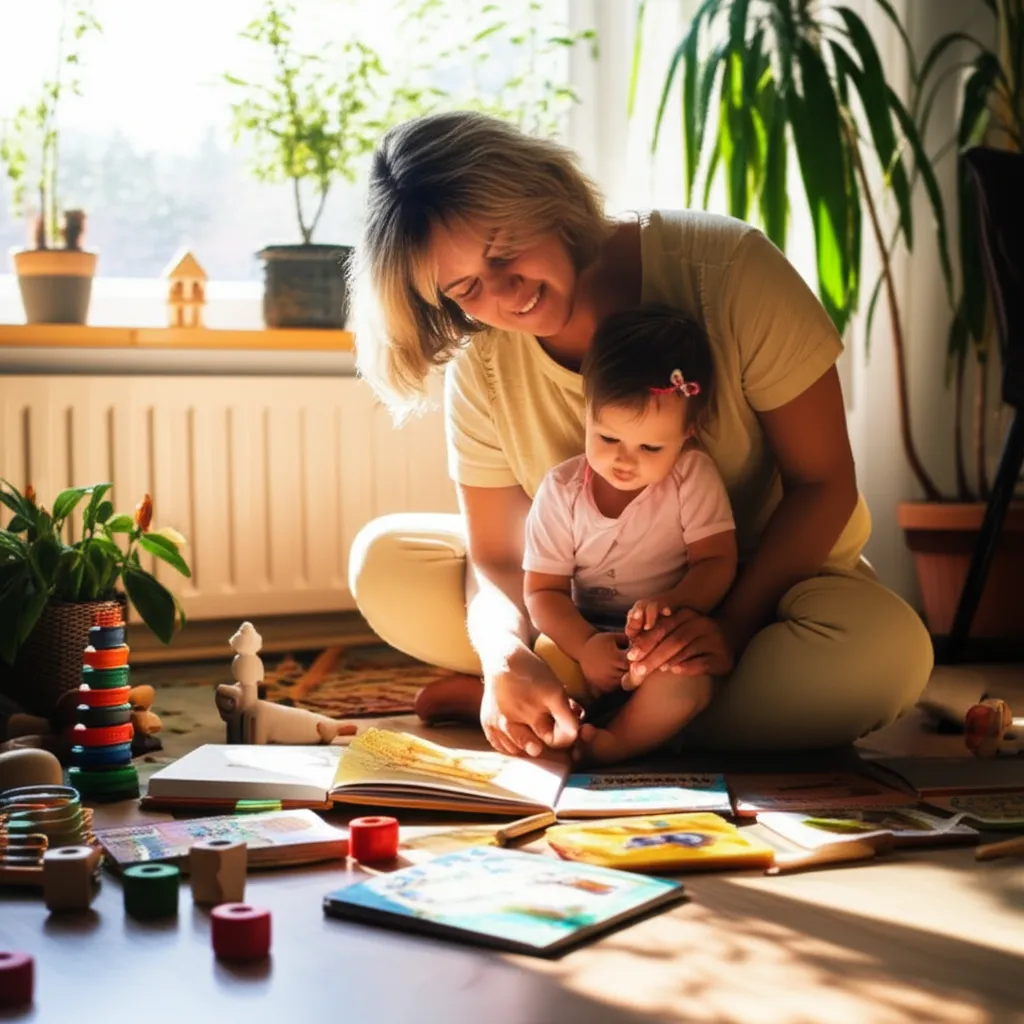
Gameschooling Education for Two Year Old
Two-year-olds live in a world where everything is a potential game — and gameschooling at this age means channeling that natural playfulness into slightly more structured experiences. This is the year of "me do it!" and that fierce independence is a gameschooling asset. A two-year-old wants agency, and games give them a framework for making choices that matter (even if the stakes are just which color apple to pick). Pretend play deepens significantly this year. Two-year-olds can sustain pretend scenarios for several minutes, assign roles ("You be the doctor"), and use objects symbolically (a banana becomes a telephone). This is the earliest form of role-playing games, and it's worth recognizing as such. When your two-year-old insists you're a dog and they're the owner, they're doing character creation, scene setting, and improvised dialogue — the bones of tabletop RPGs, decades before they'll touch a D20.
Key Gameschooling principles at this age
Honor the 'me do it' drive by choosing games that give real choices and independence
Pretend play IS role-playing — take it seriously and participate fully when invited
Simple counting games (1-5) become accessible as number awareness grows
Cooperative games continue to work better than competitive — but two-year-olds can handle very basic 'racing' concepts
Sensory play combined with game structure (dig in the sand to find hidden treasures) is peak engagement
A typical Gameschooling day
Gameschooling activities for Two Year Old
The Sneaky, Snacky Squirrel Game — spin, match the color, use squeezers to grab acorns; fine motor plus color matching
Freeze dance — play music, dance, freeze when it stops; impulse control game disguised as fun
Sensory treasure hunt — hide small toys in rice, beans, or sand; dig to find them all
Duplo challenges — 'Build something tall,' 'Make an animal,' 'Use only red blocks'; open-ended building with a prompt
Color scavenger hunt — give a color card and hunt the house for matching objects; categorization game with movement
Simple card slapping game — lay out 4-5 picture cards; name one, race to slap it; vocabulary plus speed plus fun
Parent guidance
Why Gameschooling works at this age
- Fierce independence ('me do it!') means they want to be active participants, not passive observers
- Pretend play is rich enough to sustain simple role-playing scenarios
- Color recognition and basic counting (1-5) open up new game mechanics
- Physical skills (running, jumping, climbing) allow for active, full-body games
Limitations to consider
- Emotional regulation is still developing — expect tears when games don't go their way
- True competitive understanding is absent; 'winning' doesn't mean what adults think it means
- Game sessions need to be short; pushing past 15 minutes usually backfires
- Following multi-step rules is still spotty — keep game mechanics to 2-3 steps maximum
Frequently asked questions
My two-year-old tantrums when a game doesn't go their way. How do I handle this?
This is completely normal and not a sign that gameschooling isn't working. At two, emotional regulation is a work in progress. When the spinner doesn't land on their color, they're genuinely upset — they don't have the cognitive tools to think 'it's just a game.' Validate the feeling ('You wanted purple! That's disappointing.'), offer a choice ('Should we spin again or play something else?'), and move on. Over time, these micro-moments of frustration-and-recovery build the emotional resilience that competitive gaming requires later.
Is it bad that we bend the rules of every game we play?
It's good. Strict rule-following at age two serves no developmental purpose and actively harms the child's relationship with games. Bend rules to keep the experience positive. Let them spin again, take extra turns, modify the objective. The point is engagement with game structures — not compliance. When they're developmentally ready for stricter rules (around 4-5), the transition will be smoother because they already love games.
What games work for two-year-olds playing with other two-year-olds?
Parallel play games work best — activities where children do the same thing side by side without needing to cooperate or compete. Sensory treasure hunts (separate bins), Duplo building (separate sets), and freeze dance (everyone dances independently) all work well. Avoid games that require turn-taking between children — two-year-olds taking turns with peers is a recipe for conflict. They can take turns with a patient adult; they're not ready to wait for another impulsive toddler.
How much screen-based gaming is appropriate?
The AAP suggests limited screen time at age 2, and gameschooling philosophy would agree — physical, social, manipulative play is doing more developmental work than screen-based games can. That said, short-session apps like Peekaboo Barn or Toca Kitchen are digital pretend play and can be fine in small doses. The key test: is the screen game doing something that a physical game can't? If not, choose physical. The tactile, social, three-dimensional experience of physical games is irreplaceable at this age.