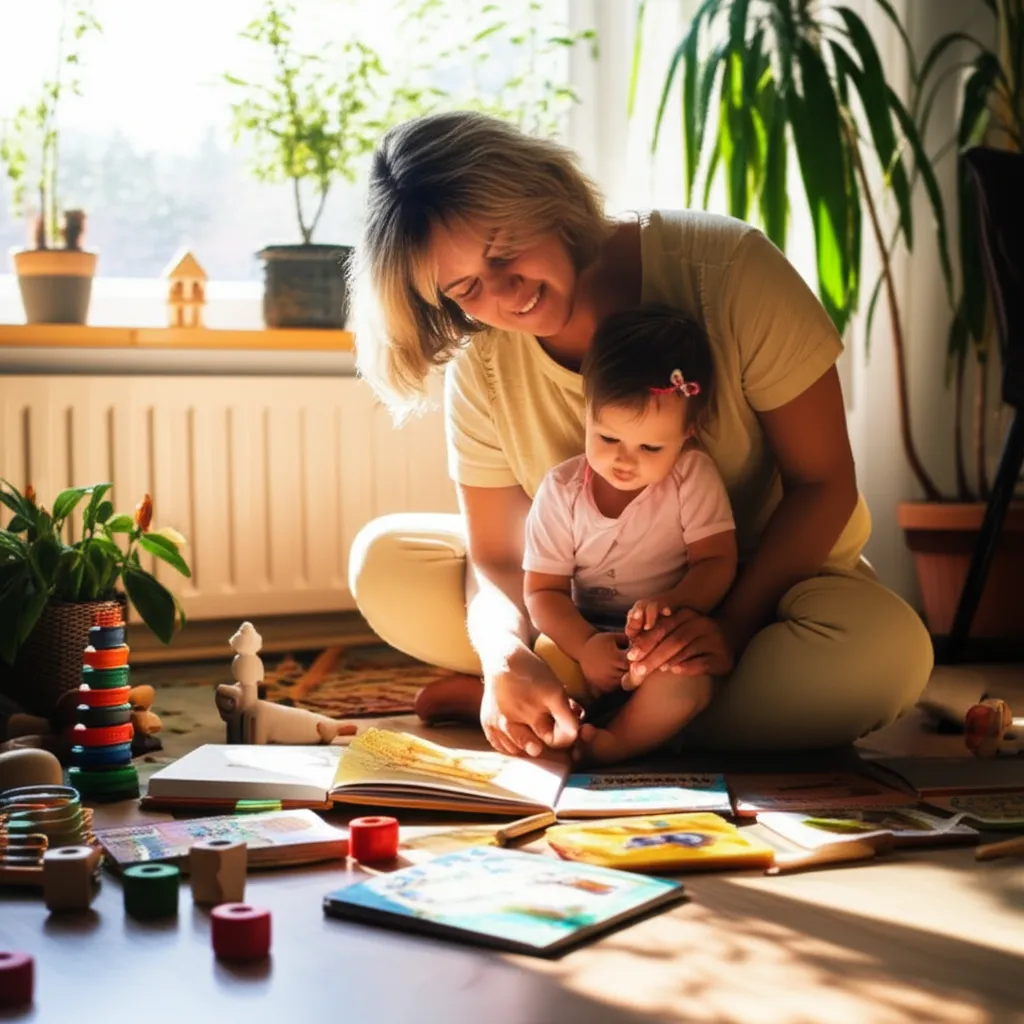
Democratic Education for Two Year Old
Two is the age most people dread — the so-called 'terrible twos.' Democratic education reframes it entirely: this is the year of magnificent self-assertion. Your child is developing a fierce will, strong preferences, and the language to express (some of) them. They're not giving you a hard time; they're having a hard time navigating their own emerging selfhood. Democratic education says the answer isn't more control — it's more respect. At Albany Free School, which accepts children from preschool age, two-year-olds are part of a mixed-age community where their intensity is accepted rather than pathologized. They're allowed to say no, to walk away from activities, and to choose how they spend their time. This doesn't mean chaos — it means an environment designed so that a two-year-old's normal behavior isn't constantly in conflict with the rules. This is also the year when imaginative play explodes. Your two-year-old is beginning to pretend, to create narratives, and to use objects symbolically. A stick becomes a sword, a box becomes a boat, a blanket becomes a cave. Democratic education treasures this kind of self-generated play because it represents pure self-directed learning — the child is creating their own curriculum from their own imagination, and no adult could design anything half as engaging.
Key Democratic principles at this age
Reframing 'defiance' as healthy self-assertion — the two-year-old is building the very autonomy that democratic education prizes
Providing extended blocks of uninterrupted free play where the child directs all activity
Using natural consequences instead of punishments: you throw the food, mealtime is over; you break the crayon, it's in two pieces now
Allowing imaginative play to unfold without adult narration, correction, or direction
Maintaining a physical environment where the child can do most things independently: low shelves, accessible supplies, child-height furniture
A typical Democratic day
Democratic activities for Two Year Old
Open-ended imaginative play with minimal props — boxes, fabric, sticks, and other materials that can become anything
Outdoor exploration in natural settings: mud, water, sand, hills, trees, and weather in all its forms
Art with real materials and no models to copy — the child creates what they want, and the product isn't the point
Participation in real household work: loading the washing machine, stirring batter, watering plants, setting the table
Physical play that involves risk assessment: climbing, jumping from low heights, balancing, running on uneven surfaces
Social time with children of different ages in unstructured settings where play emerges organically
Parent guidance
Why Democratic works at this age
- Two-year-olds in freedom-rich environments develop remarkable independence in self-care, play, and problem-solving
- The democratic reframe of 'terrible twos' behavior reduces parental frustration and preserves the parent-child relationship
- Unstructured imaginative play at this age builds creativity, emotional processing, and narrative thinking
- Children who practice real choice-making at two develop stronger executive function and decision-making skills
Limitations to consider
- Two-year-olds lack the emotional regulation to handle all the freedom they want — meltdowns are inevitable regardless of approach
- The child's language isn't yet sophisticated enough for genuine negotiation, so parents must still make many judgment calls about when to intervene
- Without structured programming, some two-year-olds may not get enough peer interaction, especially if they're the only or youngest child
- The approach requires a stay-at-home parent or a caregiver who shares the philosophy — it's hard to implement in conventional daycare
Frequently asked questions
Should my two-year-old be learning letters and numbers?
Not unless they're showing spontaneous interest. If they point at letters and ask what they are, tell them. If they count things for fun, count with them. But sitting a two-year-old down for alphabet lessons runs counter to democratic education's core principle: learning happens when the learner is ready and interested. Daniel Greenberg at Sudbury Valley documented that children who learned to read at four and children who learned at nine ended up equally proficient. Early academic instruction isn't an advantage — it's just early.
How do I handle tantrums democratically?
A tantrum is a child overwhelmed by emotions they can't yet regulate. It's not defiance or manipulation. Stay present and calm. Don't punish the tantrum (that teaches the child their emotions are unacceptable) and don't reward it with immediate concessions (that teaches them explosions get results). Simply be there: 'You're really upset. I'm here.' When it passes, reconnect. Over time, the child builds regulation skills because they experience emotions in the presence of a calm, accepting adult. This is the same approach democratic schools use with older students in emotional distress — presence, not punishment.
My child won't share. Is this a problem?
No. Two-year-olds are developmentally not ready for spontaneous sharing. They're still figuring out the concept of ownership. Forced sharing teaches children that their possessions can be taken away at any time by someone with more authority — exactly the kind of lesson democratic education rejects. Instead, allow your child to finish with a toy before someone else uses it. Say, 'You're using that right now. When you're done, Leo can have a turn.' This respects both children's autonomy and models patient negotiation.