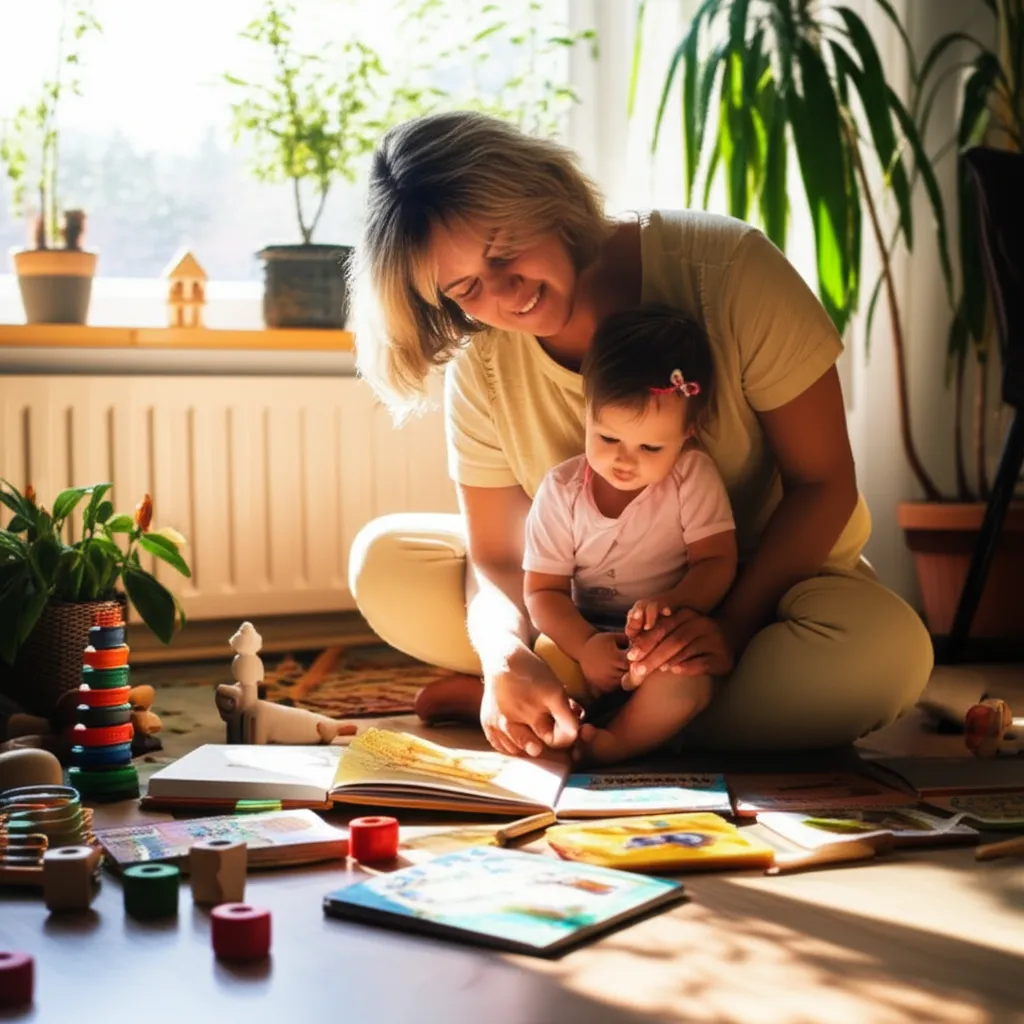
Delight-Directed Education for Two Year Old
Two-year-olds are delight-directed learning naturals. They wake up with interests, pursue them relentlessly, and resist anything that doesn't align with what they want to do. This can feel like defiance, but it's also the raw material for an entirely interest-driven education. A two-year-old who refuses to sit for circle time but will spend 45 minutes sorting pinecones by size is telling you something important about how they learn best. The imagination is now fully online. A two-year-old doesn't just play with a toy train — they narrate the journey, assign roles to the passengers, and create storylines that span the afternoon. This imaginative play is the child's first real self-directed learning project, and it incorporates everything they've been absorbing: vocabulary, social dynamics, spatial reasoning, narrative structure. Delight-directed learning means treating this play as the serious intellectual work it is. Language at two is rich enough for real conversations about what the child finds interesting. You can ask them questions and get meaningful answers. You can suggest an expansion and gauge their reaction. The feedback loop is tighter than it's ever been, and the parent who's been observing since infancy now has a detailed map of this child's learning preferences.
Key Delight-Directed principles at this age
Resistance to adult-directed activities isn't defiance — it's a clear signal about what the child does and doesn't find engaging
Imaginative play is the child's primary learning laboratory; protect it, expand it, and never trivialize it
Use conversation to understand interests at a deeper level — ask what they like about their favorite things
Begin creating simple learning environments: themed book bins, art stations, nature exploration kits
The child can now participate in choosing between activities, strengthening their sense of ownership over learning
A typical Delight-Directed day
Delight-Directed activities for Two Year Old
Interest-themed art — if they love animals, provide materials for animal collages, prints, and drawings (no templates; open-ended materials only)
Nature collection walks — bring a bag and let the child collect whatever interests them; sort and explore at home
Real-world connections — visit places where their interest lives: a bakery for food-obsessed kids, a pond for nature lovers
Storytelling expansion — listen to their pretend play narratives and ask genuine questions: 'Where is the train going?' 'What does the bear eat?'
Simple counting and grouping embedded in interests — 'How many red trucks do you have? How many blue?'
Cooking together — following the child's interest in food or mixing, with real measuring, pouring, and stirring
Parent guidance
Why Delight-Directed works at this age
- Sustained attention for preferred activities can be remarkably long — 30-45 minutes or more
- Rich language allows the child to express and discuss interests with real nuance
- Imaginative play creates a self-directed learning laboratory that runs all day
- Strong memory connects experiences across days, weeks, and even months
Limitations to consider
- Emotional volatility can make transitions between activities feel like a battle, even when moving between interests
- Limited fine motor control can frustrate a child whose imagination outpaces their hands
- Peer comparison pressure from other parents begins — 'Shouldn't they be learning to write their name?'
- The child's interests may be highly specialized, leaving parents wondering about 'gaps' in knowledge
Frequently asked questions
My two-year-old only wants to play with one type of toy. Should I force variety?
No. Deep focus on one area is exactly how delight-directed learning works. Your role is to expand within the interest, not away from it. A child fixated on cars can learn physics (ramps and speed), geography (where cars go), art (car drawings and prints), math (counting wheels, sorting by color), reading (car books), and social skills (taking turns with car play). The apparent narrowness contains multitudes.
Other kids my child's age are in preschool. Am I doing enough?
Two-year-old 'preschool' is primarily socialization and play — which your child is getting through their delight-driven explorations and any social activities you provide. There's no academic content in a typical two-year-old preschool that can't be covered better through interest-led learning at home. If your child needs more peer interaction, consider playgroups, park meetups, or co-ops rather than structured classrooms.
How do I know if my two-year-old is learning 'enough' without any formal assessment?
Watch their play become more elaborate over time. Are their block towers getting more sophisticated? Are their pretend scenarios including more characters and plot? Are they using new vocabulary they picked up from explorations? Are they asking harder questions? Growth in play complexity is the most reliable indicator of learning at this age. If you want a framework, look at developmental milestones — but measure them through play observations, not tests.
My child gets frustrated when they can't do something they're interested in. How do I handle that?
Frustration at the edge of ability is where the best learning happens, but only if the child has support. Don't solve the problem for them — instead, break it into smaller steps. 'The block keeps falling. What if you try a bigger one at the bottom?' Stay with them through the frustration without rescuing or dismissing. If they melt down, validate the feeling and offer to try again later. Children who learn to work through frustration with support become remarkably persistent learners.