Charlotte Mason Education for Two Year Old
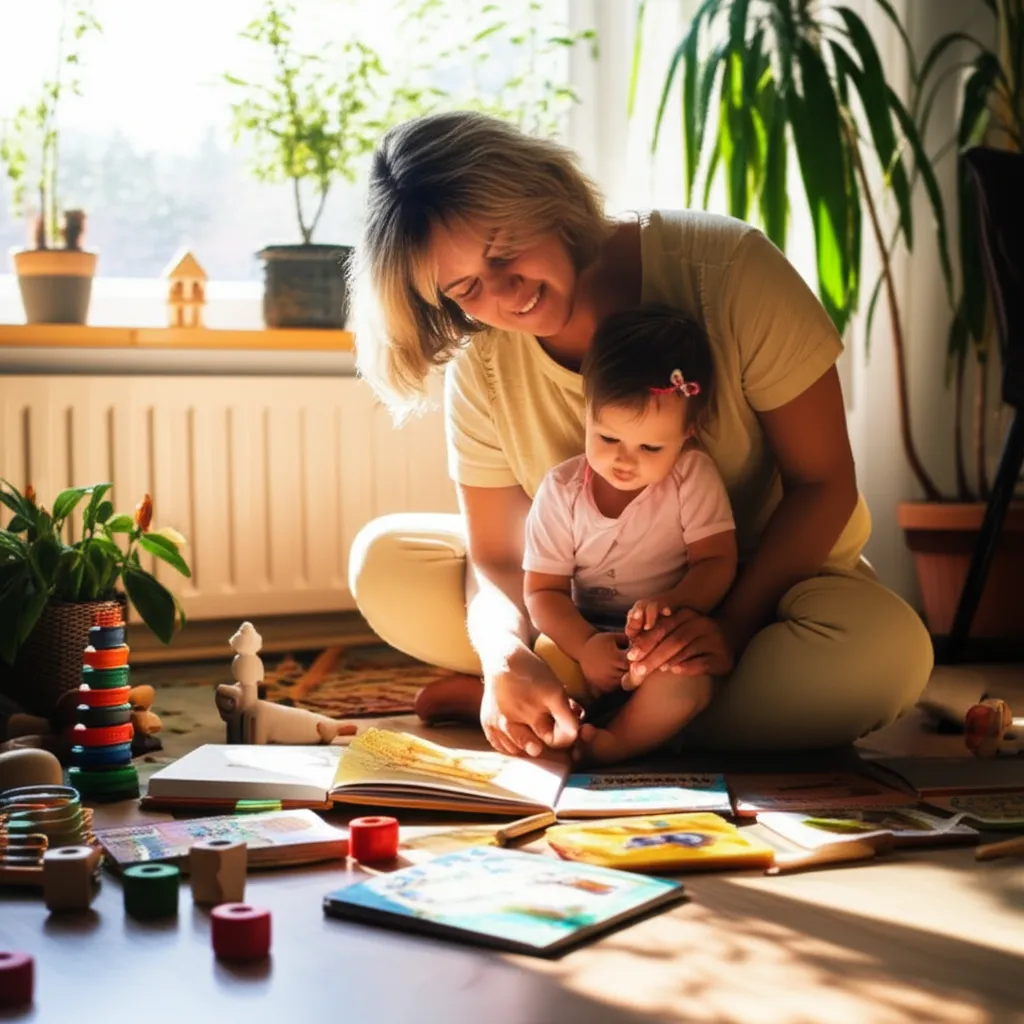
Two-year-olds live in a world of "mine," "no," and "again." They're asserting independence fiercely while still needing you completely. Charlotte Mason's approach at this age is a gift because it provides clear principles without rigid schedules—exactly what a two-year-old's unpredictable days require. This is the heart of what Mason called "outdoor life for children." A two-year-old should be spending the majority of their waking hours outside if at all possible. Not in a playground (though that's fine occasionally), but in nature: fields, woods, gardens, streams, parks. Mason believed that before age six, the natural world is the child's primary teacher, and at two, children are perfectly built to receive that teaching—they run, climb, dig, splash, collect, and wonder without any adult prompting. Read-alouds become a genuine shared activity now. Your two-year-old has preferences, makes predictions, and can retell fragments of familiar stories. This proto-narration is the beginning of the CM practice that will define their education for years to come.
Key Charlotte Mason principles at this age
Outdoor life is the primary occupation—aim for 4-6 hours outside daily
Stories and books become central to the child's inner life
Habit training targets attention, obedience, and kindness
No formal academics—not even 'pre-reading' or 'pre-math'
Free play with open-ended materials trumps any structured activity
A typical Charlotte Mason day
Charlotte Mason activities for Two Year Old
Extended outdoor exploration in varied natural settings
Daily read-alouds: fairy tales, nursery rhymes, simple poetry, nature books
Nature collections: rocks, leaves, shells, feathers sorted into an egg carton
Free art: large paper, thick crayons, finger painting, play dough
Singing: folk songs, hymns, nursery rhymes throughout the day
Practical life: pouring water, setting a placemat, feeding a pet
Parent guidance
Why Charlotte Mason works at this age
- The emphasis on outdoor time matches what two-year-olds need physically and emotionally
- No academic pressure removes the temptation to compare your child to others
- Read-aloud focus builds vocabulary, attention, and a love of story
- Habit training provides a positive framework for managing toddler behavior
- Free play develops imagination and problem-solving better than structured activities
Limitations to consider
- 4-6 hours outdoors daily is unrealistic for many families
- The 'no academics' stance conflicts with preschool culture where two-year-olds learn letters
- Habit training requires a level of parental consistency that's hard to maintain under stress
- No guidance for the big two-year-old challenges: potty training, biting, hitting, tantrums
Frequently asked questions
Should my two-year-old be learning the alphabet?
Mason would say no—and research backs her up. Two-year-olds who are exposed to rich language through read-alouds, conversation, and song develop the phonemic awareness and vocabulary that reading actually requires, without any letter instruction. If your child shows interest in letters naturally, name them. But don't drill. The child who hears 1,000 stories before age six reads more easily than the child who memorized the alphabet at two.
How do I handle the tantrums that come with habit training?
Acknowledge the emotion, hold the boundary. 'You're angry because you want more crackers. We're done with crackers now.' Don't give in because of the tantrum, and don't punish the tantrum either. Mason's approach is calm authority. Over time, the child learns that boundaries are firm and safe, and the tantrums decrease. This takes weeks, sometimes months. It works.
What if we live in an apartment with no yard?
Parks, botanical gardens, nature preserves, college campuses with green space, even a tree-lined sidewalk—all count. Indoor nature study can supplement: a windowsill herb garden, a fish tank, bringing nature in (branches in a vase, a bowl of pinecones). The principle is connection with the living world, not acreage. Urban CM families get creative, and it works.
Is it okay to use screens as a break sometimes?
Mason's principles push hard toward real experience over mediated experience. She'd say a child watching a nature documentary is not learning what a child in nature learns. That said, she also valued parental wellbeing. If 20 minutes of a calm, beautiful show means you can cook dinner without losing your mind, that's a trade-off you get to make. Just don't let it replace outdoor time and read-alouds.