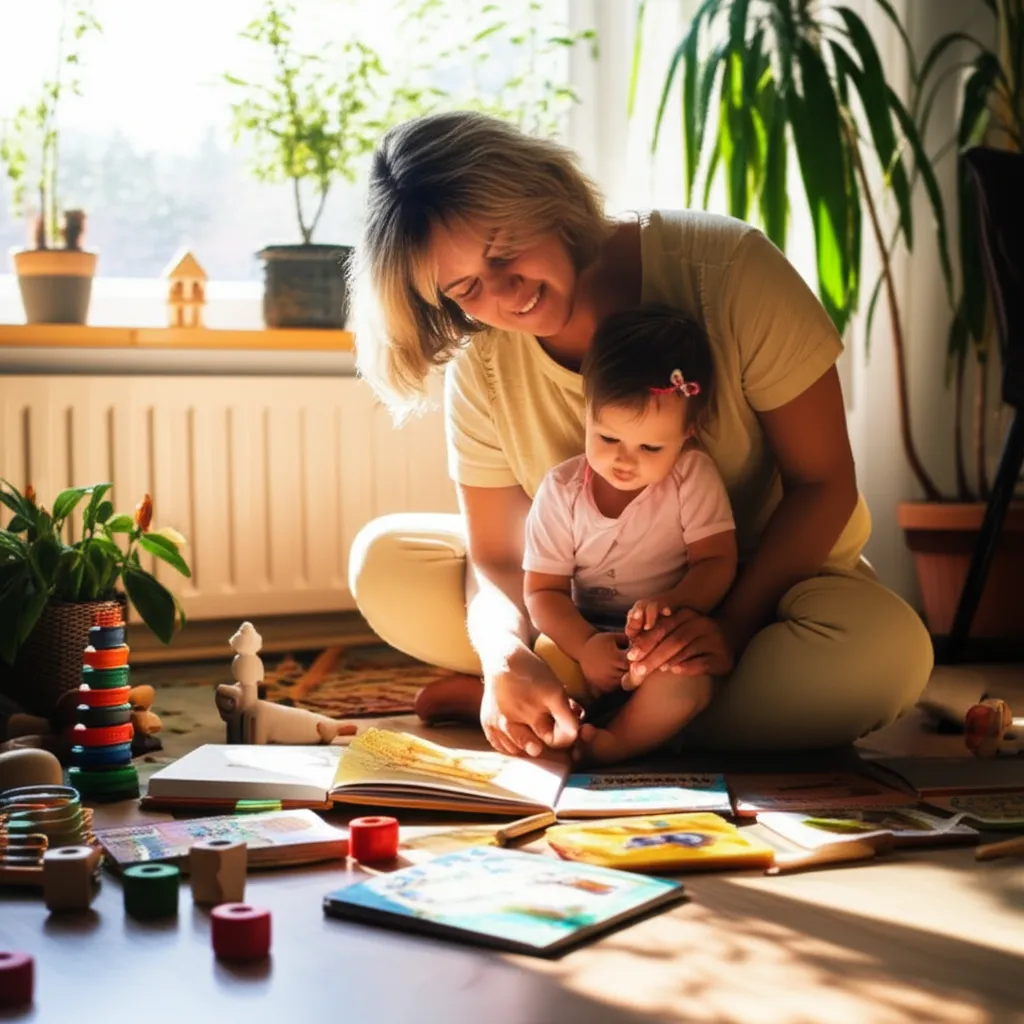
Unschooling Education for Toddler (12-18 months)
Welcome to toddlerhood, where unschooling gets its first real test. A 12-to-18-month-old is a demolition machine with an insatiable appetite for cause and effect. They throw food to see what happens. They unroll toilet paper. They open every drawer, climb every surface, and put everything in their mouth. Conventional parenting responds with "no" a hundred times a day. Unschooling asks: can we redesign the environment so we say yes instead? This is also when the preschool question starts looming. Friends are touring Montessori schools and getting on waitlists. You're letting your toddler dig in the garden and stack rocks. The gap between your approach and the mainstream becomes visible for the first time. The hardest part of unschooling a toddler isn't the philosophy. It's the stamina. These kids don't stop. They need constant supervision, enormous patience, and an adult who finds their relentless experimentation interesting rather than annoying. Some days you won't manage that. That's okay.
Key Unschooling principles at this age
Redesign the environment rather than constantly restricting the child
Tantrums are communication, not manipulation; a toddler's prefrontal cortex is years from maturity
Let them do real things: carry (unbreakable) dishes, pour water, wipe surfaces
Language explodes through immersion in real conversation, not through instruction
Resist the preschool pressure unless the child genuinely needs more social contact than you can provide
A typical Unschooling day
Unschooling activities for Toddler (12-18 months)
Pouring water between containers (outside or in the bathtub to contain the mess)
Helping with real household tasks: wiping tables, putting laundry in the machine, sweeping with a small broom
Playing with playdough, mud, sand, or other sensory materials
Walking outside on varied terrain and stopping to examine everything
Climbing on age-appropriate structures (couch cushions on the floor, low playground equipment)
Looking at books independently, turning pages, pointing at pictures
Parent guidance
Why Unschooling works at this age
- Toddlers are intrinsically motivated learners who don't need external incentives
- The unschooling environment supports the intense physical exploration toddlers need
- Real-world tasks build confidence and competence faster than toy versions
- No forced separation from the primary caregiver during a peak attachment period
Limitations to consider
- Incredibly exhausting for the primary caregiver who must be constantly present and engaged
- The child's risk tolerance often exceeds the parent's comfort zone
- Limited social interaction if the parent doesn't actively seek out playgroups or community
- No structured respite since there's no preschool drop-off to give the parent a break
- Some toddlers genuinely thrive with more routine than unschooling typically provides
Frequently asked questions
Don't toddlers need structure and routine?
Many do, and unschooling doesn't mean chaos. Most unschooling families have loose rhythms: meals happen around the same times, naps are predictable, bedtime has a routine. What's absent is a schedule of imposed activities. The difference is between a rhythm that emerges from the family's life and a schedule imposed from outside.
How do I handle tantrums without traditional discipline?
Stay calm, stay close, and wait it out. Name the emotion: 'You're frustrated because you wanted the red cup.' Don't punish, bribe, or distract. Let them feel the feeling. This is hard and slow, but it teaches emotional regulation better than time-outs. You'll lose your patience sometimes. That's human.
Is it irresponsible not to enroll in preschool?
Preschool is a modern invention. For most of human history, three-year-olds learned by being with their families. Preschool can be wonderful for some kids and unnecessary for others. The question isn't what's responsible in the abstract but what your specific child needs. If they're getting rich experiences, social contact, and responsive caregiving at home, preschool is optional.
My toddler watches a lot of screens. Am I failing at unschooling?
Screen use is one of the most contentious topics in unschooling. Radical unschoolers don't limit screens. More moderate unschoolers set loose boundaries. The honest truth is that a toddler who watches four hours of TV daily is missing out on physical exploration that matters for development. But occasional screen time while you cook dinner isn't going to ruin anyone. Find your family's balance and don't let ideological purity make you miserable.