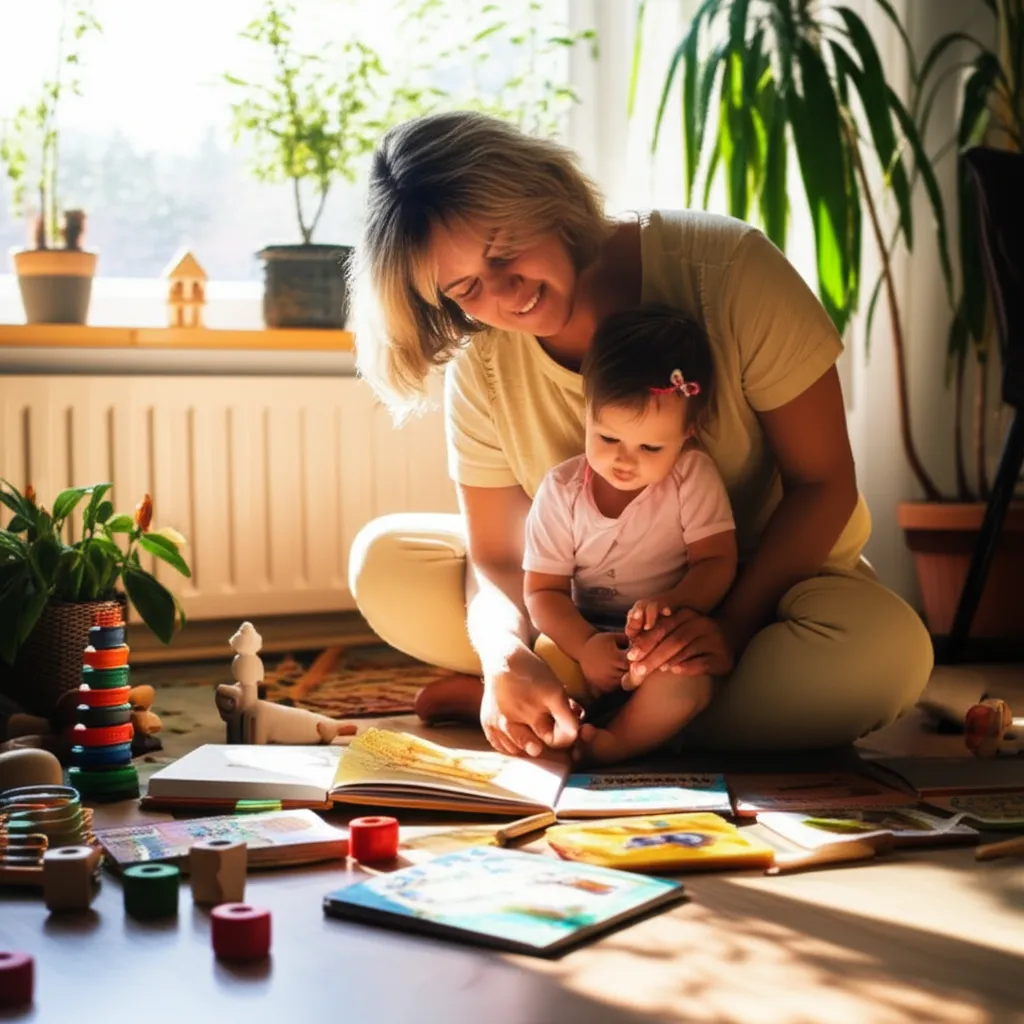
Gameschooling Education for Toddler (12-18 Months)
Walking changes everything. A toddler between 12 and 18 months is a moving, exploring, boundary-testing force of nature, and gameschooling gets to ride that energy. Physical games now include chasing, fetching, hiding in earnest (not just behind a cloth), and simple obstacle courses. At the same time, symbolic thinking is emerging — that block isn't just a block anymore, it might be a phone or a car or a piece of food. This is the age when you'll see the first real interest in simple puzzles (2-4 piece knob puzzles), basic matching activities, and "clean up" as a game. Toddlers at this stage love putting things where they go — coins in a piggy bank, shapes in a sorter, balls down a ramp. It looks like busywork, but it's the same satisfaction adults get from completing a game objective. The urge to categorize, place, and complete is hardwired, and games channel it beautifully.
Key Gameschooling principles at this age
Walking and mobility turn the whole house into a game board — use the space
Symbolic play (pretending a block is something else) is the root of imaginative game scenarios
Sorting and placing are deeply satisfying at this age — build games around that drive
Simple 2-step sequences are now manageable ('put the ball in the cup, then dump it out')
Language is exploding; name everything during play to build the vocabulary for future game instructions
A typical Gameschooling day
Gameschooling activities for Toddler (12-18 Months)
Indoor obstacle course — pillows to climb over, tunnels to crawl through, a ball to carry to a bucket at the end; full-body game with a goal
Knob puzzles — large wooden puzzles with 3-5 pieces and knob handles; matching shapes to outlines
Color sorting with a muffin tin — colored pom-poms or large buttons sorted into cups by color (supervised closely)
Treasure hunt — hide 3-4 familiar toys around the room and search together; early scavenger hunt
Play kitchen game — pretend cooking with pots, spoons, and play food; baby's first role-playing game
Ball ramp — set up a ramp (cutting board propped on books) and roll balls down; toddler retrieves and repeats
Parent guidance
Why Gameschooling works at this age
- Walking and climbing open up physical game play — chasing, fetching, obstacle courses
- Emerging symbolic play means toddlers can engage with pretend scenarios for the first time
- The drive to sort, place, and complete is strong and naturally aligned with game objectives
- Language comprehension is sophisticated enough to follow simple game instructions
Limitations to consider
- Sharing is not developmentally possible yet — parallel play is the norm, not cooperative
- Attention span is 5-15 minutes at best per activity before they need to move on
- Emotional regulation is minimal; losing or failing at a game task can trigger big feelings
- Fine motor skills are still developing; small game pieces are both dangerous and frustrating
Frequently asked questions
My toddler won't sit still for any game. Is gameschooling even possible?
You're thinking of games as sit-down activities. At this age, the best games are physical: obstacle courses, treasure hunts, chase games, ball ramps. A toddler who's running, climbing, and carrying objects from place to place is gameschooling through movement. Design the games around their energy level, not against it. When they do sit for a puzzle or sorting activity, those 5 quiet minutes are gold — but they shouldn't be the standard.
Should I buy toddler board games?
There are a few decent ones — First Orchard (HABA) is a cooperative game where toddlers roll a colored die and place matching fruit in a basket before the raven gets it. It works because it's cooperative (no losing), tactile (chunky wooden fruit), and simple (one action per turn). But don't feel pressured to buy commercial games. A muffin tin, some balls, and a few containers give you just as much game-based learning. Commercial games are great when they fit; they're not required.
How do I handle a toddler who only wants to play the same game over and over?
Let them. Repetition is how toddlers build mastery, and mastery builds confidence. If they want to do the ball ramp 50 times, they're refining their understanding of gravity, trajectory, and cause-and-effect with every single run. You can add gentle variations (a bigger ball, a steeper ramp) to keep yourself sane, but don't force novelty. When they're truly done with a game, they'll abandon it themselves — usually overnight, without warning.