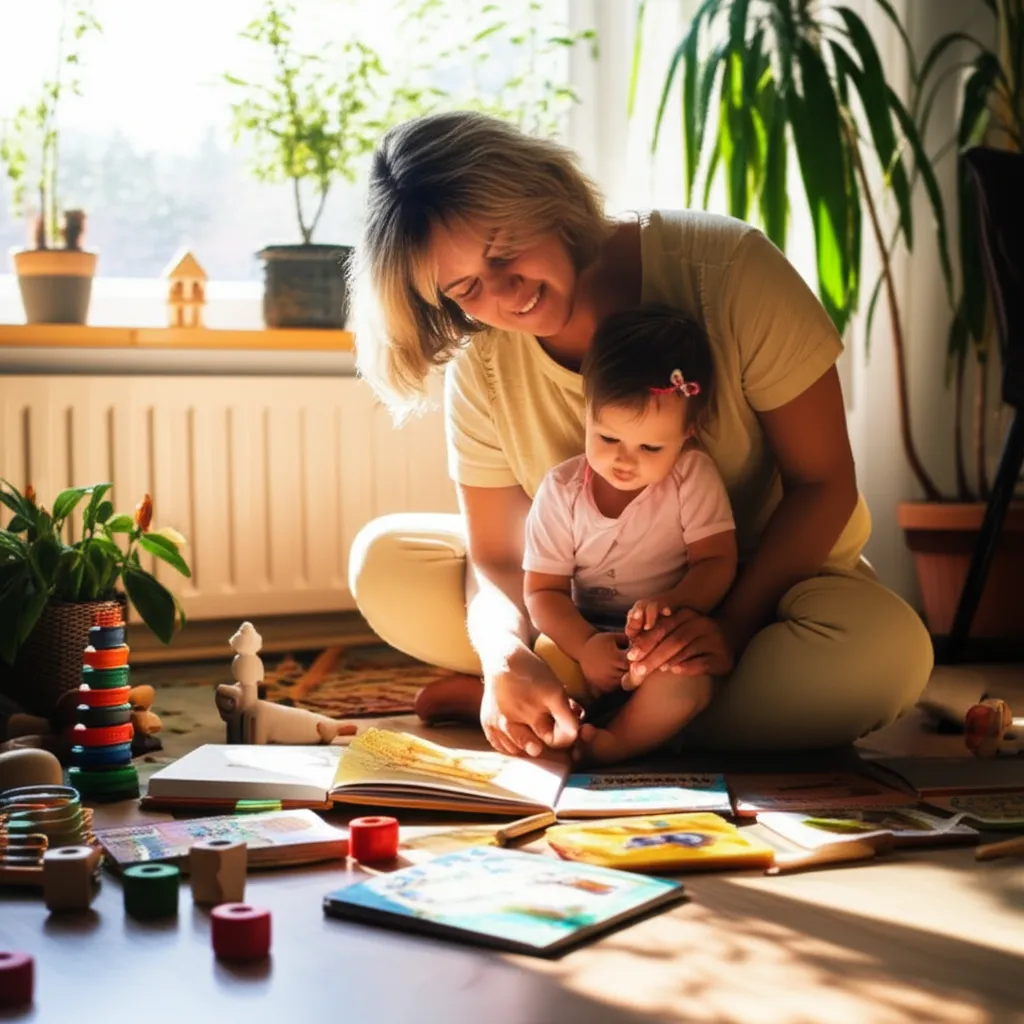
Toddler
Between twelve and eighteen months, children transition from babies to toddlers in every sense. Walking opens up a vertical world, language begins to emerge with real communicative intent, and the drive for independence intensifies. This is the age of 'I do it myself' expressed through action long before the words arrive.
The twelve-to-eighteen-month period is one of the most intense developmental windows in the human lifespan. Walking transforms everything — the child can now move toward what interests them, carry objects from place to place, and explore the world from an upright perspective that reveals an entirely different landscape than crawling provided. Maria Montessori identified this age as the beginning of the sensitive period for order, and parents often notice it acutely: their child becomes upset when routines change, insists on specific sequences for getting dressed or eating meals, and wants everything in its place. This is not rigidity but a developing mind trying to create predictable patterns from the chaos of sensory experience. Language is building rapidly underground — most children at this age understand far more than they can say, and the gap between receptive and expressive vocabulary creates genuine frustration. The child knows exactly what they want but cannot yet articulate it, leading to the emotional intensity that defines early toddlerhood. Physically, they are tireless — walking, climbing, carrying, pushing, pulling from morning to night. This is not hyperactivity but the body's developmental program building strength, coordination, and spatial understanding through constant repetition.
Key Milestones
- Walks independently with increasing confidence
- Uses 5-20 words with meaning and understands many more
- Follows simple one-step instructions
- Begins to use a spoon and drink from a cup
- Stacks two to three blocks and enjoys filling and dumping
- Shows emerging independence by wanting to do things alone
How Children Learn at This Age
Learns through whole-body movement and repetition
Deeply sensitive to order and routine — disruptions cause distress
Absorbs language at an extraordinary rate even before speaking fluently
Needs real activities and real objects rather than toys that simulate them
Concentration develops through uninterrupted work on self-chosen tasks
Recommended Approaches
- Montessori (practical life focus: dressing, cleaning, food preparation)
- Waldorf (natural materials, simple toys, rhythm-based daily routines)
- Nature-based exploration with unstructured outdoor time
- RIE-influenced respectful caregiving during transitions and routines
What to Expect
How to Support Learning
Best Educational Approaches
Frequently Asked Questions
My toddler has intense tantrums — is this normal?
Completely normal and developmentally expected. Your toddler's brain is developing faster than their ability to regulate emotions. They experience frustration, disappointment, and anger at full intensity with no internal tools to manage those feelings. The best response is calm presence: get down to their level, stay nearby, and wait it out without lecturing or reasoning. After the storm passes, offer comfort. Over time, your calm response teaches them that big feelings are survivable and that they are not alone in them.
Should I start a formal educational program at this age?
Formal instruction is not appropriate or beneficial for children under two. What toddlers need is a rich home environment with real objects to explore, freedom to move, and responsive adults who narrate the world. If you want a structured framework, Montessori toddler programs or parent-child classes offer beautifully designed environments. But the learning that matters most at this age — language acquisition, motor development, social-emotional foundations — happens through daily life, not through curriculum.
How do I handle the constant 'no' from my toddler?
Saying no is how your toddler practices having a will, which is one of the most important developmental tasks of this period. Rather than engaging in power struggles, offer limited choices: "Do you want the red cup or the blue cup?" This gives them agency without requiring you to negotiate on non-negotiable issues. Save your firm nos for safety situations, redirect where possible, and remember that this oppositional phase is building the foundations of autonomy and self-advocacy.
When should my toddler start talking in sentences?
Most children begin combining two words between 18 and 24 months, but the range is wide. Some children are saying short sentences at 15 months; others do not combine words until well past their second birthday. What matters more than word count is whether your child is communicating — through gestures, pointing, bringing you objects, making eye contact, and showing understanding of what you say. If your child has no words at all by 16 months or shows no interest in communicating, consult your pediatrician about an early intervention evaluation.