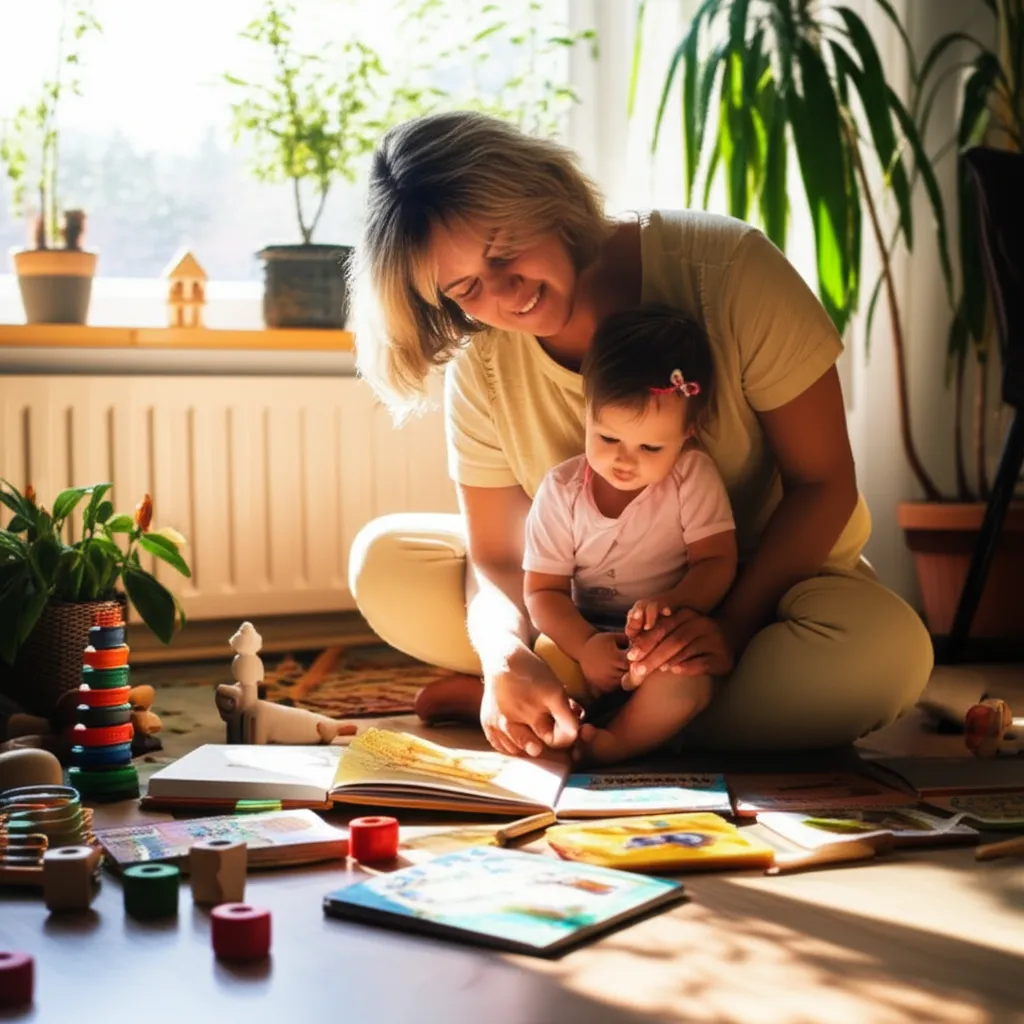
Moore Method Education for Six Year Old
Six is a year of significant growth — teeth are falling out, coordination is improving, attention span is lengthening, and the capacity for reasoning is developing rapidly. In conventional schooling, this is first grade: reading instruction in earnest, basic math, and lots of seatwork. In the Moore Formula, it's still too early. The Moores didn't set a rigid age for starting academics. They talked about a range of eight to twelve, with individual readiness as the key factor. But they were clear that six was still premature for most children. The nervous system is maturing but hasn't reached what the Moores called the integrated maturity level — the point where cognitive, emotional, and physical development have converged enough for sustained formal learning to be productive rather than stressful. At six, the Moore child's life is rich and getting richer. Read-aloud sessions are longer and more complex. Work contributions are genuinely helpful. Service activities are becoming more intentional. And the child's own interests are becoming clearer — this one loves insects, that one is obsessed with cooking, another wants to build everything. These interests are the seeds of the academic work that will eventually come.
Key Moore Method principles at this age
Six is still within the "too early" range for formal academics in the Moore framework
The integrated maturity level — where cognitive, emotional, and physical readiness converge — hasn't been reached yet
The child's emerging specific interests are the raw material for future formal study
Work contributions should be genuinely needed, not make-work
Read-aloud remains the central "study" activity, expanding in depth and variety
A typical Moore Method day
Moore Method activities for Six Year Old
Extended interest-driven exploration — pursuing a topic through books, observation, and projects
Substantial household work — cooking simple meals, doing laundry from start to finish, yard work
Nature study with increasing depth — identifying species, tracking seasonal changes
Chapter book read-alouds — the Narnia series, Little House books, and similar
Building and creating with real tools and materials
Regular service commitments outside the family
Parent guidance
Why Moore Method works at this age
- Interest-driven exploration creates the deep engagement that formal curriculum often kills
- Genuine household competence builds a level of practical confidence that school can't provide
- Extended read-aloud develops vocabulary, comprehension, and narrative skills naturally
- The child has had six years of unhurried development, building a strong emotional and social foundation
Limitations to consider
- Peers are solidly reading and writing, making the gap visible and anxiety-inducing
- Family members may become increasingly vocal about concerns
- Some children at this age are genuinely ready for and want formal learning, creating tension with the approach
- Limited Moore-specific resources or community for six-year-olds
Frequently asked questions
My six-year-old can't read and their peers can. Should I be worried?
The Moores would say emphatically: no. Reading readiness varies enormously among children, and six-year-olds who haven't been taught to read aren't behind — they simply haven't been taught yet. The Moores documented many cases of children who learned to read at eight, nine, or even later and quickly caught up to or surpassed early readers. The key indicator isn't whether they can read at six, but whether they love being read to and are curious about the world.
Should we be doing any math?
Math is happening naturally every day: cooking involves measurement and fractions, building involves spatial reasoning, counting objects in real life is arithmetic. The Moore approach trusts that a child immersed in a numerate environment will develop mathematical thinking without formal lessons. If your child shows interest in numbers, calendars, or patterns, follow that interest without formalizing it into a curriculum.
What if my child wants to go to school because their friends are there?
This is a real and common challenge. The Moores would encourage connecting with other homeschool families so the child has peers who are also learning at home. They'd also point out that the desire to "be where friends are" is a social desire, not an academic one — you can address the social need without enrolling in school. Arrange playdates, join homeschool co-ops, and participate in community activities.