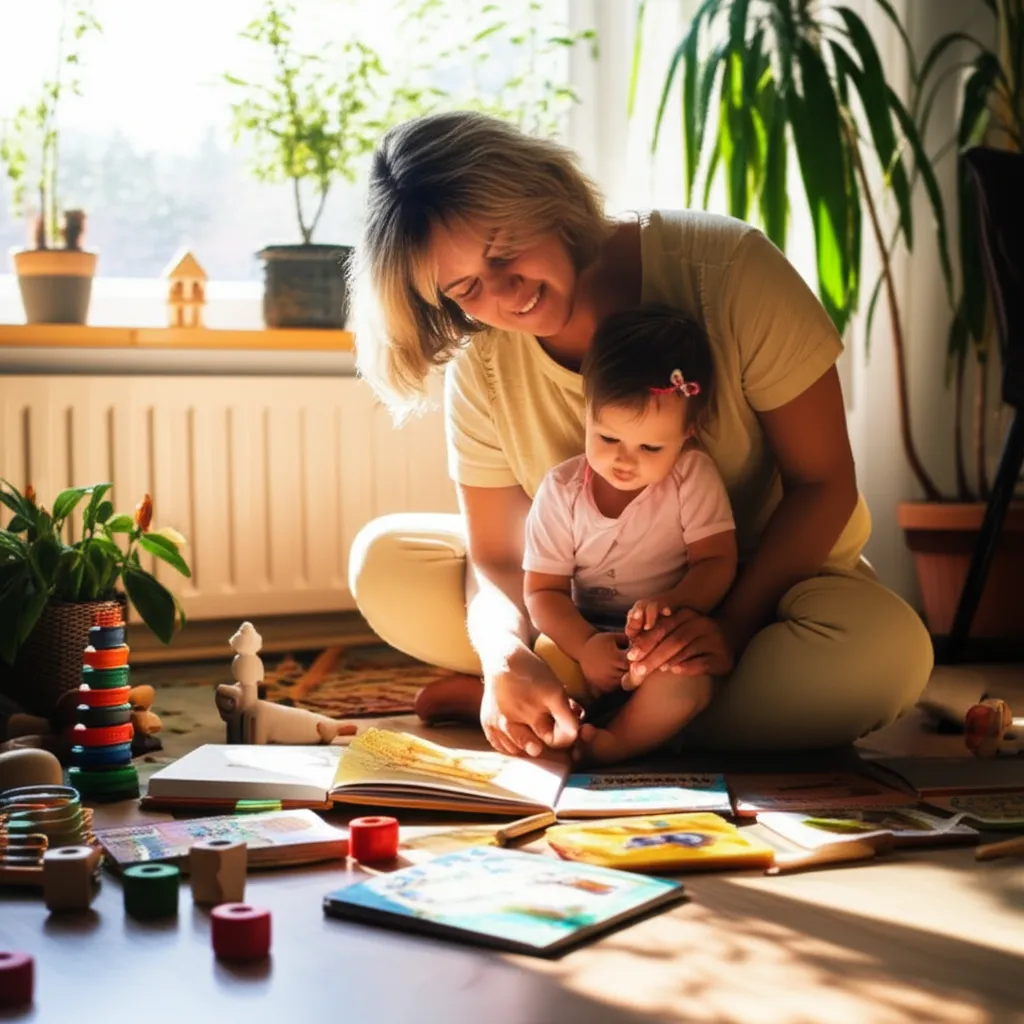
Waldorf Education for Newborn
In Waldorf philosophy, the newborn is understood as a being still deeply connected to the spiritual world, gradually incarnating into physical existence. Rudolf Steiner described the infant as "an organ of sense" — absorbing everything in the environment without any filtering capacity. This means every sound, light, texture, and emotional tone in the room is being imprinted on the developing child. The Waldorf approach to this period is therefore one of profound protection and warmth. Warmth is taken literally in Waldorf infant care. Newborns are dressed in layers of natural wool and silk, kept in softly lit rooms (rose quartz lamps are favored over harsh overhead lighting), and surrounded by gentle colors — typically soft pinks and peaches rather than the high-contrast black-and-white patterns recommended by mainstream infant development. The reasoning is different from conventional approaches: while mainstream advice emphasizes visual stimulation, Waldorf emphasizes that the newborn's senses are wide open and already receiving more input than they can process. The goal is to buffer, not to stimulate. Lullabies sung by the mother or father — not recorded music — are the primary auditory environment. The human voice, warm and unmediated, creates a sense of safety that no speaker can replicate. Feeding, sleeping, and waking follow the baby's own rhythms, but the parent begins to gently shape a predictable daily pattern that will become the foundation of Waldorf's characteristic rhythm-based approach to childhood.
Key Waldorf principles at this age
The newborn is 'an organ of sense' — absorb everything, filter nothing. The environment must be gentle enough to require no filtering.
Physical warmth protects the incarnating being — wool and silk layers, warm room, skin-to-skin contact are non-negotiable.
The human voice replaces recorded sound — live lullabies and soft speech create the authentic sensory envelope the newborn needs.
Simplicity in the environment prevents sensory overwhelm — soft colors, natural materials, no plastic, no electronic sound or light.
The beginning of rhythm — not a schedule imposed on the baby, but the parent's own predictable daily pattern that the baby absorbs through imitation.
A typical Waldorf day
Waldorf activities for Newborn
Singing simple lullabies — pentatonic melodies or traditional folk songs sung softly by the parent, never from a recording
Skin-to-skin contact during feeding and quiet waking periods — the most important 'activity' at this age
Brief outdoor time in a pram — gentle exposure to fresh air, filtered natural light, the sounds of wind and birds
A morning verse or evening verse spoken by the parent — the same words each day, creating a sense of ritual and rhythm
Gentle touch through infant massage with natural oils like calendula — slow, warm, intentional
Observing a simple silk mobile moved by natural air currents — no battery-operated movement, just the gentle drift of colored silk
Parent guidance
Why Waldorf works at this age
- Creates a genuinely calming environment that reduces overstimulation — many colicky or fussy babies settle in Waldorf-style low-stimulus settings
- Prioritizes the parent-child bond through physical closeness, singing, and presence rather than products
- The emphasis on natural materials (wool, silk, wood) avoids the off-gassing and chemical exposure common in synthetic baby products
- Rhythm-building starts from day one, laying groundwork for the predictable daily patterns that serve children well for years
Limitations to consider
- The avoidance of high-contrast visual stimulation contradicts mainstream developmental research showing newborns benefit from bold patterns at close range
- The emphasis on warmth and layered clothing can conflict with pediatric safe sleep guidelines that recommend keeping babies cool
- Rejecting all recorded music and electronic sound is impractical for many families and not clearly supported by infant development research
- The spiritual language around 'incarnation' and 'etheric forces' alienates parents who want evidence-based guidance
Frequently asked questions
Is it true that Waldorf recommends no black-and-white toys for newborns?
Yes. Mainstream infant development research supports high-contrast black-and-white patterns for newborn visual development, but Waldorf takes a different view. The Waldorf perspective is that the newborn's senses are already overwhelmed by the transition from womb to world, and adding high-contrast visual stimulation increases that overwhelm. Waldorf infant environments favor soft, muted colors — pinks, peaches, and gentle earth tones. If you want to blend approaches, you can offer brief periods of high-contrast visual engagement during alert windows while keeping the overall environment soft and low-stimulus.
Why does Waldorf emphasize wool clothing for babies?
Wool is central to Waldorf infant care for several reasons. It regulates temperature better than any synthetic fabric, wicking moisture while retaining warmth. In Waldorf philosophy, warmth is understood as essential for the incarnating child — keeping the body warm frees life energy for growth and development. Merino wool is soft enough for newborn skin and naturally antimicrobial. Practical tip: merino wool undershirts and sleep sacks are an easy entry point if full wool dressing feels like too much.
Can I use a baby monitor and white noise machine with a Waldorf approach?
A baby monitor is a practical safety tool that no Waldorf philosophy should make you feel guilty about using. White noise is more nuanced — Waldorf would prefer the natural sounds of the home (soft conversation, a parent humming, wind through a window) over electronic sound. The concern is that constant white noise prevents the baby from learning to orient to real-world sounds. A compromise many families find comfortable is using white noise only for sleep while keeping waking environments free of electronic sound.
Do I need to buy special Waldorf baby supplies?
No. Waldorf infant care is fundamentally about less, not more. You need warm natural-fiber clothing, a safe sleep space, and your own voice. A simple silk or wool mobile costs a few dollars to make. The most Waldorf thing you can do for your newborn costs nothing: hold them, sing to them, and keep the environment calm. The Waldorf baby product industry exists, but it is not necessary to practice the principles.