Enki Education Education for Newborn
Enki Education doesn't offer formal curriculum materials for newborns, and that's entirely by design. Beth Sutton's philosophy holds that the youngest children absorb the world so totally that they're best served by the ordinary rhythms of home life — not structured lessons or enrichment programs. For newborns, Enki's three-fold path of mastery, meaning, and movement shows up in the most elemental ways: the mastery of feeding and sleeping rhythms, the meaning found in a parent's voice and touch, and the movement of being carried, rocked, and held. What Enki offers parents at this stage is a way of thinking about early life rather than a set of activities to do. The emphasis is on creating a calm, rhythmic home environment where the newborn can settle into the sensory world without overstimulation. This aligns with Enki's roots in both Waldorf developmental thinking and Eastern somatic traditions — the body comes first, and the body needs peace. Parents drawn to Enki at this stage are usually planning ahead, and that's fine. The best preparation for an Enki childhood is building the habits of rhythm, presence, and simplicity now, while your baby is too young to need anything but you.
Key Enki Education principles at this age
The newborn absorbs everything in the environment — simplicity protects healthy development
Rhythm is the first teacher: consistent feeding, sleeping, and holding patterns build security
Movement at this age means being carried, rocked, and experiencing the parent's body in motion
No curriculum is needed — the ordinary life of a loving home is the entire program
A typical Enki Education day
Enki Education activities for Newborn
Singing the same simple lullabies and folk songs daily to establish rhythmic patterns
Gentle rocking and carrying in arms or a wrap — the baby's first movement experience
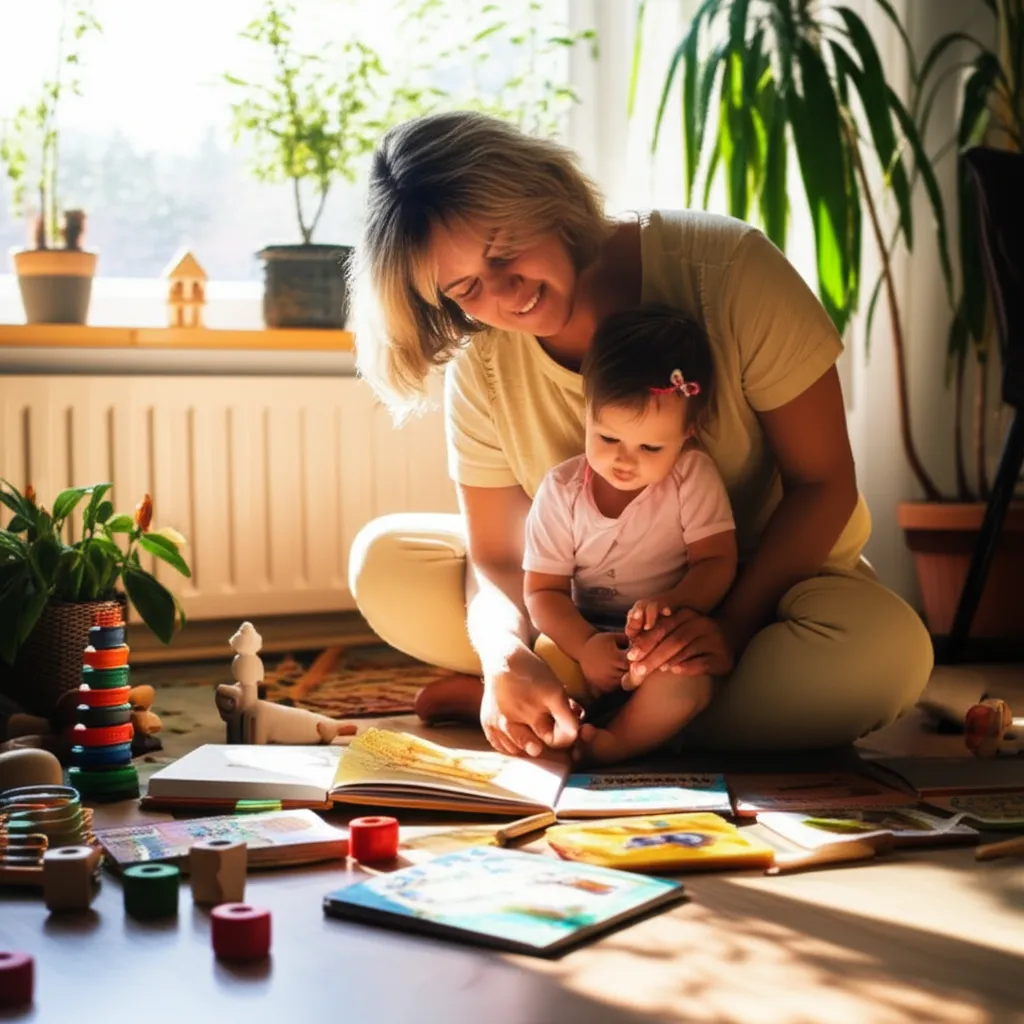
Maintaining a calm, uncluttered space with natural materials and soft natural light
Skin-to-skin contact and unhurried feeding as bonding and sensory grounding
Quiet exposure to household sounds — cooking, sweeping, siblings playing
Parent guidance
Why Enki Education works at this age
- Validates what most parents instinctively feel — newborns don't need enrichment programs
- Encourages parents to build rhythmic habits early, which pay off enormously in later Enki years
- The emphasis on song and movement starts building a family culture that supports the whole curriculum later
Limitations to consider
- There are no Enki materials to purchase or follow for this age — you're entirely on your own
- Parents looking for concrete guidance on infant development won't find it within Enki's framework
- The philosophy is beautiful but abstract when you're sleep-deprived and wanting practical answers
- No community or support structure exists specifically for Enki families with newborns
Frequently asked questions
Should I buy any Enki materials while my baby is a newborn?
There's no reason to buy anything yet. Enki doesn't publish materials for children under about 4.5 to 5 years old. If you want to prepare, read about Enki's philosophy and start building daily rhythms — singing, cooking, keeping a calm home. That's genuinely the best preparation.
How is Enki different from Waldorf for newborns?
At this age, they're nearly identical in philosophy. Both emphasize a calm, rhythmic environment and minimal stimulation. The differences between Enki and Waldorf become visible later — Enki's multicultural storytelling, Eastern movement practices, and less Eurocentric content don't show up until the preschool and elementary years.
Can I play world music for my newborn as part of an Enki approach?
Gentle music is fine, but Enki would caution against treating a newborn as someone to educate through exposure. A parent humming or singing softly is more aligned with the philosophy than playing recorded music. The multicultural music element of Enki really comes alive in the kindergarten years and beyond.