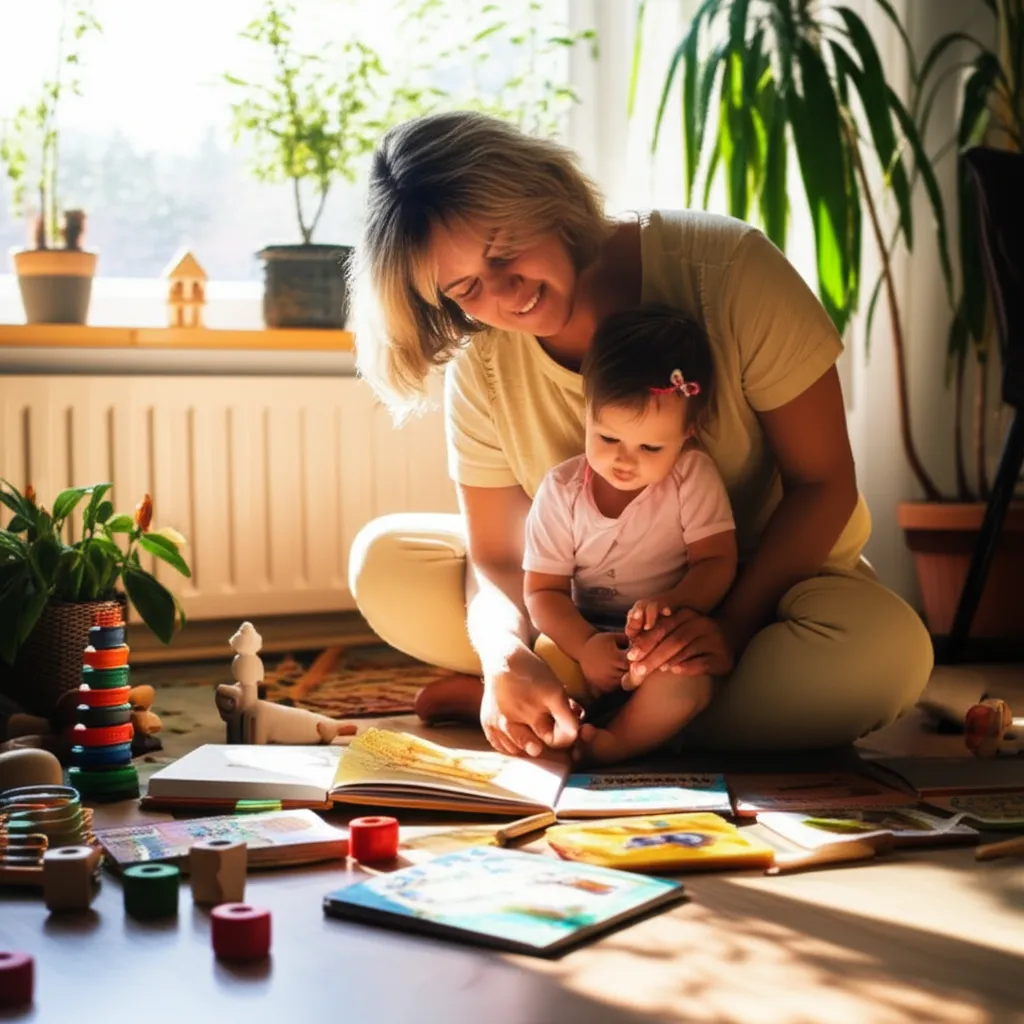
Newborn
The newborn period is a time of profound neurological development and sensory awakening. Babies are absorbing the world through touch, sound, smell, and the faces of their caregivers. Every interaction during these first twelve weeks is building the foundational neural pathways that will support all future learning.
The first three months of life are less about teaching and more about creating the conditions for a brain to wire itself. A newborn's nervous system is processing an overwhelming flood of sensory data — light, sound, texture, temperature, the smell of skin — and organizing it into the first rough maps of how the world works. During this period, a baby forms approximately 700 new neural connections every second. The single most important factor in healthy development is not stimulation but attunement: a caregiver who responds consistently, holds the baby close, and creates a predictable rhythm of feeding, sleeping, and gentle interaction. This is the period when the baby decides, at a neurological level, whether the world is safe. That sense of safety becomes the platform on which every future skill — language, movement, social connection, abstract thought — will be built. Parents who feel pressure to "educate" their newborn can relax. Being present, responsive, and warm is the curriculum.
Key Milestones
- Tracks faces and high-contrast objects with eyes
- Responds to familiar voices, especially caregivers
- Develops head control when held upright
- Shows startle reflex and begins purposeful grasping
- Establishes feeding rhythms and sleep-wake cycles
How Children Learn at This Age
Learns primarily through sensory input and physical closeness
Absorbs language patterns through tone, rhythm, and repetition
Develops trust and security through consistent responsive caregiving
Processes visual information best at 8-12 inches from the face
Recommended Approaches
- Montessori (Nido environment with simple mobiles and high-contrast images)
- RIE/Resources for Infant Educarers (respectful observation and narration)
- Attachment-based approaches prioritizing skin-to-skin and responsive feeding
What to Expect
How to Support Learning
Best Educational Approaches
Frequently Asked Questions
Do newborns need educational activities?
No. Newborns need responsive caregiving, physical closeness, and a calm environment. Their brains are forming 700 new neural connections per second just through normal daily interactions — being held, fed, talked to, and comforted. Trying to "teach" a newborn with flashcards or structured activities is unnecessary and can actually cause overstimulation. The best educational activity for a newborn is a present, attuned caregiver who responds to their cues consistently.
How much screen time is okay for a newborn?
Zero. The American Academy of Pediatrics recommends no screen time for children under 18 months, with the exception of video calls with family. Newborn eyes cannot focus beyond about 12 inches, so screens are essentially meaningless visual noise. More importantly, screen time displaces the face-to-face interaction that is genuinely building the baby's brain. Background TV can also interfere with language development by disrupting the conversational patterns between parent and child.
When should I start reading to my baby?
You can start from day one, and there is good research supporting it. Reading aloud to a newborn is not about the words on the page — your baby cannot understand them. It is about exposing their developing brain to the cadence, rhythm, and emotional tone of language. Board books with high-contrast images are a good choice, but honestly, reading your own novel aloud works just as well. The baby is listening to your voice, not following the plot.
Is my newborn sleeping too much?
Newborns typically sleep 14 to 17 hours per day, and this is normal and necessary. Sleep is when the brain consolidates the enormous amount of sensory information it processed during wakeful periods. Some newborns sleep as much as 19 hours in a day, especially in the first two weeks. If your baby is feeding well, producing wet diapers, and gaining weight appropriately, they are almost certainly sleeping exactly as much as they need to.
Should I use black and white toys for my newborn?
High-contrast black and white patterns are genuinely helpful for newborn visual development. At birth, babies see best at about 8 to 12 inches and their contrast sensitivity is low, so bold black-and-white patterns are what their eyes can actually process. Montessori Munari mobiles, simple black-and-white cards, and high-contrast board books are all appropriate. By around two months, babies begin to distinguish colors, and you can gradually introduce red and other saturated hues.
How do I know if my newborn is developing normally?
Every baby develops on their own timeline, but general markers to watch for by three months include: tracking objects with their eyes, responding to loud sounds, beginning to smile socially, lifting their head briefly during tummy time, and showing some recognition of familiar caregivers. If your baby is not making eye contact, does not respond to sound, seems unusually stiff or floppy, or is not feeding well, bring these concerns to your pediatrician. Early intervention, when needed, is most effective when started early.