Waldorf Education for Infant
The nine-to-twelve-month-old is a study in will. Pulling up to stand, cruising along furniture, possibly taking first steps, and wielding the pincer grasp to pick up everything from breadcrumbs to cat hair — this baby is asserting their presence in the physical world with unmistakable force. Waldorf sees this as the will making itself at home in the body, and the approach is to support it with meaningful work rather than passive entertainment. This is the age when imitation becomes unmistakable. The baby picks up a spoon and stirs a pot (or the air). They put a phone to their ear. They push a cloth across the floor in imitation of sweeping. These are not tricks to be clapped for — in Waldorf understanding, they are the child's deepest learning mechanism at work. Everything the adult does within the child's visual field is curriculum. This is why Waldorf emphasizes real domestic activity over baby-oriented entertainment: a parent who kneads bread while the baby watches is providing a richer educational experience than a parent who puts on a Baby Einstein video. Language is blooming — first words are emerging or imminent, and the baby understands far more than they can say. Waldorf's approach to language development is simple and old-fashioned: talk to the child, narrate your activities, sing songs and recite verses, read simple picture books with real images rather than cartoon characters. No baby talk, no electronic speech, no screens. The living human voice, engaged in real communication, is the only language teacher a baby needs.
Key Waldorf principles at this age
Imitation is the primary learning mechanism — everything the adult does within the child's sight is being absorbed and practiced
Real domestic work replaces manufactured baby activities — let the child see, touch, and participate in cooking, cleaning, and caregiving
Language develops through live conversation, singing, and verse — no electronic speech, no baby talk, no screen-based language exposure
First steps happen on the child's timeline — no walking aids, no hand-holding to pull the child upright prematurely
Emerging autonomy needs respect and boundaries — the child's growing will requires a safe environment and consistent, gentle limits
A typical Waldorf day
Waldorf activities for Infant
Participating in real household tasks — given a small cloth to wipe, a safe wooden spoon to stir, a basket of napkins to unfold and refold
Outdoor exploration — crawling on grass, touching bark and stones, watching insects, feeling wind and rain
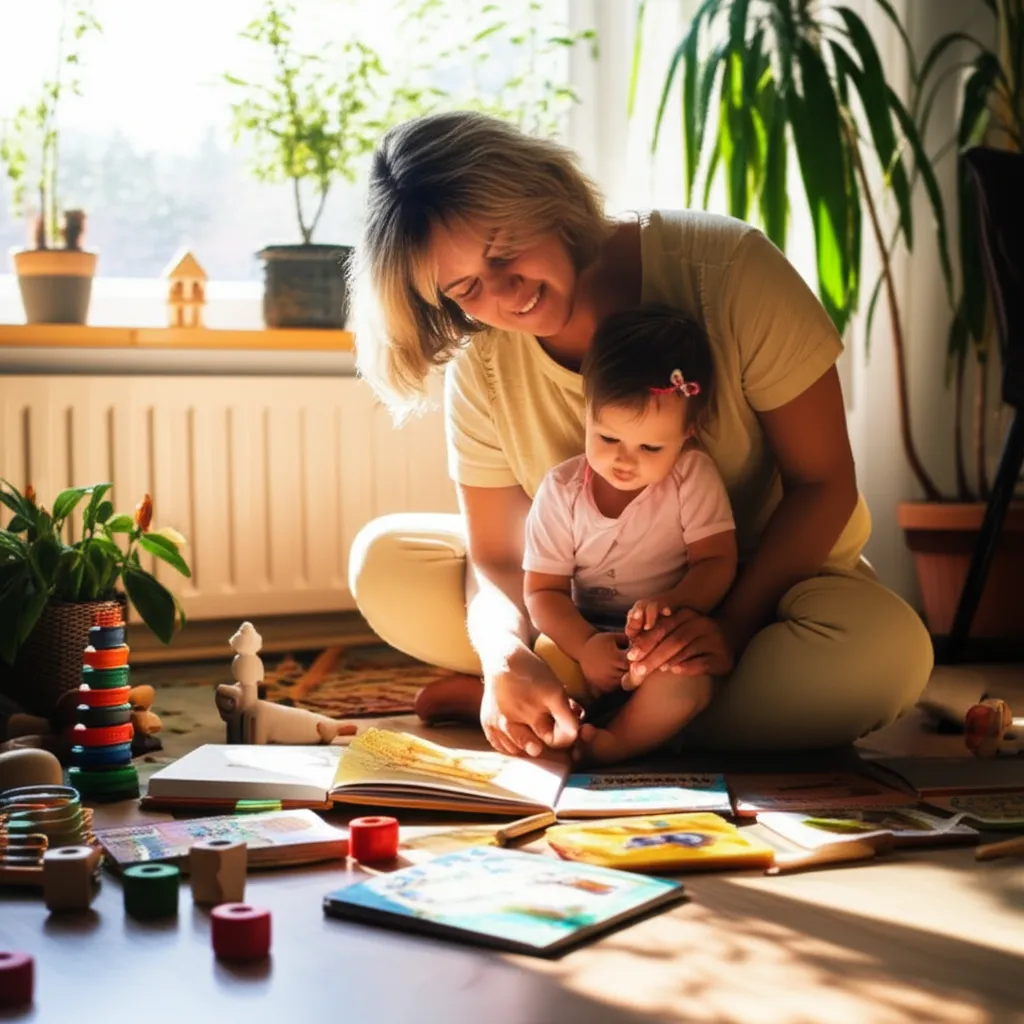
Simple board books with realistic images — pointing at and naming real objects, animals, and people
Ball play — rolling a wooden or cloth ball back and forth with a parent, the earliest form of collaborative game
Stacking and nesting — simple wooden stacking cups, nesting bowls, a ring stacker in natural wood
Music and movement — clapping songs, bouncing rhymes, and the parent singing throughout the day
Parent guidance
Why Waldorf works at this age
- Inviting the baby into real domestic work creates meaning and connection without any products or curriculum
- The emphasis on free movement and no walking aids supports natural motor development in line with physiotherapy research
- Natural language development through conversation and singing is strongly supported by language acquisition research
- The predictable daily rhythm reduces behavioral challenges by creating security — babies who know what comes next are calmer
Limitations to consider
- The prohibition on all screens is particularly challenging at this age, when parents are exhausted and a short video could provide needed breathing room
- Waldorf's expectation that a parent be home and engaged in domestic work all day is unrealistic for families with two working parents or single parents
- The 'no baby talk' recommendation ignores research showing that infant-directed speech (higher pitch, exaggerated intonation) supports language development
- Avoiding all commercial baby toys means missing some well-designed products (like certain shape sorters) that offer genuine developmental value
Frequently asked questions
My baby loves opening and closing cabinet doors. Should I put locks on or let them explore?
The Waldorf approach would be to create one or two cabinets that are the baby's to explore — filled with safe wooden bowls, metal cups, and cloth napkins — while securing cabinets with cleaning products or sharp objects. This gives the child a legitimate outlet for the opening-closing impulse (which is profound developmental work: learning about hinges, spatial relationships, and object permanence) without needing to lock down the entire kitchen. It is a 'yes environment' strategy: instead of blocking the impulse, channel it somewhere appropriate.
When should I start reading to my baby in the Waldorf approach?
Waldorf is less enthusiastic about early book exposure than mainstream parenting advice, which recommends reading from birth. In Waldorf thinking, the baby under one is best served by live storytelling, singing, and conversation rather than books. Around nine to twelve months, simple board books with realistic images (photos of real animals, natural objects, everyday scenes) can be introduced — held in the parent's lap, the baby turning pages and pointing while the parent names what they see. Avoid books with cartoon characters, licensed characters, or fantasy scenarios at this age. The goal is connecting words to the real world.
My baby hits and bites. Is this normal in Waldorf terms?
Completely normal. The nine-to-twelve-month-old is experimenting with what their body can do, and that includes hitting, biting, and pulling hair. They are not being aggressive — they are being scientific. Waldorf's response is calm, consistent redirection: gently hold the hand that hit, say 'gentle hands,' and show the gentle touch. Then redirect to something the hands can do: pat a drum, squeeze a ball, clap together. Do this every single time, without anger or lengthy explanation. The repetition teaches through rhythm and pattern, not through understanding cause and effect (which the baby does not yet have).