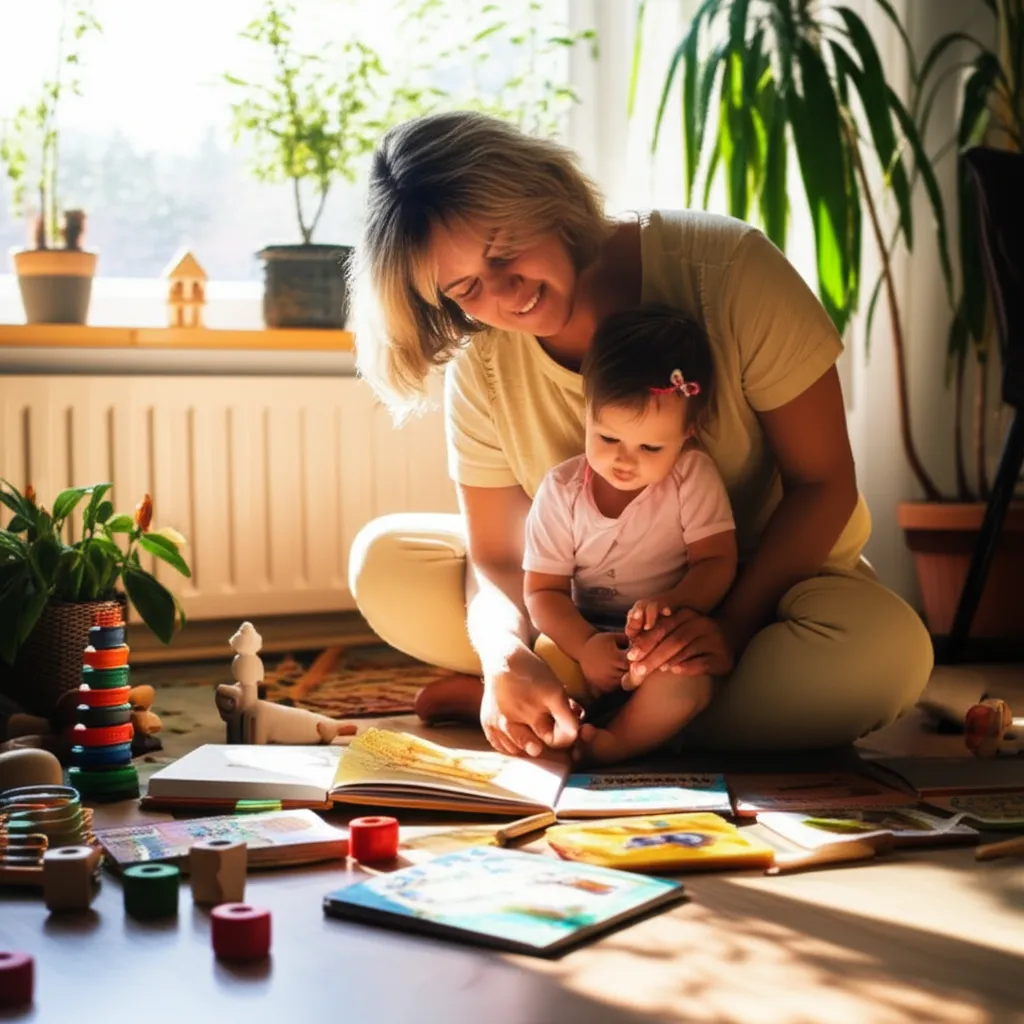
Moore Method Education for Infant (9-12 Months)
The nine-to-twelve-month period is one of dramatic change. Babies are pulling up to stand, cruising along furniture, maybe taking first steps. They're pointing at things, understanding simple words, and developing clear preferences. Their personality is emerging, and so is their will. In the Moore Formula, this stage is still entirely about exploration, relationship, and responsive caregiving. There are no flashcards, no "learning" activities, no pressure to hit milestones on schedule. The Moores were adamant that the rush to formalize learning — which in mainstream culture starts younger and younger — does real damage to children's natural curiosity. What distinguishes the Moore approach here is the emphasis on including the baby in real life. Rather than setting up parallel "educational" activities, you bring the baby into what you're already doing. They sit in the kitchen while you cook. They "help" fold laundry by playing with washcloths. They come to the garden and dig in the dirt. This is the earliest seed of the "work" pillar that becomes central later.
Key Moore Method principles at this age
Include the baby in real household activities rather than creating separate "learning" tasks
Physical development (standing, walking, climbing) is the primary intellectual work of this stage
Respect emerging autonomy — let them choose what to explore
Language develops through genuine conversation, not teaching
The earliest roots of the "work" pillar are planted by including babies in daily life
A typical Moore Method day
Moore Method activities for Infant (9-12 Months)
"Helping" with household tasks — putting items in containers, passing objects
Outdoor exploration — walking along fences, picking up sticks, watching animals
Board books with real photographs of familiar objects
Simple music — clapping, dancing, banging on pots and pans
Water and sand play with cups, spoons, and bowls
Social interaction with family members — waving, playing peek-a-boo, sharing food
Parent guidance
Why Moore Method works at this age
- Including babies in real life builds practical intelligence from the start
- Protects against the "baby enrichment" industry that targets anxious parents
- Respects the enormous physical and cognitive development happening naturally
- Builds a family culture where children are participants, not separate projects
Limitations to consider
- Very mobile babies in small spaces can be exhausting when the philosophy says "let them explore"
- The approach offers little practical distinction from thoughtful parenting at this age
- Parents comparing to Montessori may feel the Moore method lacks structure even for infant environments
Frequently asked questions
My baby is almost one and isn't walking yet. The Moore approach says not to worry, but should I?
Walking anywhere from 9 to 18 months is within the normal range. The Moores would point out that cultural anxiety about milestones often does more harm than the "delays" themselves. If your pediatrician isn't concerned, trust the process. Many children who walk later were spending that time developing other skills — language, fine motor, problem-solving.
Should we start any kind of preschool or playgroup?
The Moore approach is cautious about group care and structured programs for children this young. They believed that the primary caregiver (usually a parent) provides the ideal learning environment for the first several years. If you want social time for your own sake, that's valid — but don't do it because you think your baby needs "socialization." Babies this age engage in parallel play at best.
What about Montessori infant materials? They seem aligned with the Moore approach.
There's real overlap — both approaches value hands-on exploration, practical life skills, and following the child. The difference is that Montessori provides more structured materials and environments, while Moore says everyday household objects and outdoor exploration are sufficient. You can borrow Montessori ideas without contradicting Moore principles.