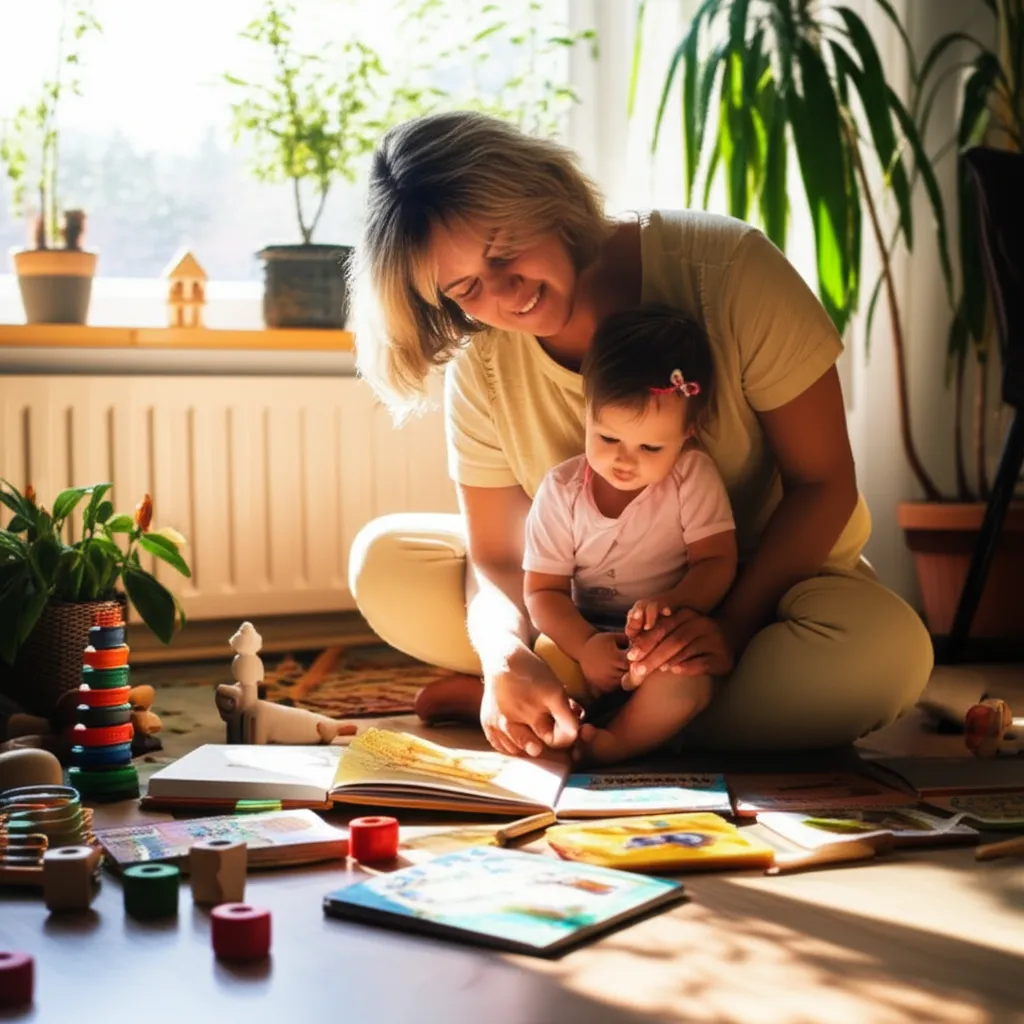
Ignatian Education for Infant (9-12 Months)
The months leading up to a baby's first birthday are electric with change — pulling to stand, first steps for some, pointing with intent, understanding simple words, showing humor and empathy. In Ignatian terms, your child is becoming a more active participant in the Experience-Reflection cycle, even if their "reflection" looks like staring intently at a bug for five minutes or handing you the same book for the twentieth time. The Jesuit value of magis — always seeking the greater good, the deeper engagement — shows up naturally in a baby this age. They don't do things halfway. When they're interested in something, they're ALL in. This total engagement is exactly what Ignatius meant by throwing yourself fully into experience before reflecting on it. As your baby approaches toddlerhood, the Ignatian concept of freedom becomes relevant in new ways. Ignatian freedom isn't doing whatever you want — it's the interior freedom to choose what truly matters. Giving your baby choices (this cup or that one, this book or that one) is an early, concrete form of this principle. You're building the muscle of intentional choosing that Ignatian education will develop for years to come.
Key Ignatian principles at this age
Freedom through choice — offering real, meaningful choices throughout the day to build your baby's capacity for agency
Total engagement as a model — honoring your baby's intense focus rather than interrupting it, seeing it as a spiritual quality worth protecting
Community and relationship — your baby now actively seeks shared experiences (pointing, showing, giving), and responding to these bids builds the communal foundation Ignatian education values
Action as expression — your baby communicates through doing, and Ignatian pedagogy values action as a legitimate form of understanding
A typical Ignatian day
Ignatian activities for Infant (9-12 Months)
Offer two-option choices throughout the day — snacks, toys, books — and genuinely respect whichever they pick
Follow your baby's pointing: when they point at something, go to it together, name it, explore it — this is shared experience at its purest
Create simple "jobs" your baby can participate in: putting laundry in the basket, wiping the table, helping stir — service starts here
Read books interactively, letting your baby turn pages and point to pictures, following their interest rather than reading linearly
Spend time with other babies and families — Ignatian education values community, and social exposure matters now
Practice unhurried transitions: when it's time to leave the park or put away toys, give warnings and take your time rather than rushing
Parent guidance
Why Ignatian works at this age
- The emphasis on choice-making gives concrete, daily practices that feel genuinely educational
- Ignatian respect for the individual helps parents resist comparison and appreciate their unique baby
- The framework's long view (forming people for others) provides perspective during a period that can feel frantic
- Shared attention practices build language and social skills organically
Limitations to consider
- Formal Ignatian education still doesn't have much to say about babies specifically — you're extrapolating from principles
- Choice-offering can become stressful if your baby is indecisive or wants a third option you didn't offer
- The approach doesn't provide milestone-tracking or developmental benchmarks some parents want
- If you're not near a Jesuit community, finding like-minded parents can be isolating
Frequently asked questions
My baby is about to turn one. Should I look into Jesuit preschools?
If there's a Jesuit or Ignatian-inspired preschool near you, it's worth visiting — many accept children as young as two or three. Look for programs that emphasize the whole child, reflection, and service rather than just academics. That said, there are far fewer Ignatian preschools than Montessori or Waldorf ones, so you may need to apply Ignatian principles to whatever setting you choose. A good Montessori program, for instance, shares many values with Ignatian education (respect for the child, prepared environment, observation-based teaching).
How do I practice the examen when I'm exhausted by the end of the day?
Simplify ruthlessly. The examen can be two questions: What am I grateful for from today? What was hard? That's it. You can do it in 60 seconds while brushing your teeth. Some parents find it helpful to do it as a conversation with a partner: 'What was your best moment today? What drained you?' The form matters less than the habit of reflective awareness.
Is there a reading list for parents interested in Ignatian approaches to early childhood?
The honest answer is that there's not much written specifically about Ignatian early childhood education. For the Ignatian framework itself, try 'The Jesuit Guide to (Almost) Everything' by James Martin or 'What Is Ignatian Spirituality?' by David Fleming. For early childhood, you'll get more practical guidance from general responsive parenting books. The synthesis is something you'll largely need to create yourself, which is both the challenge and the beauty of this approach.