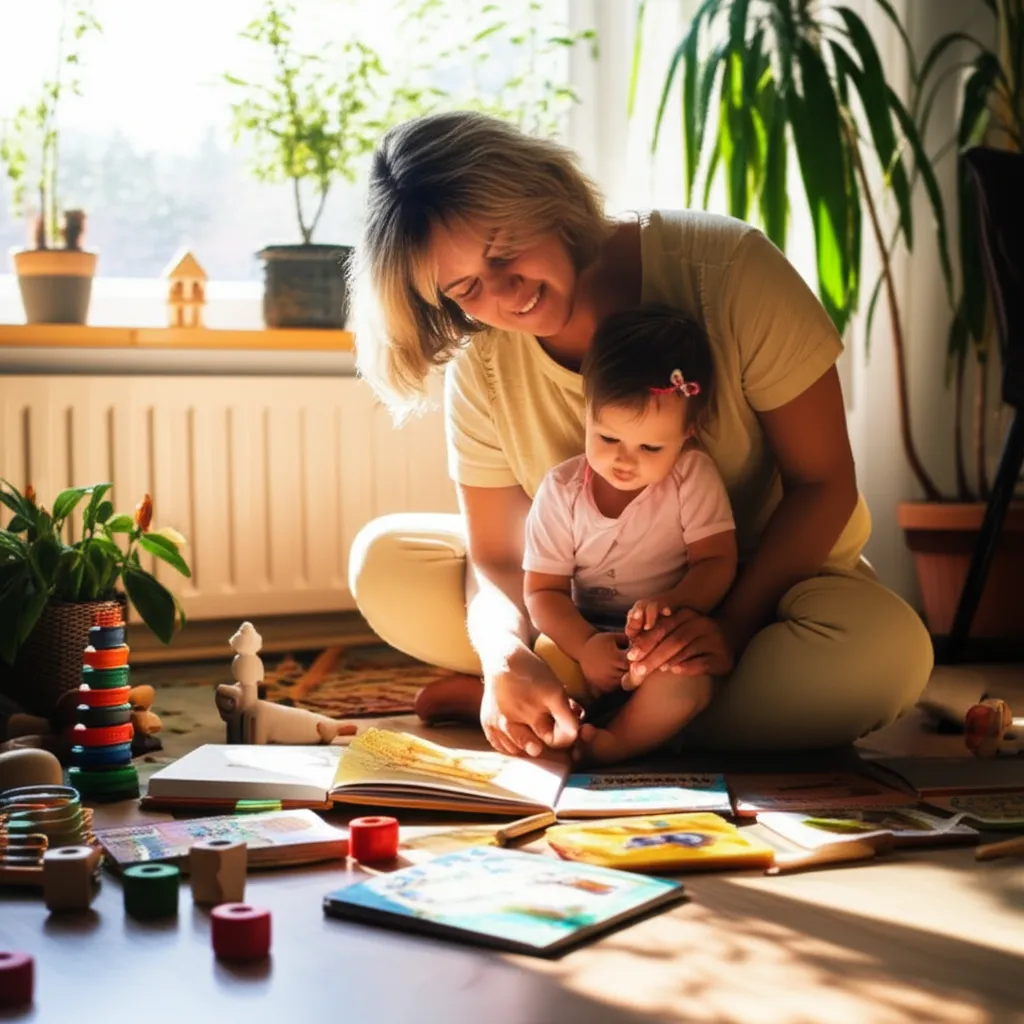
Forest School Education for Infant (9-12 Months)
The nine-to-twelve-month period is a turning point. Many babies are pulling to stand, cruising along surfaces, or taking first steps — and doing so on uneven natural ground builds balance and confidence in ways that flat floors never will. This is also when object permanence solidifies, meaning hide-and-seek games with natural objects take on new cognitive depth. A stone buried under leaves isn't gone — the baby knows it's there and will dig for it. This is the beginning of persistence, problem-solving, and memory. Language is exploding beneath the surface. Babies at this age understand far more words than they can say, and outdoor environments provide an extraordinarily rich vocabulary context. You're not just naming 'tree' — you're naming oak, birch, and pine. Not just 'bird' but robin, crow, and woodpecker. Not just 'water' but stream, puddle, and rain. The specificity of nature vocabulary gives the developing brain more categories to work with, more distinctions to draw, more neural connections to form. Forest School sessions at this age start to feel genuinely collaborative. The baby points at something and looks at you for a response. They bring you objects — a stick, a stone, a leaf — and wait for your reaction. They lead you somewhere by crawling determinedly in a direction and looking back to make sure you're following. This is the birth of shared attention, communication, and social learning. The forest provides endless conversation starters that neither of you planned.
Key Forest School principles at this age
Upright exploration on uneven terrain — cruising along fallen logs, pulling up on stumps, early steps on grass and slopes
Object permanence games using natural hiding spots: leaves, bark, hollow logs, and soil for burying and rediscovering objects
Rich nature vocabulary building through specific naming of plants, animals, weather phenomena, and landscape features
Shared attention and proto-communication — following the baby's pointing, bringing, and leading behaviors as early child-led direction
Increasing session length and complexity as stamina, mobility, and engagement capacity grow
A typical Forest School day
Forest School activities for Infant (9-12 Months)
Log cruising and stump standing — using natural structures as pull-up and balance supports on uneven ground
Hiding and finding games with natural objects: burying stones under leaves, tucking pine cones behind trees, covering items with bark
Posting and fitting — pushing sticks through gaps in fences, dropping pebbles into hollow logs, threading grass through holes in leaves
Slope navigation on gentle inclines — crawling up banks, sliding down on bottoms, building confidence with elevation change
Early tool use: using a stick to poke at something, drag leaves, or reach an object just out of grasp
Collecting walks where the baby gathers items in a basket or bag, choosing what to pick up and carry
Parent guidance
Why Forest School works at this age
- Upright exploration on natural terrain builds balance, coordination, and spatial awareness far more effectively than flat indoor surfaces
- Object permanence and early problem-solving find natural outlets in the rich, complex environment of a woodland
- The vocabulary-rich outdoor environment supports the language explosion happening beneath the surface during this period
- The baby's emerging desire to share experiences (pointing, bringing, leading) creates genuine two-way learning conversations
Limitations to consider
- New walkers and cruisers fall frequently — natural surfaces have roots, rocks, and uneven ground that increase tumble risk
- The drive to explore outpaces judgment: babies this age will head straight for deep water, steep drops, or thorny plants without hesitation
- Sessions require intense one-on-one supervision, making group ratios challenging — 1:2 adult-to-child is the realistic maximum
- Teething, sleep regressions, and developmental leaps can make some sessions very short or need to be abandoned entirely
Frequently asked questions
My baby is pulling up on everything — is it safe to let them use trees and logs?
Yes, with assessment. Check that any structure they're pulling up on is stable — a rooted tree is perfect, a loose branch propped against something is not. Fallen logs should be tested with your foot first; if they roll, they're not safe for cruising. Stumps are excellent natural pull-up stations. The uneven, textured surfaces of natural objects give better grip than smooth furniture, and the slight instability of some natural surfaces builds balance and core strength that stable indoor furniture doesn't challenge.
How do I handle the transition from crawling to walking in outdoor settings?
Natural environments are ideal for this transition because they demand more balance work than flat floors. Grass provides slight resistance that strengthens ankles. Gentle slopes teach weight shifting. Uneven ground forces micro-adjustments that build proprioception. Let your baby set the pace — they'll cruise, stand briefly, sit down, try again. Don't hold their hands to 'walk' them; this teaches them to rely on external support rather than their own balance. Instead, position yourself a short distance away and let them choose when to let go and try. Some babies walk earlier outdoors because the motivation to reach something interesting overrides their caution.
Should I be worried about my baby putting soil and plants in their mouth at this age?
Vigilance is still important, but the risk profile is shifting. By 9-12 months, most babies have better immune function and are eating solid foods, so incidental soil contact is less concerning. The main risks are toxic plants (learn to identify yew, foxglove, deadly nightshade, laburnum, and any regional species), mushrooms (assume all wild mushrooms are off-limits), and contaminated soil. If you're in a managed Forest School site, the leaders will have assessed plant hazards. If you're on your own, invest time in learning the five most dangerous plants in your area — that covers the majority of real risk.