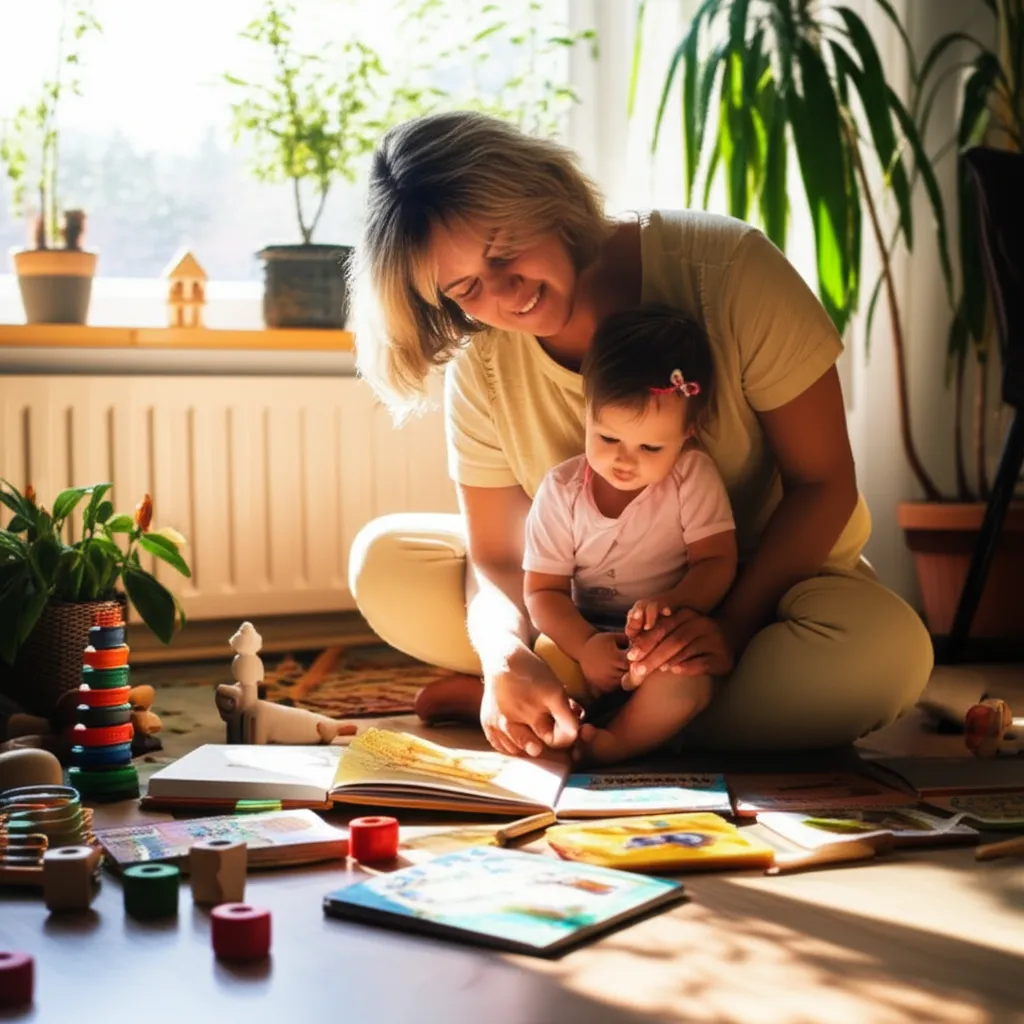
Waldorf Education for Infant
The six-to-nine-month-old is becoming a mover. Sitting upright, beginning to crawl, and developing the pincer grasp that will eventually allow them to pick up a raisin or turn a page — this is a period of explosive physical development. In Waldorf terms, the will forces are pouring through the limbs, and the child's relationship to space is transformed. A baby who could only lie and look is now a baby who can go and get. Waldorf responds to this mobility with two priorities: a safe, beautiful environment worth exploring, and the freedom to explore it without constant adult interference. The classic Waldorf infant-toddler space at this age is a mostly empty room with a warm floor (wool rug or sheepskin), a few low shelves with carefully chosen objects, perhaps a low mirror, and a small pull-up bar or climbing arch. The space is baby-proofed not by covering it in plastic guards but by removing anything that should not be explored and making everything that remains safe to touch, mouth, and manipulate. This is also the period when the baby begins to understand that they can make things happen — pushing a ball and watching it roll, dropping a wooden block and hearing it thud, pulling a cloth and revealing a hidden object. These are not just motor milestones; they are the foundations of the child's understanding of cause and effect. Waldorf's natural materials serve this learning well, because wood, metal, and cloth respond to force in varied and honest ways that plastic, with its uniform bounce, does not.
Key Waldorf principles at this age
Freedom of movement is paramount — the crawling baby needs open floor space, not a playpen or activity center
The environment does the teaching — a few well-chosen objects on low shelves invite exploration without adult direction
Natural materials respond honestly to the baby's actions — a wooden block thuds, a silk drapes, a metal cup clangs, each giving true sensory feedback
Beginning of imitative play — the baby picks up a spoon and 'stirs' because they have watched a parent stir
Food introduction as a sensory and social experience — eating together at a family table, handling real food rather than pouches
A typical Waldorf day
Waldorf activities for Infant
Free crawling and pulling up on safe, stable furniture — no walkers or activity centers that bypass natural motor development
Object exploration from a low shelf — choosing from two or three items (a wooden cup-and-ball, a basket of silk scarves, a set of stacking rings in natural wood)
Outdoor sensory exploration — touching grass, leaves, bark, and stones under close supervision
Mealtime participation — sitting at the family table, handling soft foods with fingers, drinking from a small open cup
Simple imitative games — peek-a-boo with a silk cloth, clapping hands, waving goodbye as part of daily rhythms
Water play during bath time — pouring, splashing, and experiencing warm water with simple wooden or metal cups
Parent guidance
Why Waldorf works at this age
- Open floor play with minimal equipment aligns with physiotherapy best practices for gross motor development
- Natural material toys provide genuinely varied sensory feedback that supports fine motor and cognitive development
- Baby-led food introduction at the family table develops oral motor skills, social awareness, and healthy eating patterns
- The emphasis on outdoor time and nature contact supports immune development and sensory integration
Limitations to consider
- The 'no playpen' ideal is impractical in many homes where a parent must cook, use the bathroom, or attend to another child safely
- Waldorf's aesthetic preferences (natural wood everything) can become expensive — quality wooden toys cost significantly more than plastic alternatives
- Some babies genuinely need more structured sensory input than the low-stimulus Waldorf environment provides
- The rejection of baby-proofing products (outlet covers, cabinet locks) in favor of removing objects entirely does not work in shared family spaces
Frequently asked questions
My baby wants to watch screens. Other babies in our life watch screens. How do I handle this?
Waldorf recommends no screen exposure for children under seven, and the strongest case for this recommendation is in the first year of life, when the brain is wiring its most fundamental patterns. The challenge is social — other families show babies phones, tablets play in restaurants, and older siblings watch television. You do not need to be rigid about accidental exposure (a screen glimpsed in a store is not harmful), but deliberately offering a screen to a pre-verbal baby, even for video calls with grandparents, is something Waldorf would discourage. Video calls are a reasonable exception most families make. The important thing is that screens do not become a tool for occupying the baby so the parent can do other things.
Should I be doing baby sign language with my Waldorf baby?
Baby sign language is not part of traditional Waldorf practice, but it is not incompatible with Waldorf principles either. Waldorf's concern would be if signing became another form of early academic instruction — drill sessions with flashcards showing signs. If instead you naturally incorporate a few signs (milk, more, all done) into your daily rhythm, using them consistently as you speak the words aloud, this supports communication without contradicting Waldorf's emphasis on organic, imitative learning. The key is that the baby picks up signs by watching you use them, not by being drilled.
My baby wants to stand and walk but cannot crawl yet. Should I help them?
Waldorf, like the RIE approach, would say no — do not pull a baby to standing or walk them by the hands. The developmental sequence of rolling, sitting, crawling, pulling up, and walking exists for neurological reasons. Crawling, in particular, develops cross-lateral coordination that supports later reading and writing. If your baby is pulling up to stand on their own, that is their own achievement and should be celebrated. But holding a baby upright and 'walking' them bypasses crucial developmental stages. Provide a stable pull-up bar or low furniture, and trust the baby's body to figure out the sequence.