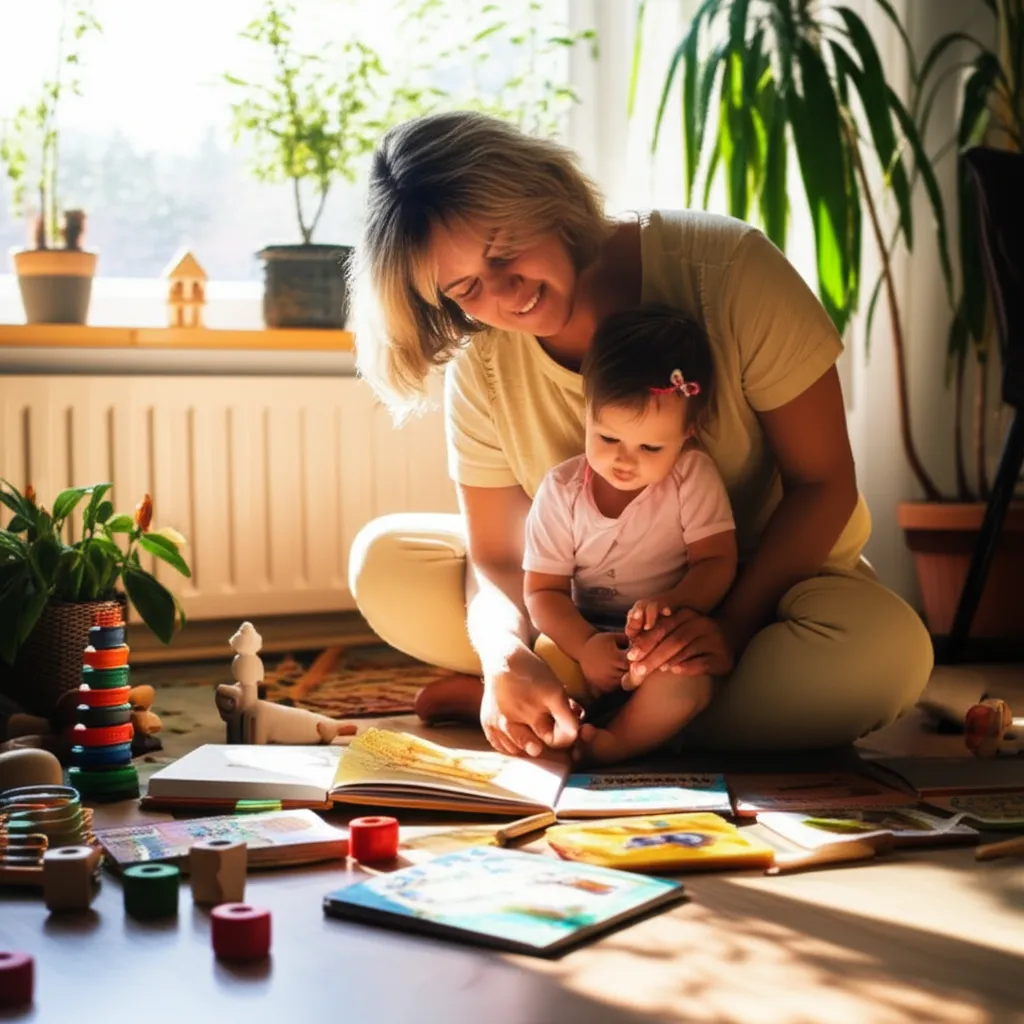
Unschooling Education for Infant (6-9 months)
Six to nine months is when babies become mobile, and everything changes. Crawling, pulling up, reaching for things on tables. The world goes from a place they observe to a place they explore. For unschooling families, this is where the rubber meets the road on baby-proofing versus child-proofing your philosophy. An unschooling approach favors making the environment accessible rather than restrictive. Instead of gating off the kitchen, you make the lower cabinets safe and let the baby explore them. Instead of a playpen full of approved toys, you create a whole room (or whole house) where the baby can roam and discover. This is also when separation anxiety peaks and the baby becomes fiercely attached to their primary caregiver. Unschooling leans into this rather than fighting it. The secure base of a trusted adult is what gives the baby confidence to explore.
Key Unschooling principles at this age
Make the environment accessible rather than restricting the baby's movement
Separation anxiety is healthy attachment, not a problem to solve
Let the baby set the pace on solid foods; baby-led weaning aligns with unschooling principles
Physical movement and exploration are the primary mode of learning right now
A typical Unschooling day
Unschooling activities for Infant (6-9 months)
Crawling through rooms and discovering what's in accessible cabinets and drawers
Baby-led weaning with whole foods to explore textures, tastes, and cause-and-effect
Playing with water, sand, or dirt outside
Pulling up on furniture and cruising along edges
Exploring containers: putting things in, taking things out, dumping, filling
Listening to music and responding with movement
Parent guidance
Why Unschooling works at this age
- Mobile babies are natural explorers and the unschooling environment supports this beautifully
- Baby-led weaning teaches autonomy, fine motor skills, and sensory awareness simultaneously
- The emphasis on secure attachment gives babies confidence to take risks
- Babies at this age are fearless scientists; unschooling just stays out of their way
- Every interaction is novel, so the learning curve is steep without any instruction
Limitations to consider
- Safety concerns are real and constant; the 'say yes' philosophy has hard limits with a crawling baby near stairs
- Extremely labor-intensive for the parent; unschooling a mobile infant requires near-constant attention
- No measurable outcomes to reassure anxious parents that the approach is working
- Other parents may judge your baby-proofing choices as too lenient
Frequently asked questions
How do I balance safety with letting them explore?
Remove genuine dangers (chemicals, sharp objects, choking hazards, unstable furniture) and then let them roam. The goal isn't zero risk. Babies need to bonk their heads occasionally to learn about gravity. Your job is preventing serious injury, not preventing all discomfort.
My baby just wants to empty every drawer in the house. Is this learning?
Yes. Emptying and filling containers teaches spatial reasoning, cause and effect, and object permanence. It also develops fine motor control and grip strength. The fact that it's annoying doesn't make it less educational.
Should I be reading to my baby?
If your baby enjoys it, absolutely. Many babies this age prefer to grab the book and chew on it rather than listen to the story, and that's fine too. Don't force reading time because you think it's important. Let the baby show you when they're interested in being read to.
Is it okay to use a playpen or baby gate sometimes?
Of course. Unschooling doesn't mean your baby has unrestricted access to the entire house at all times. You need to cook dinner, use the bathroom, and maintain your sanity. Use containment when you need to and offer freedom when you can.