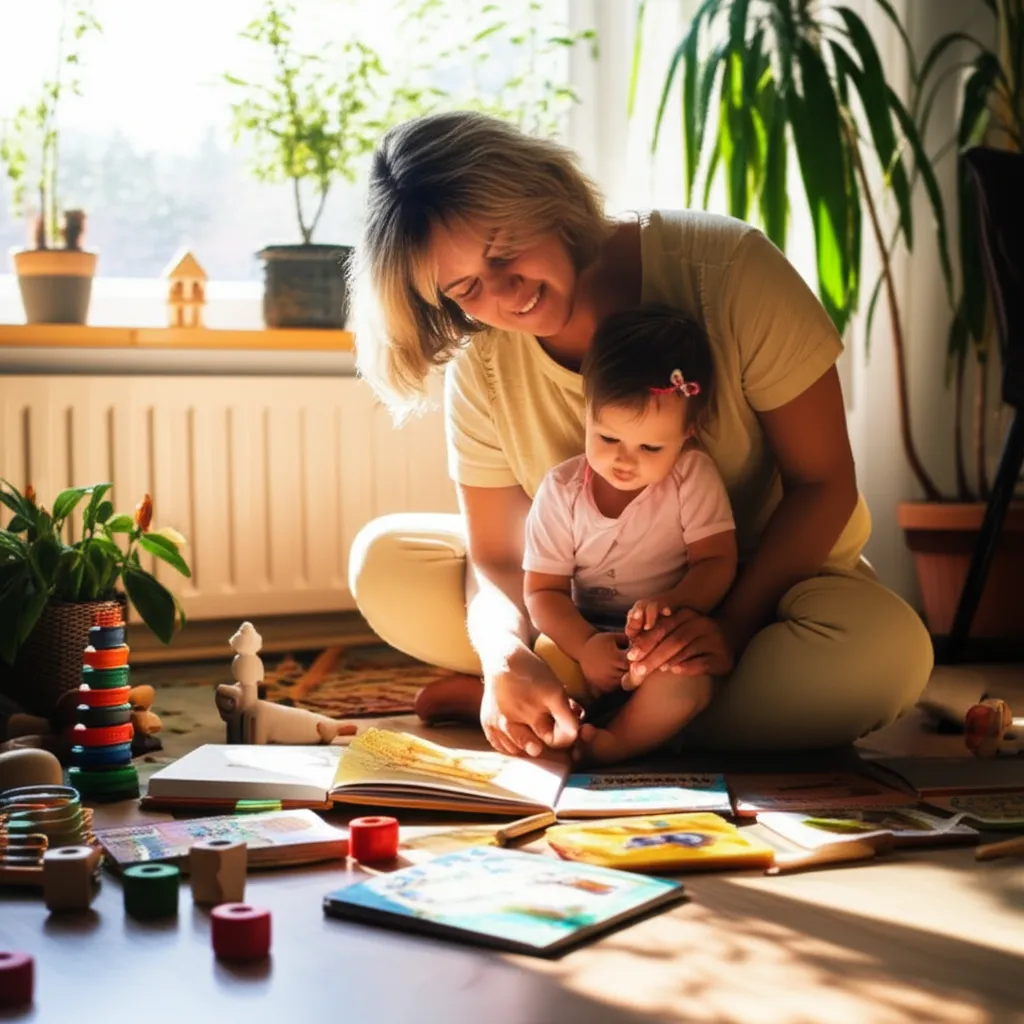
Project-Based Learning Education for Infant (6-9 Months)
The six-to-nine-month window is when PBL starts to feel less metaphorical and more real. Babies at this age are sitting independently (or nearly so), beginning to crawl, and developing the fine motor control to manipulate objects with genuine intention. They can transfer items between hands, bang things together, and drop objects deliberately to watch what happens. This is the dawn of experimental thinking — and it changes everything about how you set up their learning environment. What makes this stage so exciting for a PBL approach is the emergence of object permanence and intentional problem-solving. A baby who pulls a cloth to reach a toy underneath is conducting a genuine investigation: "How do I get that thing I want?" This is the infant version of the authentic problem that sits at the heart of every good PBL unit. The difference is that no one assigned this problem — the baby identified it themselves and is motivated to solve it. Social referencing also begins here. Your baby will look to you to gauge whether something is safe, interesting, or worth investigating. This makes you a more active participant in their explorations. When you smile and nod as they reach for a new texture, you're giving them the green light to continue their research. When you model excitement about discovery, you're shaping their relationship with learning itself.
Key Project-Based Learning principles at this age
Problem-solving setups: Create simple challenges that require the baby to figure something out — a toy partially hidden under a cloth, an interesting object just out of reach, a container with a lid to remove.
Extended investigation cycles: Babies now have the motor skills and attention to return to an exploration multiple times. Offer the same materials on different days and notice how their approach changes.
Social learning scaffolding: Use your reactions and modeling to extend explorations. If the baby bangs a spoon on the table, try banging it on the floor — show them there's more to discover.
Movement as inquiry: Now that crawling is emerging, the baby can move toward what interests them. Set up the environment so different 'stations' of interesting materials invite movement and choice.
Container and spatial play: Babies at this age are fascinated by in/out, open/close, and fitting things together. Provide lots of containers, cups, boxes, and objects that nest.
A typical Project-Based Learning day
Project-Based Learning activities for Infant (6-9 Months)
Object permanence games: Hide a toy under one of two cloths while the baby watches. Celebrate when they pull the right cloth. Gradually make it trickier — use three cloths, or pause before letting them search.
Texture posting box: Cut a hole in a shoebox lid and offer soft items (fabric balls, scarves, socks) to push through. The baby practices fine motor skills while discovering that things still exist inside the box.
Musical instrument exploration: Offer a small collection of sound-makers — a wooden xylophone, a shaker, a drum, bells — and let the baby discover each one. Notice which sounds they return to and how they experiment with volume and rhythm.
Ramp and roll investigation: Set up a simple inclined surface (a cutting board propped on a book) and offer different objects to release at the top — balls, cars, blocks. Some roll, some slide, some don't move. The baby begins to notice these differences.
Heuristic play baskets: Themed collections of real-world objects — a 'metal basket' (spoons, whisks, small pots), a 'nature basket' (pine cones, smooth stones, shells, large seed pods), a 'fabric basket' (ribbons, scarves, net, felt).
Pull-to-discover stations: Attach interesting objects to ribbons draped over the edge of a low table. The baby discovers that pulling the ribbon brings something into view — an early lesson in tool use and cause-and-effect.
Parent guidance
Why Project-Based Learning works at this age
- Intentional reaching, grasping, and manipulation mean the baby can now genuinely choose what to explore and how — real student voice and choice in action.
- Emerging mobility transforms the entire space into a learning landscape where the baby can move toward their interests independently.
- Object permanence creates natural problem-solving opportunities that require no adult setup — the baby encounters challenges organically.
- The social referencing that begins now means you can actively encourage exploration through your responses, making facilitation feel natural.
Limitations to consider
- Safety concerns increase dramatically as babies become mobile. You'll spend significant energy baby-proofing, which can limit the materials and environments available for exploration.
- Babies at this age still can't communicate what they're thinking or planning, so you're interpreting their actions — which means you'll sometimes misread their intent.
- Frustration tolerance is low. When a problem-solving challenge is too hard, the baby may melt down rather than persist, and there's no way to explain 'try again differently.'
- The gap between what interests the baby and what they can physically do is often wide, leading to frustration that can cut exploration sessions short.
Frequently asked questions
My baby just wants to throw everything on the floor. How is that a project?
Dropping and throwing objects is a genuine scientific investigation — your baby is testing gravity, distance, cause-and-effect, and your reaction. Instead of stopping it, lean in: offer different objects to drop (a ball, a feather, a block) and a container to drop them into. You can make this a daily 'experiment' and you'll see their approach become more sophisticated over time.
How do I set up the environment for PBL at this age without spending a lot on toys?
Your kitchen and recycling bin are your best resources. Wooden spoons, metal bowls, cardboard boxes, plastic containers with lids, fabric scraps, and natural objects (large stones, pine cones, shells) are all superior to most commercial baby toys. The key is variety in texture, weight, size, and material — not brand names or electronic features.
When should I step in during exploration versus letting the baby figure it out?
Watch for the frustration threshold. A baby working hard to reach something — grunting, stretching, trying different approaches — is engaged in productive struggle. A baby crying in frustration has passed their limit. Step in with the minimum help needed: move the object slightly closer rather than handing it to them, or show one strategy without doing it for them.