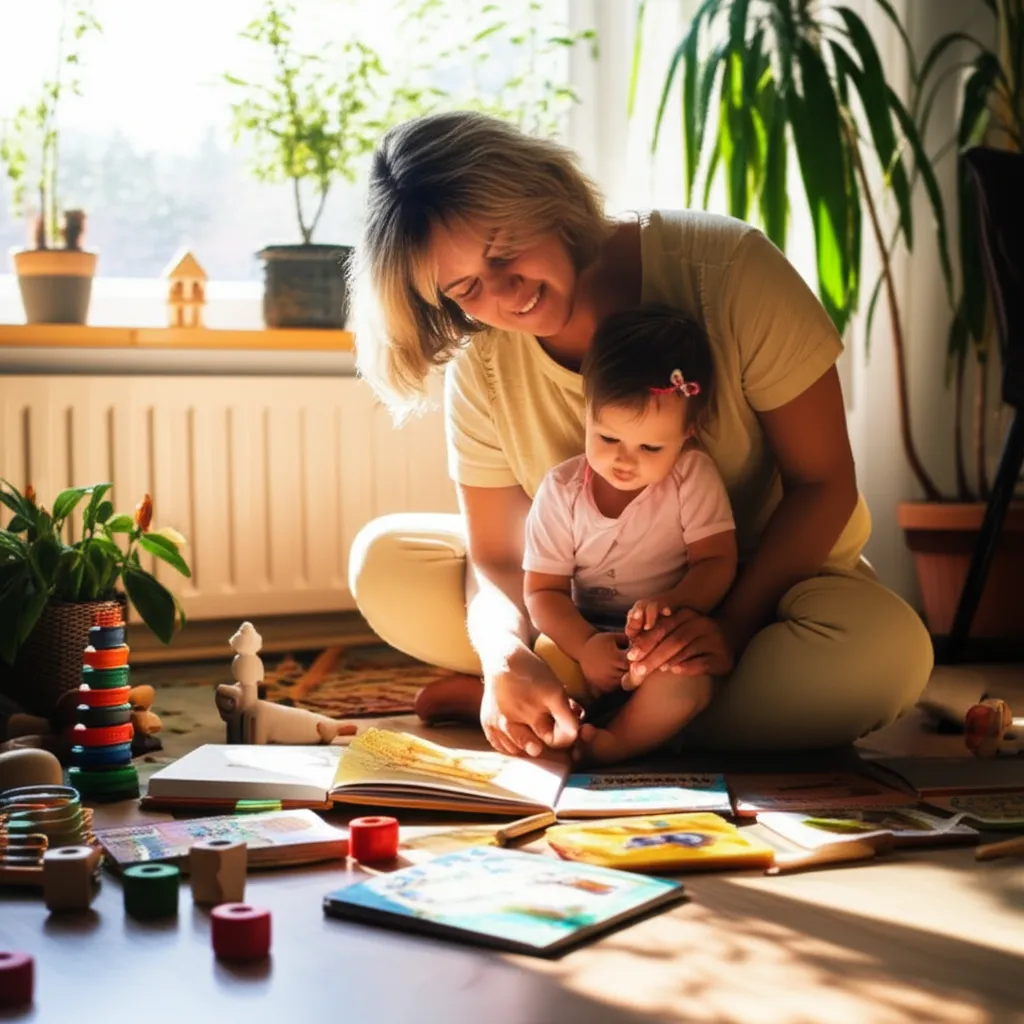
Delight-Directed Education for Infant (6-9 Months)
Six to nine months is when delight-directed learning starts to feel real. Your baby is sitting up, maybe crawling, and they're making intentional choices about where to go and what to pick up. When a crawling baby bypasses five toys to get to the one they want, that's a clear signal of interest. You're no longer guessing — they're showing you. Object permanence is emerging, which means your baby now remembers things that are out of sight. This changes the nature of delight. A baby who pulls a cloth off a hidden toy with excitement isn't just playing — they're demonstrating that their interest persists even when the object disappears. This is the cognitive foundation for sustained interests later: the ability to hold something in mind and pursue it. This is also the age of dropping things on purpose. Over and over and over. Before you lose your mind picking up the spoon for the fifteenth time, recognize this as cause-and-effect research driven by genuine fascination. Delight-directed learning means finding ways to support this interest rather than shut it down — maybe a container of soft objects they can dump and refill, or a high chair game where different objects make different sounds when they hit the floor.
Key Delight-Directed principles at this age
Mobility reveals true interests — watch where the baby goes when given free range
Repetitive actions (dropping, banging, opening/closing) are research projects, not misbehavior
Emerging object permanence means you can now play with hidden interests — peek-a-boo, hidden object games
Begin offering simple choices between two options to strengthen the child's sense of agency
Separation anxiety means the parent is the 'safe base' from which exploration happens — stay close
A typical Delight-Directed day
Delight-Directed activities for Infant (6-9 Months)
Treasure baskets — themed collections of 5-8 safe objects in a basket, rotated based on what interests the baby most
Drop and sound experiments — different containers and different objects to drop into them, exploring cause and effect
Crawling obstacle paths — pillows, tunnels, and ramps that lead toward objects you know they want
Container play — boxes, cups, bags, and bowls to fill, dump, open, close, and nest inside each other
Water play — pouring, splashing, and floating objects during bath time, following whatever action they repeat most
Book choosing — hold up two books and let the baby reach for the one they want; read it as many times as they indicate
Parent guidance
Why Delight-Directed works at this age
- Crawling gives babies the ability to physically pursue their interests, making choices unmistakable
- Intentional reaching and grasping mean the baby can interact deeply with objects that fascinate them
- Repetitive play (dropping, banging, opening) provides clear, consistent signals about what they're studying
- Object permanence means interests persist even when materials are put away — you can pick up where you left off
Limitations to consider
- Safety concerns limit what the baby can freely explore, creating tension with interest-following
- Separation anxiety may make it hard for the baby to explore independently, requiring constant parent presence
- Everything still goes in the mouth, limiting which materials you can safely offer
- The baby's interests change rapidly, sometimes within minutes, making it hard to build sustained themes
Frequently asked questions
My baby is obsessed with things that aren't safe — cords, outlets, the trash can. How do I redirect without shutting down their curiosity?
Look at what's underneath the interest. Cords are interesting because they're long, flexible, and they move when pulled. Offer safe alternatives: thick ribbons tied to a basket handle, a pull-toy on a string, fabric strips to tug on. The trash can is interesting because things go in and disappear. Give them their own container to put things into and dump out. You're saying yes to the underlying fascination while redirecting the specific object.
My baby just wants to play with the same three objects every day. Should I introduce more variety?
This is the delight telling you exactly what to do. A baby who returns to the same objects daily is doing deep work — they're mastering something. You can gently expand by adding one related object to their favorites (if they love stacking cups, add a stacking ring), but don't replace what they love. When they're truly done, they'll stop reaching for it.
How do I know if I'm following my baby's interests or just entertaining them?
Watch what happens when you stop. If the baby continues the activity on their own, they're genuinely interested. If they look at you and fuss for more input, you were entertaining them. Both have value, but delight-directed learning leans toward the first — activities the child would keep doing even if you stepped back. Your role is to set up the environment and then observe.