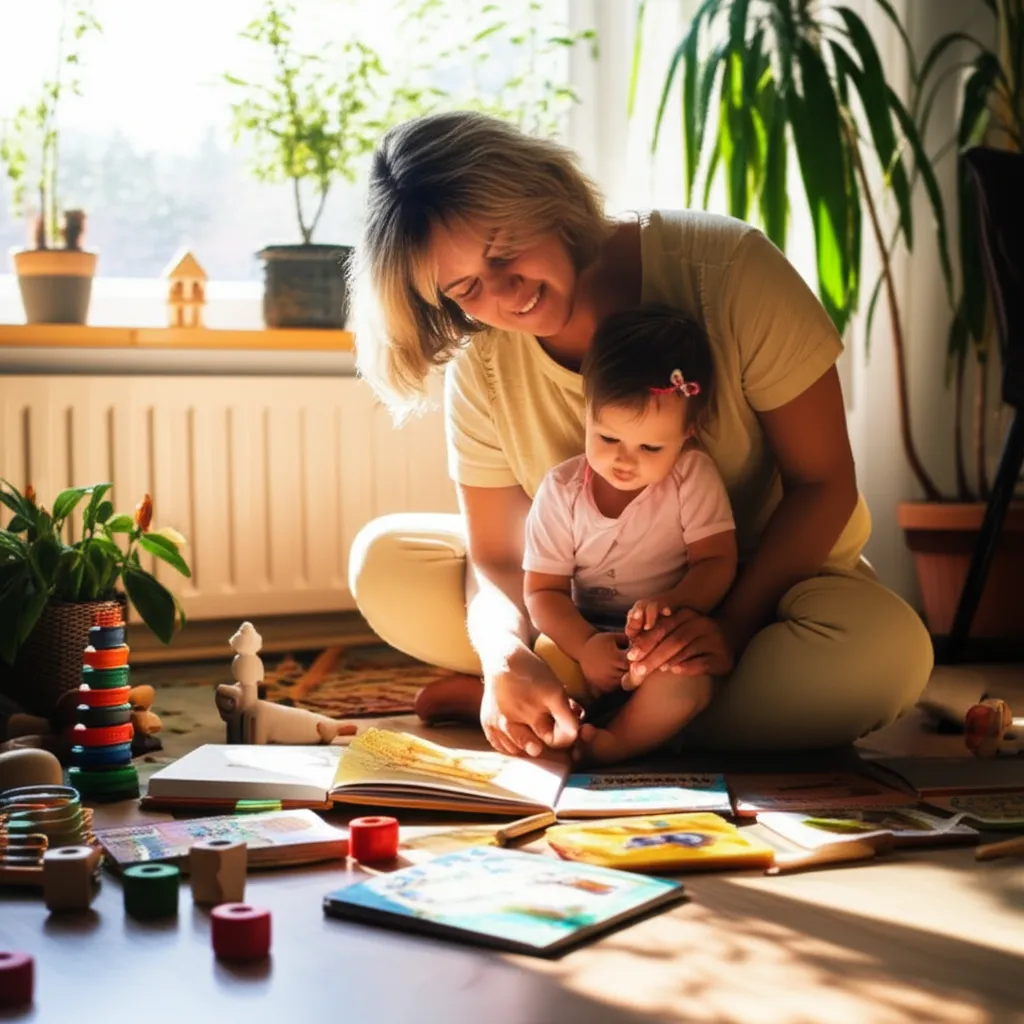
Project-Based Learning Education for Infant (3-6 Months)
Between three and six months, babies undergo a remarkable transformation in how they engage with the world. They can now hold their head up, reach for objects, and — perhaps most significantly for a PBL approach — they smile, laugh, and vocalize in response to interactions. This is when the feedback loop between learner and environment becomes truly bidirectional, and the seeds of inquiry-based learning start to show visible roots. At this stage, PBL manifests as extended exploration sequences. A baby who grabs a wooden ring isn't just holding an object — they're investigating its weight, temperature, texture, taste, and sound. When you provide open-ended materials and resist the urge to redirect, you're honoring the PBL principle of sustained inquiry. The baby decides what to explore and for how long. Your role shifts from pure environmental design toward becoming a co-investigator who notices, responds, and gently extends the exploration. This is also when cause-and-effect understanding begins to emerge. A baby shakes a rattle and hears a sound. They kick a mobile and it moves. These moments are the infant equivalent of a driving question: "What happens when I do this?" The delight on a baby's face when they discover they can make something happen is pure intrinsic motivation — the engine that powers PBL at every age.
Key Project-Based Learning principles at this age
Sustained exploration: When your baby is engaged with an object or experience, protect that time. Don't interrupt with a new toy or activity. Depth over breadth is a PBL fundamental.
Cause-and-effect opportunities: Provide materials and setups where the baby's actions produce visible, audible, or tactile results — this builds the understanding that their choices matter.
Responsive co-investigation: When your baby discovers something, mirror their excitement and describe what's happening. This models the collaborative inquiry that defines PBL classrooms.
Open-ended materials: Choose objects that can be explored in multiple ways (wooden spoons, fabric squares, safe containers) over single-purpose toys that beep and flash.
Documentation habit: Start photographing or noting your baby's explorations. This practice mirrors PBL's emphasis on reflection and documentation, and creates a beautiful record.
A typical Project-Based Learning day
Project-Based Learning activities for Infant (3-6 Months)
Treasure basket exploration: Fill a low basket with 6-8 household objects of varying textures, weights, and materials. Sit nearby and observe which ones the baby gravitates toward and how they investigate each one.
Kick-and-discover station: Suspend interesting objects (a crinkly fabric, a small bell, a soft rattle) within kicking range during back-lying time, so the baby discovers their movements create effects.
Water play introduction: During bath time or with a shallow tray, let the baby feel warm water, splash gently, and explore wet versus dry textures on their hands.
Shadow and light investigation: On a sunny day, use your hands or simple objects to cast shadows on a white surface near the baby. Move slowly and watch them track the patterns.
Sound source finding: Make gentle sounds from different positions around the baby — above, beside, behind — and observe how they turn to locate the source. Vary the sounds each time.
Texture crawl path: Lay out different fabric swatches (fleece, burlap, satin, terry cloth) on the floor for tummy time, so the baby encounters different sensations as they shift and reach.
Parent guidance
Why Project-Based Learning works at this age
- Babies at 3-6 months are intensely curious and have longer alert periods, giving them genuine time for sustained exploration — the core of PBL.
- The emergence of reaching and grasping means babies can now choose what to investigate, introducing real student voice and choice into their learning.
- Cause-and-effect discovery is intrinsically motivating — babies will repeat actions dozens of times with visible delight, building persistence and experimental thinking.
- Parents can observe clear preferences and interests emerging, which provides authentic data for planning next experiences.
Limitations to consider
- Mobility is still limited, so the baby depends entirely on you to set up their environment — they can't yet seek out what interests them independently.
- Mouthing everything is developmentally appropriate but limits the range of safe materials you can offer for exploration.
- Attention spans, while growing, are still measured in minutes. Extended projects aren't possible; it's more like micro-investigations.
- It takes patience and a shift in perspective to see infant exploration as genuine learning — the payoff isn't visible in the way older children's project work is.
Frequently asked questions
My baby just wants to put everything in their mouth. Is that really learning?
Yes — emphatically. The mouth is one of the most nerve-rich areas of the body, and mouthing is how babies gather detailed information about texture, temperature, shape, hardness, and taste. It's their primary research tool at this age. Provide a variety of safe, clean objects and let them investigate.
How long should exploration sessions last at this age?
Follow the baby's lead entirely. Some sessions might last two minutes, others might stretch to twenty. When they look away, fuss, or lose interest, the session is over. Pushing past their natural stopping point teaches them that learning is something imposed on them rather than something they drive.
What's the difference between PBL materials and regular baby toys?
Most commercial baby toys do one thing: press a button, hear a sound. PBL materials are open-ended — a wooden spoon can be mouthed, banged, waved, dropped, rolled, and examined from every angle. The baby decides what to do with it. Look for objects from nature and your kitchen before buying specialized toys.
Should I be worried if my baby isn't interested in the activities I set up?
Not at all. If your baby ignores the treasure basket but is fascinated by the tag on their blanket, that tells you something valuable about what they find interesting right now. PBL is about following the learner — adjust your offerings based on what you observe, rather than trying to make the baby fit your plan.