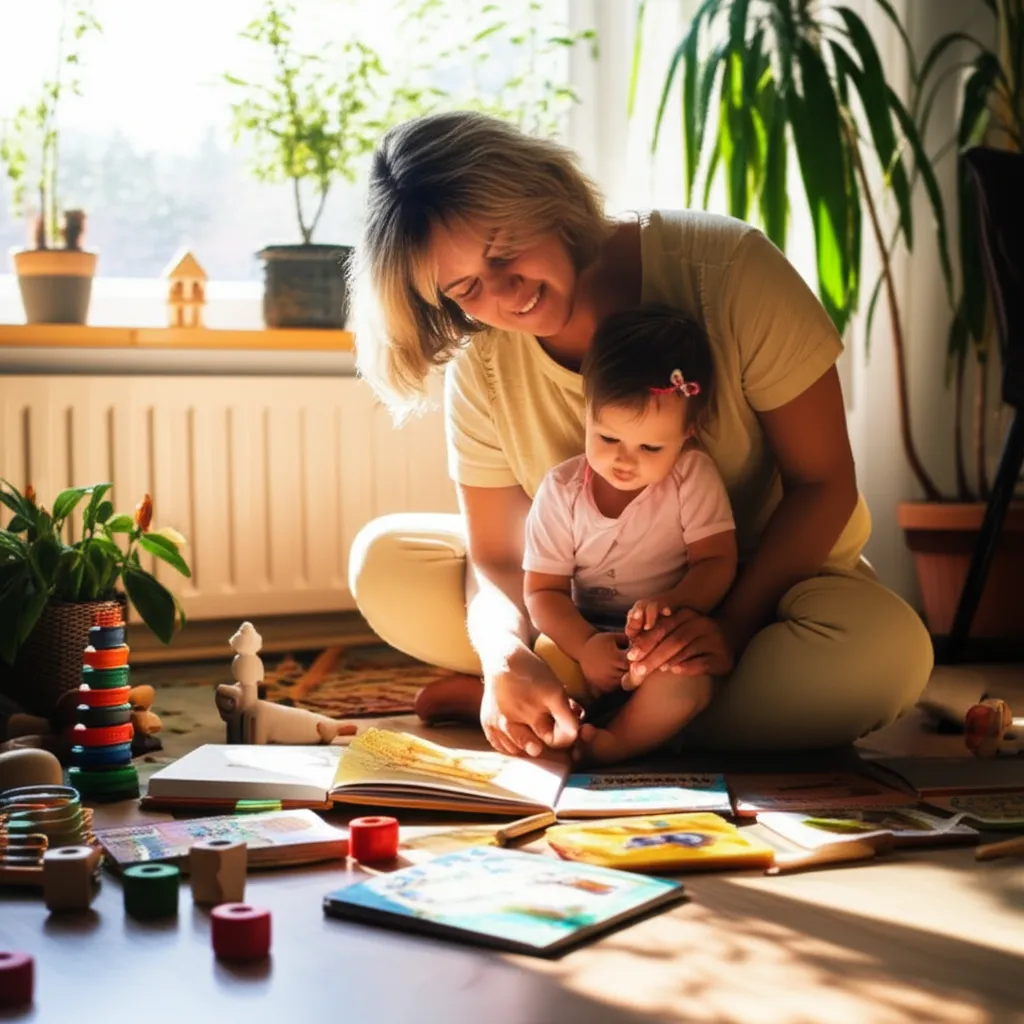
Literature-Based Education for Infant (3-6 Months)
Between three and six months, your baby starts reaching for things — including books. This is when literature-based education shifts from passive listening to early interaction. Your infant may grab at pages, mouth board books, and start showing preferences (kicking excitedly for one book, turning away from another). These are real responses worth paying attention to. Read-alouds become more reciprocal during this period. You'll notice your baby watching your face as you read, tracking pictures, and cooing in response to your voice. This is the beginning of "conversation" around books — the back-and-forth that literature-based education values throughout childhood. Simple board books with one image per page, texture books, and cloth books are ideal. Your baby is learning that books are objects worth exploring. Let them chew on them, bat at them, hold them upside down. Every interaction builds the association that books are interesting, safe, and connected to your presence.
Key Literature-Based principles at this age
Follow your baby's lead — when they reach for a book, kick with excitement, or turn away, they're communicating preferences. Honor those signals.
Books are sensory objects at this age. Chewing, grabbing, and crumpling pages are all valid forms of "reading."
Interactive read-alouds (pausing, pointing, making sounds) build early conversational patterns that support later narration skills.
Keep sessions short and responsive — two minutes of engaged reading beats ten minutes of a fussy baby being held in front of a book.
A typical Literature-Based day
Literature-Based activities for Infant (3-6 Months)
Read simple board books with one clear image per page, naming and pointing to objects.
Offer cloth and texture books for independent sensory exploration during floor time.
Make animal sounds, silly voices, and exaggerated expressions while reading to build engagement.
Pause during familiar books to let your baby vocalize — treating their coos as responses in a conversation.
Sing picture book versions of songs (like "The Itsy Bitsy Spider") with hand motions.
Start a bedtime book routine with the same one or two books each night.
Parent guidance
Why Literature-Based works at this age
- Babies start showing real book preferences, making read-alouds feel more like a shared activity than a monologue.
- Sensory book exploration builds fine motor skills alongside language exposure.
- Short, frequent reading sessions fit naturally into caregiving rhythms without requiring dedicated "school time."
- Establishing bedtime reading routines now creates habits that persist for years.
Limitations to consider
- Sessions are very short — your baby's attention span is measured in minutes, which can feel like you're not doing enough.
- Books get destroyed. Parents who are precious about keeping books pristine will find this stage frustrating.
- There's still no visible academic progress, which can trigger comparison anxiety with parents using more structured infant programs.
Frequently asked questions
My baby just wants to chew on books. Is that okay?
It's more than okay — it's developmentally appropriate. At this age, babies explore everything with their mouths. A baby who reaches for a book and brings it to their mouth is showing interest in books as objects. That's the first step. Keep offering board books and cloth books designed to withstand this treatment, and keep reading aloud even while they chew.
Should I be pointing at words while I read?
You can occasionally run your finger along text to start building print awareness, but at this age, pointing at pictures is more valuable. Name objects, describe what's happening in illustrations, and make eye contact. Your baby is learning that books contain interesting things to look at and talk about — word-tracking comes much later.
How many books should we own at this stage?
A small rotation of ten to fifteen board books is plenty, supplemented by library books. Babies this age love repetition, so you don't need a huge collection. Focus on variety in types — some with photos, some with illustrations, some with textures, some with flaps. Rotate a few in and out each week to keep things fresh for you (your baby won't mind rereading the same book fifty times).