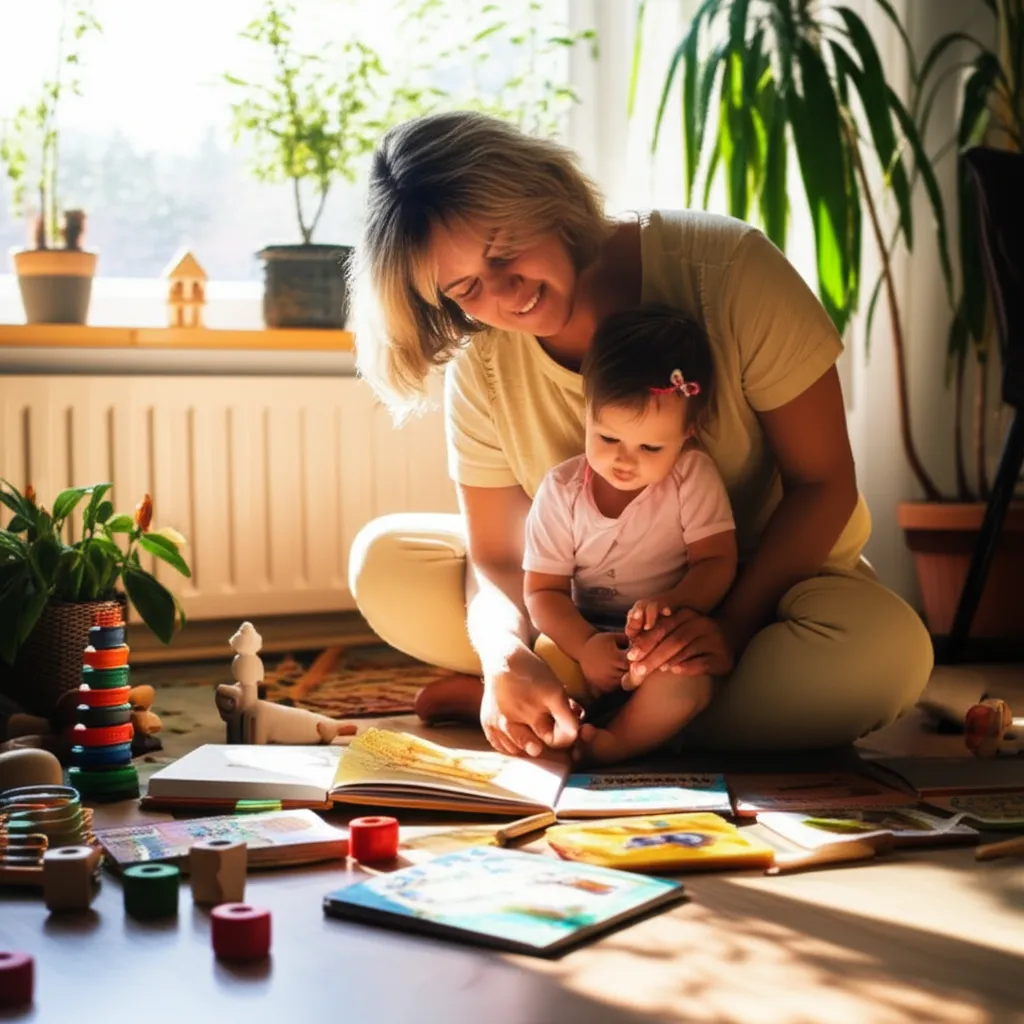
Ignatian Education for Infant (3-6 Months)
Between three and six months, your baby is waking up to the world in earnest — smiling socially, reaching for objects, babbling with intent. Ignatian education at this stage builds on the foundation of attentive presence you've been developing and begins to embrace the Experience dimension of the Ignatian Pedagogical Paradigm. Your baby is now actively experiencing the world through senses and movement, and your role is to enrich those experiences with care and intention. The Jesuit concept of magis — striving for the better, the more — doesn't mean pushing your infant to hit milestones faster. It means bringing your best self to the interactions you're already having. When you shake a rattle for your baby, can you be fully there? When they're exploring a texture, can you resist the urge to redirect and instead observe what captures their attention? Ignatian spirituality teaches that every person has a unique calling. Even at three months, your baby is showing you who they are — what fascinates them, how they respond to stimulation, what their temperament reveals. Paying attention to these early signals is cura personalis in its most basic form.
Key Ignatian principles at this age
Experience as teacher — providing rich sensory encounters and letting your baby lead the exploration
Magis in parenting — not doing more, but bringing greater presence and intention to what you're already doing
Recognizing individuality — noticing your baby's unique preferences and temperament as early expressions of personhood
Gratitude as daily practice — Ignatian tradition emphasizes thankfulness, and this stage is full of first smiles, first laughs, first reaches worth savoring
A typical Ignatian day
Ignatian activities for Infant (3-6 Months)
Offer one new sensory experience per day — a different texture, sound, or visual — and observe your baby's response without directing it
Practice "holy listening" during babbling: give your full attention, respond conversationally, and treat their sounds as meaningful communication
Take your baby outside daily and practice the Ignatian tradition of noticing — point out light, leaves, sounds, with genuine interest
Begin a simple gratitude practice: name one thing about your baby you're grateful for each day, either silently or aloud
During play, practice waiting 10 seconds before helping or redirecting — let your baby work through a challenge first
Read aloud from whatever you're reading (your own book, an article) — the content doesn't matter, the sound of engaged human speech does
Parent guidance
Why Ignatian works at this age
- Encourages responsive, attuned parenting that's well-supported by developmental research
- Provides a reflective counterbalance to the noise of "baby enrichment" culture
- Builds the parent's observational skills, which become increasingly valuable as the child grows
Limitations to consider
- Still very much an adult practice adapted to parenting rather than a true infant pedagogy
- Parents wanting concrete milestones or structured activities may find this too open-ended
- The spiritual language can be off-putting if you're not comfortable with religious framing
- Fewer community resources compared to popular approaches like baby music classes or Montessori playgroups
Frequently asked questions
How do I balance Ignatian reflection with the reality of caring for a baby this age?
You don't need to add anything to your schedule. The examen can happen during a feeding or while rocking the baby to sleep. The point isn't to carve out special spiritual time — it's to bring reflective awareness to the time you're already spending. Some parents find that a two-minute voice memo at the end of the day works better than journaling.
My baby seems to just want to chew on everything. How is that an 'Ignatian experience'?
That IS the experience. Mouthing is how babies this age explore their world — it's a genuine investigation. The Ignatian approach invites you to see it that way rather than as something to manage. What textures does your baby prefer? Do they mouth things differently when calm vs. excited? Noticing these things is the beginning of knowing your child as a person.
Are there any Ignatian resources specifically for parents of infants?
Very few that target this specific age. Some Jesuit-affiliated organizations publish parenting reflections, and books like 'Ignatian Spirituality A to Z' can help you understand the framework. But honestly, at this stage you're better served by a good book on infant development (like 'The Wonder Weeks') combined with your own reflective practice. The Ignatian framework is the lens, not the content.