Democratic Education for Infant (3-6 Months)
Between three and six months, babies become dramatically more engaged with the world. They're reaching for objects, laughing, rolling, and showing clear preferences — turning toward things they like and away from things they don't. For families oriented toward democratic education, this is when the philosophy starts to feel more tangible. Your baby is making choices, and you can honor them. Democratic education's central claim is that people learn best when they're free to follow their own interests. At this age, that means paying attention to what captures your baby's focus and making more of it available. If they're drawn to crinkly textures, give them crinkly things. If they light up at music, play more music. You're not teaching — you're providing a rich environment and letting the baby direct their own exploration, the same principle that drives free activity time at Sudbury Valley and Brooklyn Free School. This period also marks the beginning of proto-communication that democratic educators would recognize as early self-advocacy. When your baby pushes away a toy they're done with, fusses when overstimulated, or reaches for something specific, they're expressing preferences. Treating these signals as valid communication — rather than inconveniences to manage — is how democratic values live in daily infant care.
Key Democratic principles at this age
Following the baby's gaze and reaching as early expressions of interest-led learning — the same principle that drives free choice at democratic schools
Offering variety without directing attention, creating a prepared environment that the baby navigates on their own terms
Respecting 'no' signals like turning away, fussing, or pushing objects aside as the infant's first exercises in autonomy
Allowing extended focus time when the baby is absorbed in something, rather than interrupting to redirect
Including the baby in family life rather than isolating them in a separate 'baby world,' reflecting the age-mixing valued in democratic schools
A typical Democratic day
Democratic activities for Infant (3-6 Months)
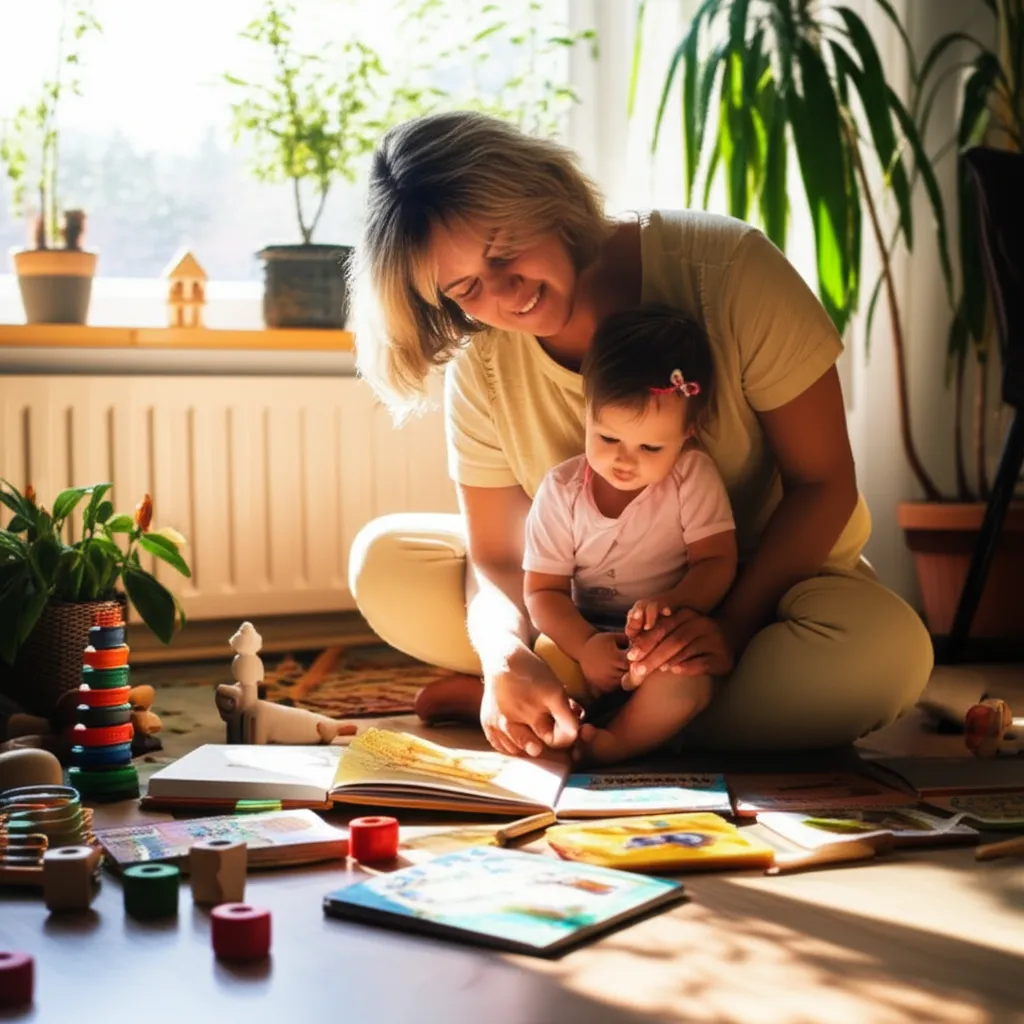
Floor time with a rotating selection of safe objects in different textures, weights, and shapes — the baby chooses what to pick up
Face-to-face 'conversations' where the parent mirrors the baby's sounds and expressions, establishing turn-taking communication
Supported sitting or propped positions that let the baby observe household activities and family interactions
Outdoor exploration from a carrier or blanket — feeling grass, watching leaves move, hearing birds
Water play during bath time, allowing the baby to splash and explore at their own pace
Being present during older children's or adults' activities, absorbing the mixed-age environment that democratic schools prize
Parent guidance
Why Democratic works at this age
- The baby's emerging preferences give parents concrete ways to practice following the child's lead
- Reduces pressure to buy into expensive infant stimulation programs — the philosophy validates simple, baby-led exploration
- Builds the parent's observation skills, which will be essential for supporting self-directed learning later
- The baby develops a sense of agency — their reaching, choosing, and refusing are met with respect
Limitations to consider
- Babies this age need significant adult support for safety, so 'freedom' is always bounded by what the caregiver provides and allows
- It's impossible to know whether a baby's apparent 'choice' reflects genuine preference or just what's closest — the philosophy requires interpretation
- Parents may feel directionless without a curriculum or milestone checklist to follow
- Social pressure to 'teach' the baby through structured activities can make this hands-off approach feel countercultural and lonely
Frequently asked questions
Should I be doing baby classes or structured activities?
You can if you enjoy them, but they're not necessary from a democratic education standpoint. The philosophy holds that babies learn everything they need through free exploration in a rich environment. A music class isn't harmful, but your baby learns just as much from hearing you sing while doing dishes. The key question isn't 'what structured activity should I add?' but 'am I providing an interesting, safe environment and following my baby's lead?'
My baby seems to want the same toy over and over. Should I redirect?
No — repetition is how babies learn at this age, and it's also a clear expression of preference. At Sudbury Valley, a student might spend weeks on a single interest with no adult intervention. Your baby's fixation on one toy is the infant version of that deep engagement. They're learning everything that toy has to teach them. When they're done, they'll move on.
How do I explain this approach to skeptical grandparents?
Focus on outcomes rather than philosophy. You might say, 'We've found that she's most content and engaged when we let her explore at her own pace, so that's what we do.' Most grandparents respond better to seeing a happy, curious baby than to hearing about educational theory. You don't need to convince them of the democratic model — you just need them to respect your approach when they're with the baby.