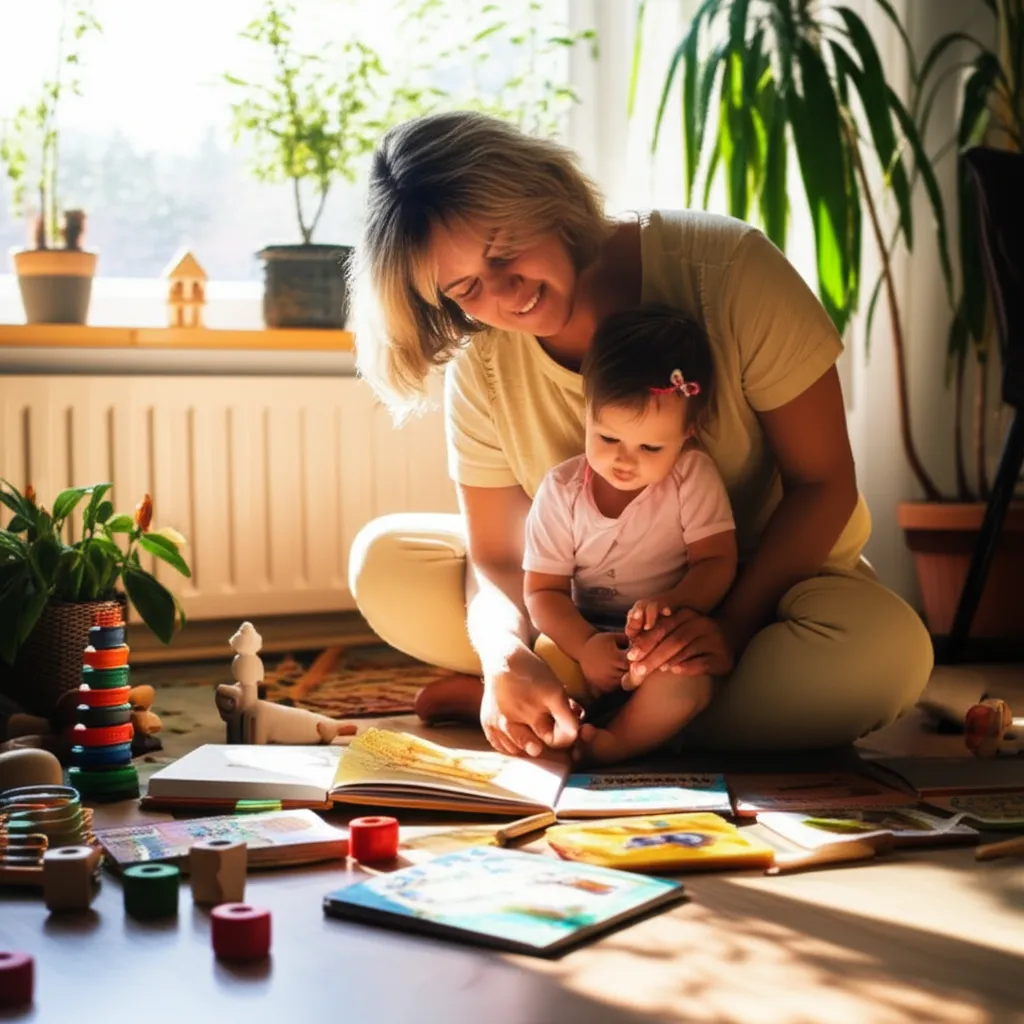
Gameschooling Education for Four Year Old
Four is the golden age of gameschooling. The frustration of "almost but not quite" that marks younger children gives way to genuine competence. Four-year-olds can follow multi-step rules, wait for their turn (most of the time), count reliably, and handle simple decisions that affect outcomes. Games shift from being primarily luck-based to introducing early elements of choice — and four-year-olds notice the difference. "I picked this because..." starts appearing in their game talk. This is also when peer gaming takes off. Playdates can revolve around board games instead of just free play. Four-year-olds are developing theory of mind — the understanding that other people have different thoughts and knowledge — which makes games involving hidden information (like a simplified Go Fish) genuinely interesting. They're not just matching cards; they're thinking about what the other person might have. Chess pieces might get introduced as characters in pretend play before anyone explains how they move, and that's a perfectly valid entry point.
Key Gameschooling principles at this age
Introduce games where choices matter — even simple ones — to build early strategic thinking
Peer play with board games becomes viable; facilitate but start stepping back
Early literacy means games with simple words or letter recognition become accessible
The concept of 'fairness' is emerging and powerfully motivating — use it to reinforce rules
Losing is getting easier but still needs emotional support; model graceful losing yourself
A typical Gameschooling day
Gameschooling activities for Four Year Old
Outfoxed — cooperative deduction game; reading clues, eliminating suspects; builds logical reasoning without reading
Bananagrams Junior — letter tiles with two game modes for pre-readers; spelling and letter recognition through play
Candy Land or Chutes and Ladders — classic luck-based games that teach turn-taking, counting, and handling setbacks
Red Light Green Light / Simon Says — outdoor games that build impulse control and listening skills
Simple dominos — matching numbers or pictures end-to-end; pattern recognition and planning
Lego free-build with challenges — 'Build the tallest tower using only 20 pieces'; constrained creativity
Parent guidance
Why Gameschooling works at this age
- Multi-step rules can be followed reliably — games with 4-5 rules work well
- Early strategic thinking appears ('I'll pick this one because...')
- Social skills support genuine peer gaming — playdates can center around board games
- Counting, color and shape recognition, and early letter knowledge open up a wide range of games
Limitations to consider
- Reading isn't reliable yet, so games can't depend on reading text
- Strategy is very short-term — planning more than one move ahead is rare
- Losing still stings, especially against peers; adult support is needed for competitive games
- Attention for a single complex game tops out around 20-25 minutes
Frequently asked questions
My four-year-old is obsessed with winning. Is that a problem?
It's developmentally normal and not a character flaw. Four-year-olds are just grasping the concept of competition, and like any new discovery, they're intense about it. Channel it constructively: play cooperative games where everyone wins together, play competitive games where luck is the main factor (so winning feels less personal), and model your own responses to losing. 'Oh no, I didn't win! That's okay, I had fun. Let's go again.' Over the next year or two, the intensity will mellow as they internalize that games are about the playing, not just the outcome.
Can video games be part of gameschooling at four?
Selectively, yes. At four, games like Toca Kitchen, Lego Duplo World, and simple puzzle apps offer genuine learning through play. The key is choosing games that require problem-solving, creativity, or decision-making rather than just tapping and swiping. Keep sessions short (15-20 minutes), and balance screen gaming heavily with physical and social games. The social and motor benefits of board games and active play can't be replicated on a screen at this age.
How much math can a four-year-old learn through games?
More than you'd think. Regular board game play at this age builds: counting (dice, spinners, spaces), one-to-one correspondence (one piece per space), basic addition and subtraction (gaining and losing game items), number recognition, and early spatial reasoning (moving pieces on a grid). Research shows that children who play board games regularly enter kindergarten with stronger number sense than peers who don't. You don't need 'math games' specifically — regular board games do the work.