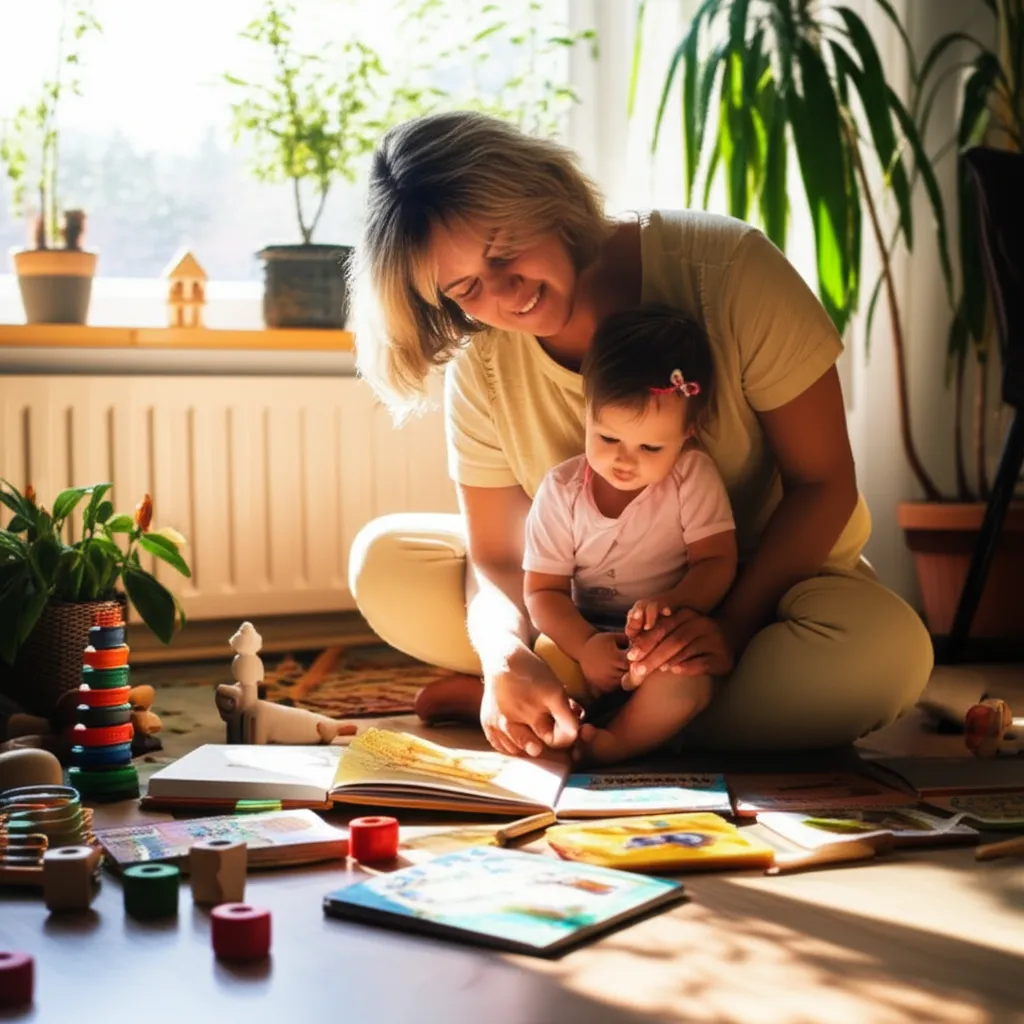
Democratic Education for Four Year Old
Four is when democratic education starts looking recognizable. Your child can participate in real discussions, understand cause and effect, negotiate with peers, and sustain complex play scenarios for extended periods. This is the entry age for many democratic schools, and there's a reason: four-year-olds are ready to be contributing members of a self-governing community. At Fairhaven School in Maryland, a Sudbury-model school that accepts children from age four, new students are immediately part of the same governance system as teenagers. They attend school meeting, they can bring complaints to the judicial committee, and their vote counts equally. Four-year-olds rise to this in surprising ways — not because someone taught them governance, but because they've been practicing the underlying skills (expressing preferences, negotiating, understanding fairness) for years. Four also brings a hunger for competence. Your child wants to do real things: cook real food, build real structures, use real tools, solve real problems. This aligns perfectly with democratic education's rejection of dumbed-down, age-segregated activities. When a four-year-old asks to use a knife and you teach them to use one safely (a butter knife on a banana, progressing from there), you're treating them as a capable person — exactly as a Sudbury or Summerhill school would.
Key Democratic principles at this age
Including the four-year-old in real family decision-making: where to eat, what to do this weekend, how to solve a household problem
Supporting extended project work — a four-year-old might spend days on a single construction, drawing, or imaginative scenario
Introducing basic concepts of community responsibility: shared spaces need care, actions affect others, agreements matter
Allowing real risk-taking with real tools and real materials, graduated to the child's demonstrated ability
Trusting the child to resolve peer conflicts with minimal adult intervention, stepping in only when someone might get hurt
A typical Democratic day
Democratic activities for Four Year Old
Complex dramatic play with multiple characters, evolving plots, and negotiated rules among peers
Construction projects that last days: forts, art installations, gardens, inventions from recycled materials
Cooking real recipes with genuine involvement in measuring, mixing, cutting (with appropriate tools), and tasting
Physical challenges: climbing trees, riding bikes without training wheels, swimming, navigating rough terrain
Early research: pursuing burning questions by looking at books, asking adults, observing, and experimenting
Community participation: contributing to family meetings, helping plan outings, taking responsibility for a pet or plant
Parent guidance
Why Democratic works at this age
- Four-year-olds in democratic environments display remarkable independence, social competence, and creative thinking
- The child's ability to participate in governance — even simple family meetings — builds civic skills and a sense of belonging
- Extended project work at this age develops concentration, planning, and persistence that transfer to later academic work
- Democratic education's acceptance of different learning timelines reduces anxiety about 'keeping up' with peers in conventional programs
Limitations to consider
- Four-year-olds can be volatile — they understand fairness in theory but may melt down when a decision doesn't go their way
- Some children at this age need more predictability and routine than a fully free environment provides
- If the child will eventually enter a conventional school, the transition from complete freedom to structured classrooms can be rocky
- Finding a democratic school that accepts four-year-olds can be difficult depending on location — many only start at five or six
Frequently asked questions
My four-year-old plays all day and shows zero interest in academics. Is this okay?
It's more than okay — it's developmentally appropriate and exactly what democratic education expects. Play IS the four-year-old's learning mode. Through play, they're developing language, social skills, physical coordination, emotional regulation, mathematical thinking (counting, sorting, patterning), scientific thinking (hypothesizing, testing, observing), and creativity. Formal academics at four haven't been shown to provide lasting advantages. What does last is a healthy relationship with learning, and that's built through play.
How does a democratic school handle a four-year-old who breaks things or hurts others?
Through the judicial committee (in Sudbury-model schools) or school meeting (at Summerhill and others). A four-year-old who breaks something or hurts someone is treated the same as an older student: the incident is reported, discussed, and consequences are decided by the community. For a four-year-old, consequences might be making amends, being restricted from certain activities temporarily, or having a conversation about impact. The process itself teaches the child that actions have consequences and that the community — not just an authority figure — holds each member accountable.
Shouldn't my four-year-old be learning to follow instructions and sit still for school?
Only if you plan to send them to a school that requires it. And even then, the research on 'readiness training' is weak. Children learn to follow classroom conventions quickly when they enter that environment — especially if they bring the confidence and self-regulation that democratic education builds. Drilling a four-year-old on sitting still and following instructions doesn't prepare them for school; it just makes them four-year-olds who've spent time sitting still and following instructions instead of playing.